


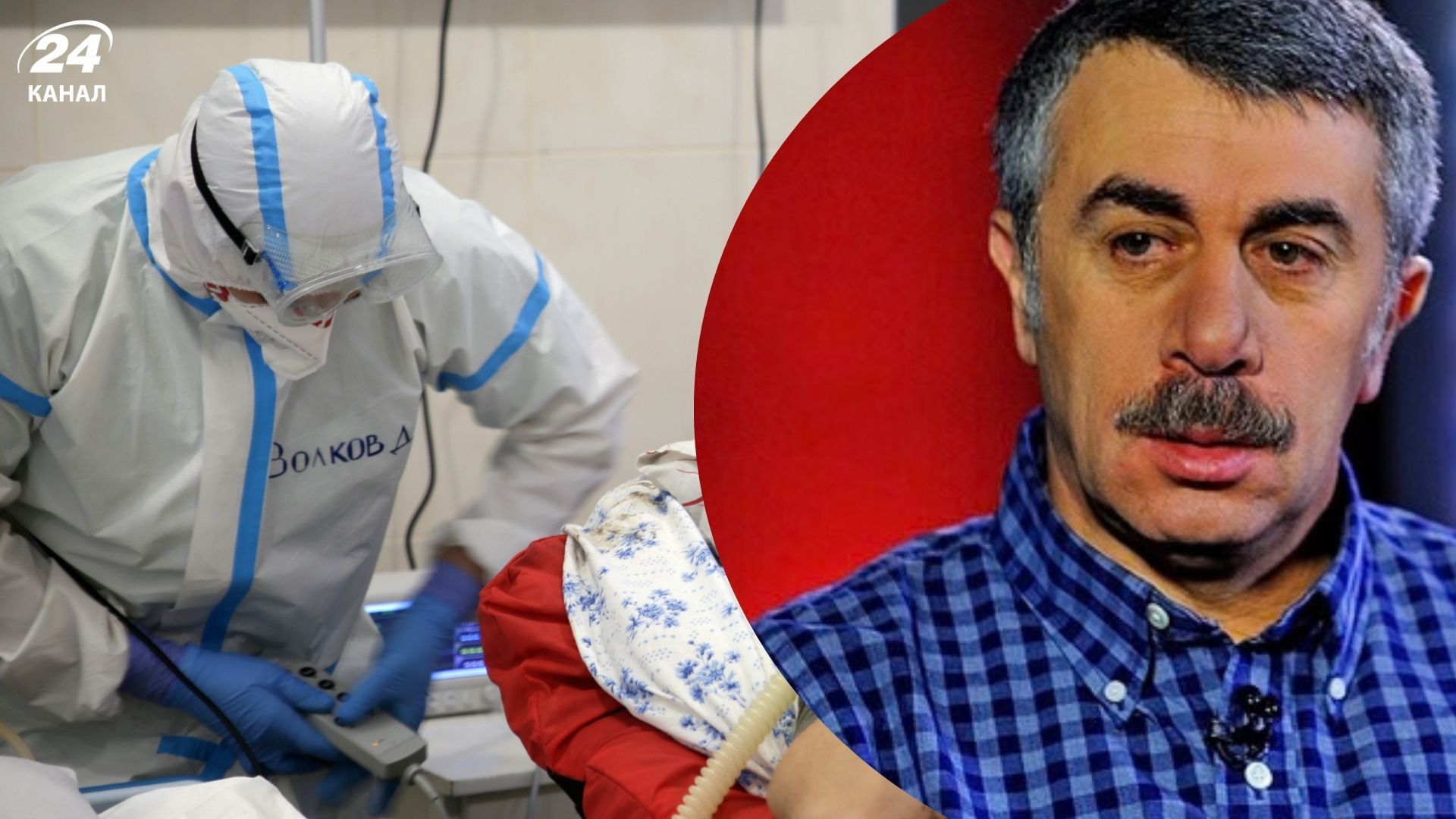
In an exclusive interview with Channel 24, pediatrician Yevgeny Komarovsky explained which details of this story truly deserve attention. He cast doubt on the widely spread theory of accidental infection in the laboratory and discussed what might be behind the alarming reports from Russia.
The death of a female institute employee does not confirm a plague outbreak
The reports of a possible epidemic were triggered by the death of a young woman who worked at a plague research institute in Irkutsk. She was hospitalized with pneumonia of unknown etiology – that is, an inflammation of the lungs for which the exact causative agent had not been identified. The combination of this diagnosis and the deceased’s place of work led to speculation about a possible infection with a particularly dangerous pathogen.
However, an unidentified cause of pneumonia does not in itself indicate that a dangerous disease is being concealed. Even modern diagnostic methods do not always allow for the identification of the specific microorganism that caused the lung inflammation. Komarovsky noted that similar cases occur even outside of laboratories that work with dangerous infections.
When a young, healthy person dies from pneumonia – and such cases, unfortunately, do occur – in at least 50% of cases, medicine has no answer to the question of exactly which microbe killed that person. In other words, there is nothing surprising about the diagnosis of “pneumonia of unknown etiology,”
– Komarovsky explained.
The doctor had far more questions about the reaction of Russian authorities and the lack of clear official information. After the woman fell ill, as reported, about 200 people who may have come into contact with her were hospitalized and began receiving antibiotics. Such measures could have been related to suspicions of a dangerous infection, but they do not yet prove that it was specifically the plague.
In the case of the pulmonary form of the disease, new cases among those who had been in contact with her could have emerged in the time that has passed since the incident. At the same time, there have been no reliable reports of additional infections or deaths. Komarovsky doubts that a large-scale outbreak of the infection could have been completely concealed.
And even if that were the case, it would be very, very difficult to conceal. Something would inevitably have leaked out – that someone else had fallen ill, that someone else had died. There is no such information. In other words, there is no indication that the outbreak is spreading. Then again, we don’t know what the outbreak is. The plague has not been confirmed by anyone,
– the doctor emphasized.
The lack of objective information is a cause for concern not only for Ukraine but also for other countries. In particular, questions are arising in countries where Russians travel from the Irkutsk region, since without reliable data it is impossible to even assess the nature of a potential threat.
The theory about a broken test tube is nonsense
Among the explanations for the incident, a story has emerged claiming that a 28-year-old employee allegedly accidentally broke a test tube containing the plague pathogen and became infected. Komarovsky was extremely skeptical of this version, pointing out the specific precautions required when handling hazardous materials.
For the pulmonary form of the disease to develop under such a scenario, the woman would have had to directly inhale the pathogen. At the same time, this version suggests that the employee was handling the hazardous material without proper protective gear and, after the test tube broke, began to clean it up. The doctor called this combination of circumstances unconvincing.
“When you hear all this talk about how a 28-year-old woman broke a test tube, it sounds something like this: Sergeant Ivanov picked up a nuclear bomb and accidentally set it off or dropped it. That’s roughly how it sounds,”
– Komarovsky said.
At the same time, the large-scale response by Russian authorities does not necessarily mean that a dangerous pathogen actually escaped the laboratory. Institutions that work with such materials must respond even to minor suspicions of possible contamination.
Therefore, the hospitalization of people who had been in contact with the patient and the prescription of antibiotics could have been standard precautionary measures. The doctor does not rule out that the responsible agencies decided to err on the side of caution, without waiting for confirmation of a specific infection.
If an incident occurred at the research institute and they were even 1% concerned that something might happen, they had to respond. They responded in accordance with protocols. They took every possible precaution,
– the doctor explained.
However, the Russian side has not provided enough information to dispel questions about the circumstances of the employee’s death. Komarovsky noted that the international community is awaiting explanations, while Russian authorities do not seem to be in a hurry to provide them. Because of this, even routine epidemic control measures began to be perceived as possible confirmation of a large-scale emergency.
The Russian institute may have been working on more than just the plague
Komarovsky considers the most important question to be whether the incident in Irkutsk actually involved the plague. The institute’s name and the report of its employee’s death do not yet allow us to determine exactly which pathogen or other hazardous substance could have caused the incident.
Plague control institutions deal with a wide range of particularly dangerous infections, toxin research, and anti-epidemic measures. Therefore, the doctor does not rule out that the cause of death could have been a completely different disease or even exposure to a hazardous substance. At the same time, no evidence supporting such theories was presented during the conversation.
“Plague” is a great headline, but in reality, it’s practically impossible to imagine that the plague poses a threat to us. But to think that it could be anything at all… We can only speculate,
– Komarovsky noted.
Among purely hypothetical scenarios, he even mentioned the possibility of exposure to a toxic substance such as “Novichok.” However, he immediately noted that such a turn of events is unlikely and there is no reason to consider it more plausible than the plague theory.
The problem is that the very name of the Anti-Plague Institute leads people to the simplest explanation. At the same time, the institution’s other areas of activity are overlooked, even though its staff may work with various pathogens and hazardous materials.
The Anti-Plague Institute deals with a vast number of other particularly dangerous infections. It works with infectious toxins and studies anti-epidemic measures. In other words, this institute has plenty to do besides the plague,
the doctor emphasized.
Komarovsky also drew attention to the media frenzy surrounding Russian laboratories. Previously, Russia spread stories about alleged Ukrainian biolaboratories and “combat mosquitoes,” and now Russian scientific institutions have become the target of similar allegations. The doctor called this a kind of informational boomerang, but stressed that he would like to see its consequences for the Kremlin, not for ordinary residents of Irkutsk.
Yevgen Komarovsky on the plague in Irkutsk: watch the video