


 3
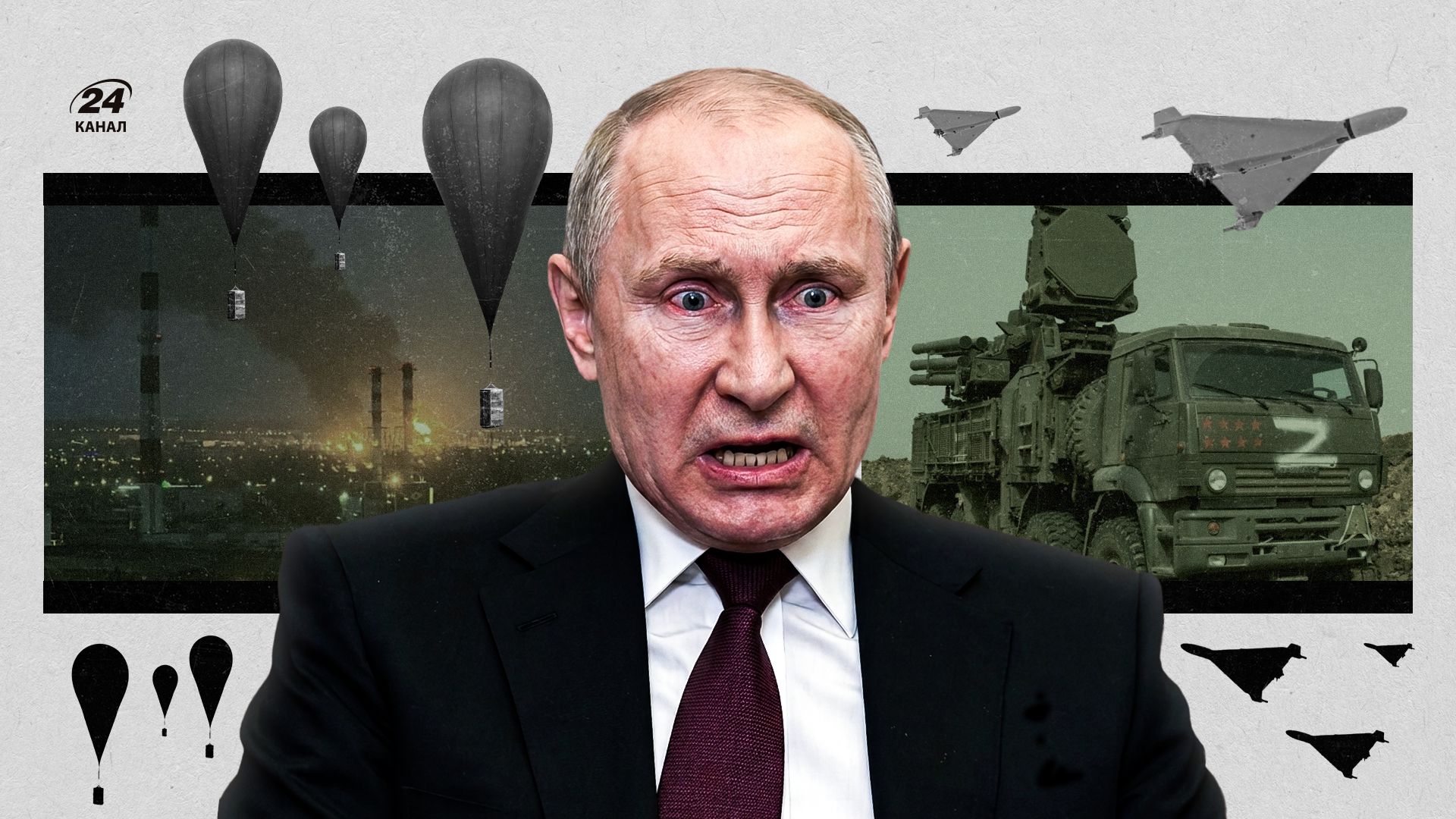
3 Ukraine is finding new ways to strike Russian military and strategic targets where the enemy least expects an attack. Even seemingly ordinary weather balloons are being used, and Russia’s oil infrastructure is coming under increasing pressure.
Military analyst, flight instructor, and reserve colonel Roman Svitan explained to Channel 24 how weather sondes can jam Russian radars, why strikes on full oil storage tanks cause particularly heavy damage, and how Ukrainian drones are hunting down ballistic missile launchers.
Natural Phenomena in the Service of the Ukrainian Armed Forces: How Weather Balloons Work
A weather balloon is a relatively inexpensive device capable of ascending to an altitude of over 10 kilometers. Its main advantage lies in its ability to carry a variety of payloads. If special lenses, reflective elements, or dipoles are suspended from such a balloon, it becomes a serious interference source for Russian radar stations.
On the screens of old Soviet radars, which lack modern interference-rejection systems, the appearance of such objects creates a solid “glare” – a white field behind which an air defense operator is simply unable to see the actual target. This creates a safe corridor for Ukrainian strike drones to fly through.
However, the most interesting aspect is how these probes are delivered. Ukrainian specialists have begun to use high-altitude jet streams. Since air masses in our latitudes move predominantly from west to east, meteorologists can accurately calculate the altitude and flight path.
The speed of the jet stream can reach 200 kilometers per hour. Thanks to this, a weather balloon launched from Ukrainian territory reaches Moscow in just two hours – at the same speed as a drone with a piston engine.
In addition to electronic warfare equipment, weather sondes can also carry a payload. Due to their high altitude, it is extremely difficult for Russian air defense systems to intercept them. A weather balloon can deliver a wide range of munitions directly over the Moscow region: from aircraft bombs to small drones.
Upon reaching a designated location, the balloon can release a drone, which then operates autonomously. Such drones are equipped with machine vision systems, digital memory, and artificial intelligence components. They are capable of independently identifying a ground target – an aircraft at an airfield, a radar station, or a fuel tank – and delivering a precision strike. Even with a warhead weighing just a few kilograms, such a drone can inflict critical damage on expensive equipment.
What surprises has Ukraine in store for the Kremlin? Watch the video
Strike on an oil refinery: why full tanks are being set on fire right now
In parallel with air operations over the aggressor country’s capital, the Defense Forces have changed their approach to destroying Russian oil and gas infrastructure. While oil refineries were previously the main target, the focus has now shifted to production control stations and oil terminals, as happened in Rostov.
There is a clear, logical explanation for this change in tactics. As a result of previous strikes, Ukraine has disabled approximately 50% of Russia’s oil refining capacity. This has left Russia with a surplus of crude oil that it has nowhere to refine. The enemy was forced to fill all available storage tanks with crude oil.
Right now is the perfect moment to destroy them. If a drone hits an empty barrel, the Russians can seal the hole relatively quickly. But a hit on a fully filled 50,000-ton tank results in its complete burnout.
Destroying a single such tank causes millions of dollars in damage, and it takes one and a half to two years to restore it.
Strikes on the Rostov hub – through which the lion’s share of logistics for the occupying forces passes – are particularly painful for the enemy. The destruction of fuel in this area directly affects the Russian army’s rate of movement and immobilizes enemy armored vehicles on the front lines.
Hunting Ballistics: How Launchers Are Destroyed
Another significant achievement of the Defense Forces has been the destruction and damage of Russian ballistic missile launchers. Given that Ukraine does not yet have its own long-range ballistic missiles (such as the ATACMS with a range of 300 km) that could quickly strike enemy positions, the military has to employ more complex strategies.
Launchers are typically deployed about 100 kilometers from the front line. Their operational time is measured in minutes, making it impossible to directly engage them with standard weapons. Therefore, the Ukrainian military uses drones in standby mode (“standby drones”). They are deployed in advance to the likely launch zone and circle there, waiting for a target to appear.
The launchers are detected through the combined efforts of radio intelligence (both Ukrainian and from partners) and satellite data. As soon as a launcher moves into position, a drone locks onto it and strikes.
In total, Russia has slightly more than a hundred such systems. Damaging even 5–7% of them significantly reduces the enemy’s ability to launch ballistic strikes against Ukrainian cities, since repairing and testing a single system takes several months.
Political Pressure as an Indicator of Success
The effectiveness of Ukrainian strikes on oil infrastructure is confirmed by the political reaction. Russia is trying by any means necessary to stop these attacks, even resorting to international leverage. Donald Trump’s statements about the so-called "energy truce" are merely a cover for Russian interests.
The Kremlin is looking for ways to “buy” security for its oil refineries, offering in return access to financial markets or cheap shares in Russian companies. This is precisely why pressure is mounting on Ukraine’s military and political leadership to halt the strikes.
However, any attempts to interfere in the process of selecting targets for the Armed Forces of Ukraine constitute a direct encroachment on state sovereignty. Ukrainian intelligence agencies must respond firmly to such threats, as the destruction of the enemy’s economic potential remains one of the key factors for victory in the war.