


 1
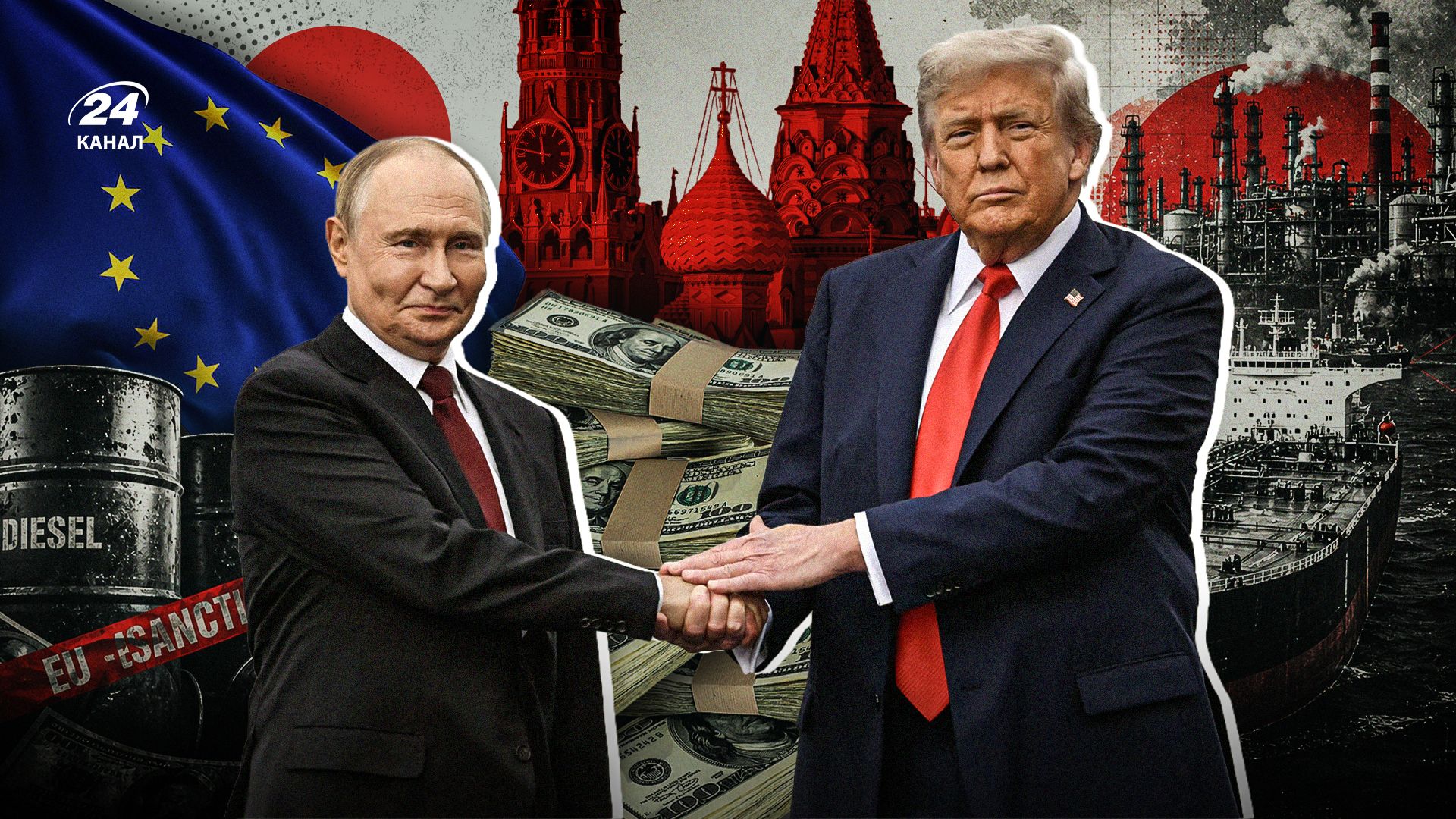
1 The U.S. shocked the world by signing the so-called “diesel deal” with Russia, hoping to keep fuel prices in check. But behind the potential – and clearly very temporary – benefit for Americans lies another question: Will this deal serve as a way to bolster the Kremlin’s military budget and weaken the sanctions that were intended to limit Russia’s ability to wage war against Ukraine?
To avoid justified criticism, Donald Trump is drawing attention to the European Union’s trade with Moscow. However, the EU is gradually reducing its dependence on Russian energy resources, while Washington’s decision could set a new precedent for easing restrictions.
Why the U.S. deal with Russia is causing concern, what Trump is failing to consider, and whether the West risks weakening the pressure on the Kremlin with its own hands – Channel 24 investigated. Read on for details.
Russian diesel in exchange for potentially lower prices: why Trump’s decision sparked controversy
On October 9, 2026, U.S. President Donald Trump suddenly announced an agreement with Vladimir Putin regarding the supply of Russian diesel fuel to global markets. The U.S. administration offered a convoluted explanation for this move, citing a desire to increase fuel supply and keep domestic prices in check ahead of the midterm congressional elections.
To this end, the U.S. Department of the Treasury issued a “General License No. 135,” which permits relevant transactions involving Russian diesel. In doing so, Washington made an exception to the sanctions regime imposed in response to Russia’s full-scale invasion of Ukraine. Additionally, Americans are now reportedly exempt from penalizing themselves for trading with Russia under the “Hellish Sanctions” law, which Trump signed and which takes effect on October 18, 2026.
According to Russian Deputy Prime Minister Alexander Novak, deliveries may take place in stages: first 300,000 metric tons, then another 500,000 metric tons in November, and later 1 million metric tons. At the same time, larger volumes are mentioned in public reports. However, in Russia, there is currently no way to deliver them.
The main contradiction lies in the fact that efforts are being made to secure potential benefits for American consumers by granting Russian fuel access to the international market. Moscow will receive revenue from its sale, even though the sanctions were actually intended to limit the Kremlin’s financial capacity to wage war.
Important! The Atlantic reports that lifting sanctions on Russian diesel fuel and demanding an end to strikes on Russian oil refineries may be an attempt to force Ukraine to surrender. According to journalists, Washington’s actions are driven by commercial interests and a desire to secure major business deals, which makes the U.S. position unpredictable and requires Europe to develop its own security mechanisms.
Easing sanctions supports the Russian economy and weakens Ukraine’s position
Gintaras Bagdonas, a retired Lithuanian Army colonel and former head of the European Union’s military intelligence, believes that Trump’s decision is driven by short-term domestic political interests in the U.S., which take precedence over the long-term security of Ukraine and European allies.
Instead of focusing his efforts on helping Ukraine end the war on acceptable terms, he is propping up the Russian economy. Moreover, through these actions, he is primarily encouraging Moscow, the Kremlin, and Vladimir Putin to continue the war and build up their military capabilities,
– Bagdonas noted.
In addition, he doubts that the deal will provide Americans with significant and lasting fuel price reductions. Russian diesel could be redirected from other markets, particularly Brazil, so increased fuel availability in the U.S. will not necessarily mean a rise in global supply. The economic impact may be limited, while Russia will receive additional revenue.
Another risk is discord among Western allies. If Washington grants sanctions exemptions on its own, it will be more difficult for it to demand that its partners consistently adhere to a common policy toward Moscow.
Easing the pressure could also complicate negotiations to end the war: Russia will have additional resources, while Ukraine will have to defend its demands amid inconsistent policies from its allies.
Will Trading in Russian Diesel Really Help the U.S.?
Aviation expert Bohdan Dolintse questions the economic rationale of Washington's decision. In his view, Donald Trump is using the European Union’s purchases of Russian energy resources as an argument in favor of agreements with Moscow, but fails to take into account the trend toward reducing the EU’s dependence on Russian fuel.
It is a fact that the European Union continues to make these purchases. But this argument overlooks a very important point – the trend. Statistically, the EU is purchasing less and less each year and is trying to find alternatives,
– explained Bohdan Dolintse.
Yes, Europe still buys Russian energy resources, but there is a difference between a gradual reduction in imports and decisions that open up new opportunities for the sale of Russian fuel. It is difficult to completely abandon such supplies all at once, as this requires alternative suppliers and the necessary infrastructure.
Since March 2022, the EU has paid Russia approximately $209 billion for fossil fuels – which is less than the $250 billion Trump mentioned. At the same time, the implementation of the REPowerEU plan has made it possible to reduce the share of Russian supplies to 6% of the relevant indicator and avoid additional costs estimated at 278 billion euros.
These figures show that European trade with Russia must be assessed over time. The mere fact that purchases continue does not mean that sanctions are ineffective or that they should be eased.
REPowerEU is a European Commission initiative launched in May 2022 amid Russia’s full-scale invasion of Ukraine and global energy supply disruptions. This program aims to completely eliminate the European Union’s dependence on Russian coal, gas, and oil, while simultaneously promoting the transition to renewable energy sources.
Europe also buys Russian energy resources – and that’s a problem
In contrast, Andriy Horodnytskyi, a Ph.D. and political expert, emphasizes the responsibility of both sides. In his view, Europe cannot criticize Washington for trading with Russia while ignoring its own purchases; however, the U.S. should not justify its decisions by citing the actions of its European partners.
Since the beginning of 2026, European countries have purchased 7.5 billion euros’ worth of liquefied natural gas from Russia. Total trade between Europe and Russia amounts to approximately 57–58 billion euros. These figures indicate that economic ties between the parties remain intact despite the sanctions.
Horodnytskyi points out that European buyers may continue to prefer Russian gas because of its price. However, the economic benefit does not resolve the issue of financing a country that is waging war.
You’ll save 5–10 billion euros by buying gas from Russia. Are there any moral implications here? No, there aren’t. But accusing each other of being “fools” for what you’ve done – you’ve both done the wrong thing. We shouldn’t keep doing the wrong things just because our predecessor did them,
– noted Horodnytskyi.
Unlike Dolintse, who emphasizes the reduction in European imports, Horodnytskyi focuses on the inconsistency of the mutual accusations. Even if the EU reduces its purchases, this does not absolve it of responsibility for the ongoing trade. Similarly, European purchases do not justify the easing of U.S. restrictions on Russian diesel.
However, the agreement between the U.S. and Russia – permission to export Russian diesel fuel – could pave the way for further easing of sanctions. In particular, this could lead to the resumption of crude oil sales. Furthermore, the U.S. itself exports significant volumes of diesel, so the need to purchase Russian fuel for the American market is not obvious.
Sanctions or Trade: What Is the West’s Main Dilemma?
Interestingly, the topics of sanctions against Russia and trade with Russia encompass various aspects of essentially the same problem. Bagdonas warns that easing sanctions helps the Russian economy and could worsen Ukraine’s situation. Dolintse questions Washington’s arguments, emphasizing that Europe is gradually reducing its dependence on Russian energy resources. Horodnytskyi points out the double standards and calls on the U.S. and the EU not to justify their own decisions by citing each other’s actions.
Thus, the question is not merely whether Russian diesel will lower prices in the U.S. It is also important whether Western countries are prepared to maintain economic pressure on Russia when sanctions conflict with their short-term economic interests.
If exemptions from the restrictions help the Kremlin restore energy revenues, this could weaken not only the pressure on Moscow but also the joint U.S.-European policy of supporting Ukraine.