





 2
2 Spanish Prime Minister Pedro Sánchez found himself mired in a severe parliamentary crisis and on October 5 announced early elections.
The formal justification was the housing crisis and yet another failure by the government to resolve it (preceded by the migrant crisis and the storming of Ceuta, and other crises before that). Sánchez himself acknowledged that his cabinet had failed to deliver on all its promises and asked voters to give progressive forces a significantly stronger majority in parliament. In addition, right from the start of the campaign, the prime minister has been warning the electorate about an alternative scenario – the far right coming to power.
Channel 24 analyzed the course of events in Spanish politics to understand why Pedro Sánchez is willing to risk his position right now, how the far-right Vox party is capitalizing on the migration and housing crises, and whether Spaniards still have enough motivation to support the Socialists again, who are increasingly mired in scandals and corruption cases.
The housing crisis is devastating the Socialists’ approval ratings: how Sánchez’s government lost control of parliament
Most interestingly, the current political crisis in Spain has a very specific face. It is 87-year-old María del Carmen Abascal, who has lived in a rented apartment in Madrid for over 70 years.
This is a typical story for many Spaniards, but it took on new significance after an investment fund purchased the building in 2018. At that time, the pensioner’s rent was set to increase severalfold – from a subsidized 450–500 to a staggering 2,650 euros, later reduced to a market rate of 1,650. Meanwhile, Doña María’s pension amounts to only 1,350 euros per month.
Previous attempts to evict her were successfully blocked in court, but on September 23, the woman was ultimately literally carried out of her apartment.
María del Carmen Abascal speaks to the media / Photo – Democrata

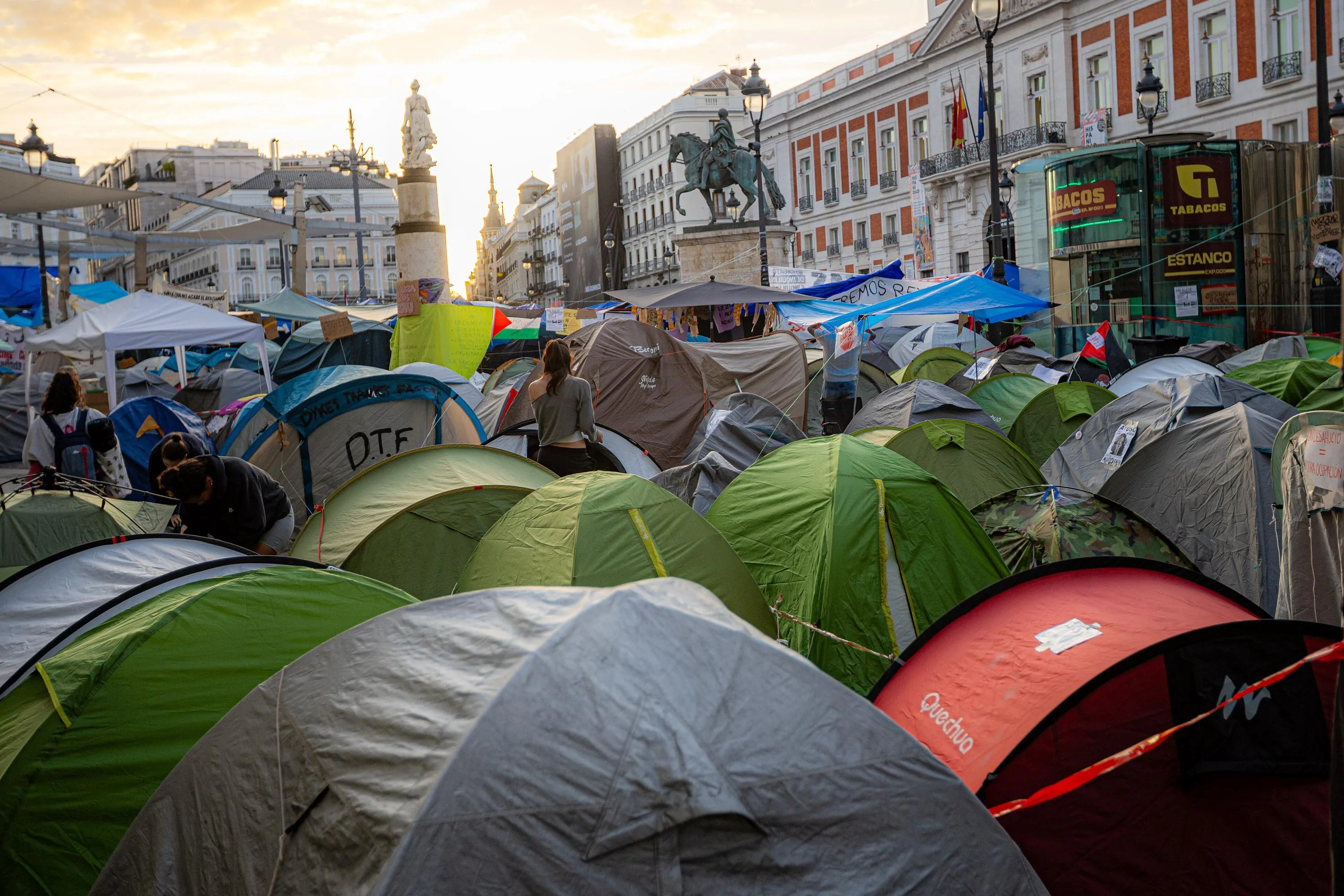
Footage of the pensioner, who ended up in the hospital after the eviction, quickly spread across the Spanish media, and her story itself became a symbol of a much larger problem. It’s no surprise that tens of thousands of people took to the streets of Madrid, and protesters set up a tent city in the Spanish capital’s central square, Puerta del Sol. Subsequently, similar demonstrations broke out in other cities across Spain.
The protesters’ demands were no longer limited to Abascal’s return home – they called for rent caps, stronger protections against eviction, and a comprehensive overhaul of the government’s housing policy. Although the pensioner’s story ultimately had a happy ending – she was allowed to return to her apartment – the protests could no longer be stopped.
The problem is that Abascal’s story was merely a symbol of the deep housing crisis that has plagued Spain for years. According to the OECD, between 2022 and 2024 alone, Spain issued building permits for approximately 345,000 new homes, while the demand for housing during that time increased by more than 600,000 households.
The Bank of Spain estimated the cumulative housing shortage for 2022–2025 at approximately 600,000 apartments. The shortage is particularly acute in large cities and tourist regions, where population growth, demand for rentals, and fierce competition from tourist accommodations – which often involve short-term apartment rentals – are all on the rise (this is why Spaniards hate Airbnb; in tourist-heavy Barcelona, they’ve even declared war on the service and are threatening not to renew licenses once they expire).
A tent city of protesters in Madrid / Photo – Wikimedia
The situation is further complicated by the fact that the government has very few options to simply solve the problem with affordable public housing. Such housing makes up only 3% of Spain’s housing stock, which is significantly less than in many other European Union countries.
In fact, the Sánchez government has been trying to address this problem, which is why two urgent housing decrees were submitted to parliament. The idea was to continue protecting vulnerable groups from eviction, better regulate seasonal rentals, and curb some of the speculation in the market. However, the ruling coalition did not have enough votes to pass the measures, and the opposition refused to support the government’s proposals.
Along with the People’s Party and Vox, the Catalan party Junts also voted against the decision – and this is literally the party on whose support the survival of the Sánchez government largely depended after the 2023 elections.
The Catalans argued that the proposed measures could have the exact opposite effect, leading to a reduction in overall market supply and, consequently, a creeping rise in prices.
In the end, Pedro Sánchez’s government failed to pass the vote. But instead of spending another few months negotiating with Junts and trying to assemble a new ad-hoc majority, the prime minister decided to shift this debate from parliament to the entire country.
And there is even a certain political shrewdness to this, since Sánchez has been leading Spain since 2018, so it would be difficult to convince voters that his government has nothing to do with the current housing crisis. On the other hand, he now has the opportunity to shift the blame onto the opposition, hinting to voters that it is they who are blocking solutions to the country’s housing problems.
The far right is gaining support: how the migration crisis in Ceuta is boosting Vox’s ratings
While the Sánchez government focuses primarily on housing issues, the opposition – represented by the far-right Vox party – is highlighting the problem from a slightly different angle. Vox attempted to directly link the eviction of María del Carmen Abascal to another crisis that has been tearing Spain apart for several months. The party published a post hinting that if the pensioner had been a migrant from Morocco, the state would have quickly found her new housing.
This looks like a rather crude form of political manipulation, but the groundwork for it in modern Spain is extremely fertile. In late July, more than 72,000 migrants crossed the border from Morocco into the Spanish city of Ceuta in a matter of days – nearly as many people as live in the city itself. As a result of the border breach, dozens of people died, and thousands of migrants remained in Ceuta for a long time, overwhelming local services and provoking growing discontent among the city’s residents.
Migrants from Morocco breach the border into the Spanish city of Ceuta / Photo – AP

Exactly who caused this breach – and to what extent it was intentional – remains a matter of debate. Moroccan authorities blamed disinformation on social media and a network of smugglers, while in Spain itself, there is suspicion that Rabat should have done more to deter the migrants. However, Spanish public opinion on this issue is extremely firm, and according to a 40dB. poll, about 90% of respondents blamed the Arab kingdom (with which Spain is set to co-host the World Cup in four years) for this crisis.
Such problems, however, provide the perfect pretext for Spain’s far-right groups and, in particular, the Vox party. Its leader, Santiago Abascal, directly called the events in Ceuta an “invasion” and demanded that the border be militarized. For his part, he accused Prime Minister Pedro Sánchez of weakness toward Morocco, and such rhetoric is indeed resonating with many Spaniards who have been fed fake news on social media and are weary of constant crises.
Santiago Abascal at an anti-immigration protest / Photo – Vox
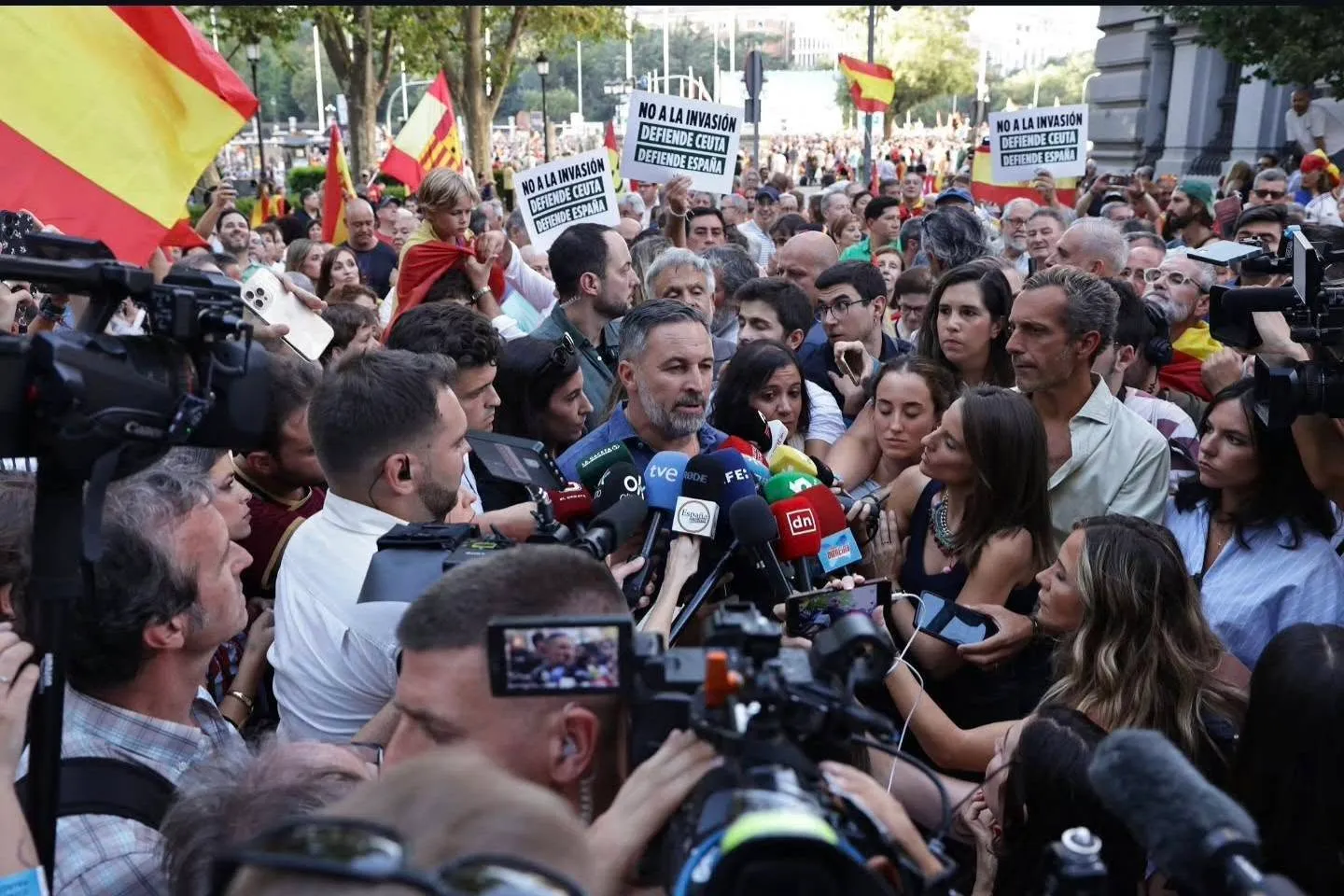
In the same poll, about 27% of Spaniards named Vox as the party best able to handle migration issues. Even some voters from the more moderate “People’s Party” believed that Abascal would be more effective on this issue than their own political party.
Moreover, this is already reflected in national polls. The “People’s Party” remains in first place with 31.6% support, while Sánchez’s Spanish Socialist Workers’ Party (PSOE) holds 27.4% and second place, while Vox has already risen to 18.4% and has become the only major party that is steadily gaining support.
Abascal’s party, of course, is unlikely to win an absolute majority, but without its participation, the more popular right-wing “People’s Party” may simply lack the votes needed to form a government.
Against this backdrop, Pedro Sánchez’s plan for early elections looks extremely risky. Not only could he lose to the right-wing “People’s Party,” but now Vox may also have the opportunity to determine just how far to the right the next Spanish government’s policies will go.
Scandals and corruption within the Socialist Party: Why is Pedro Sánchez calling for early elections?
If one looks solely at the polls, Pedro Sánchez’s decision to call early elections seems almost suicidal. His Socialists are trailing the People’s Party, and ultimately, this could lead to the formation of a right-wing government involving Vox. Moreover, in addition to the housing and migration crises, there is yet another problem that the prime minister will find much harder to blame on others’ mistakes: corruption scandals within his own party.
Police are conducting searches at the PSOE headquarters in Madrid / Photo – EPA
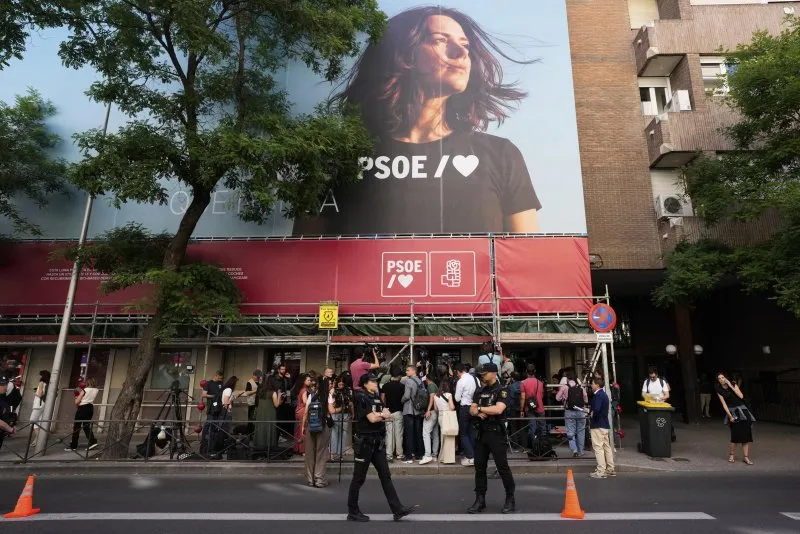
The most painful has been the so-called “Koldo case,” which began as an investigation into fraud involving the procurement of face masks during the COVID-19 pandemic but later escalated into a much larger scandal. In June, former Transportation Minister and one of the PSOE’s most influential officials, José Luis Ábalos, was sentenced to 24 years and 3 months in prison for forming a criminal organization, bribery, embezzlement, and trading in political influence.
His former advisor, Koldo García, received a sentence of nearly 20 years. In addition, a separate investigation within this case is looking into possible fraud involving government contracts, and another former organizational secretary of the Socialists – Santos Serdán – has been implicated.
Moreover, the problems have long since extended beyond the party itself and have reached the prime minister’s immediate family. Sánchez’s wife, Begonia Gómez, went on trial in September on charges of influence peddling and embezzlement of public funds. Meanwhile, the prime minister’s brother, David Sánchez, was barred from holding public office for nine years this summer due to irregularities during his employment in the province of Badajoz.
All of this compounds a long-standing problem for the current government: the lack of a majority in parliament. After the 2023 elections, Sánchez managed to retain power only thanks to a complex agreement with left-wing and regional parties, including the Catalan party Junts. It was precisely to secure their support that the Socialists agreed to a controversial amnesty for Catalan separatists.
However, the coalition that once allowed Sánchez to stay in power is now increasingly blocking his own decisions, and the failure of the housing decrees was merely the most obvious example.
Therefore, the idea of early elections makes a certain amount of sense for Sánchez, even despite the mountain of problems. After all, waiting until 2027 would mean many more months of dealing with a parliament that is virtually impossible to control, new details emerging in court cases, and the steady rise in Vox’s poll numbers. Instead, the prime minister decided to strike first and try to run a campaign centered on the housing issue, where responsibility can be shared with the opposition.
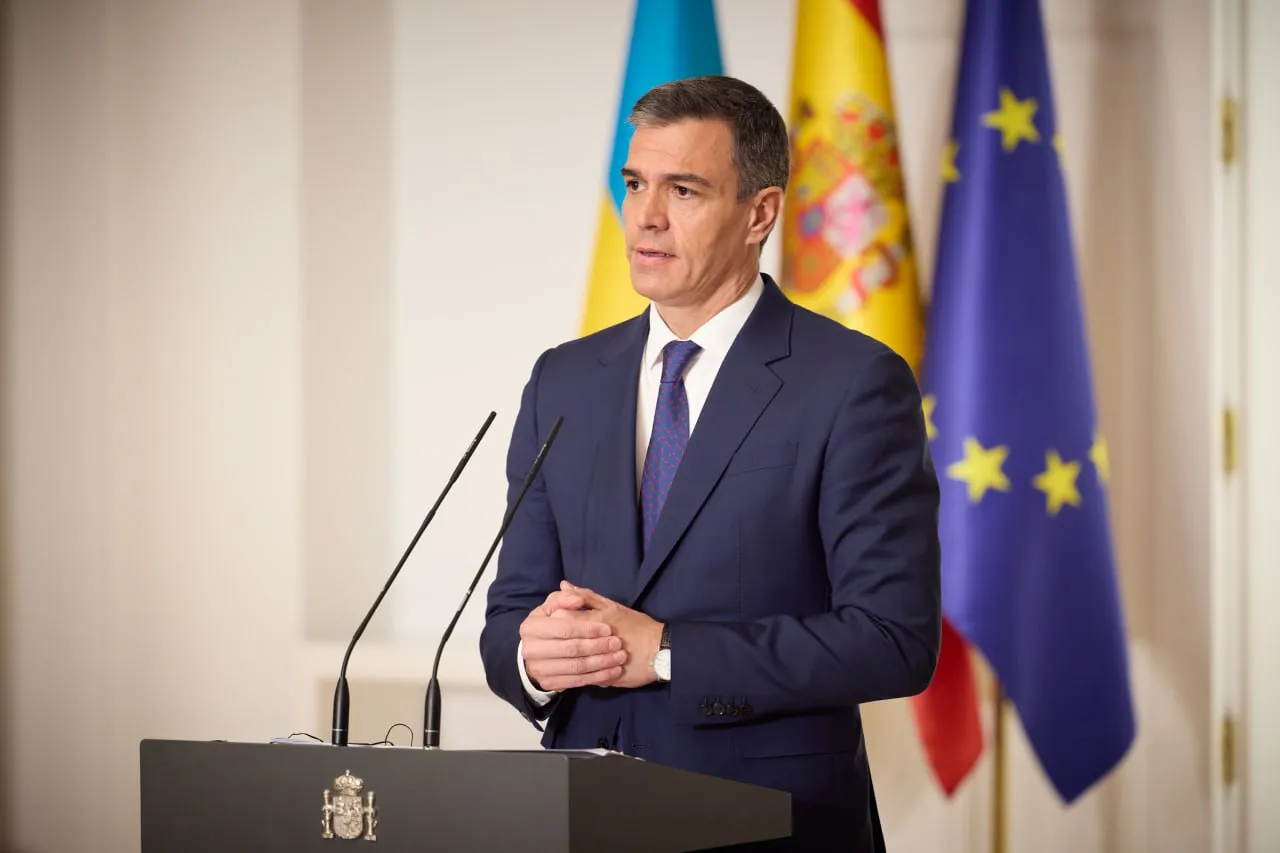
Spanish Prime Minister Pedro Sánchez / Photo – Office of the President of Ukraine
In his address announcing the dissolution of parliament, Sánchez framed the issue exactly this way for voters. According to the prime minister, the country needs a much broader “progressive majority” that will allow it to continue social reforms and overcome resistance from political and economic elites.
In effect, the Spanish prime minister is attempting to frame the election not as a judgment on his own performance over the past eight years, but as a choice between two models for Spain’s future.
On the one hand, there are the Socialists, who promise greater state intervention in the housing market and a continuation of the current course (though they have limited tools to do so due to EU regulations). On the other hand, there is the People’s Party, which will almost certainly have to negotiate with the increasingly powerful Vox to form a majority.
That is precisely why Sánchez is taking this risk now, as he needs Spaniards to vote in November not so much for him personally as against the possibility of seeing far-right figures in ministerial positions.

Pedro Sánchez faces numerous challenges / Photo – Office of the President of Ukraine
The only question is whether Spanish voters truly see the far right’s rise to power as such a serious threat, or whether the bigger problem right now is the endless crises and scandals associated with the Socialists led by Pedro Sánchez.