


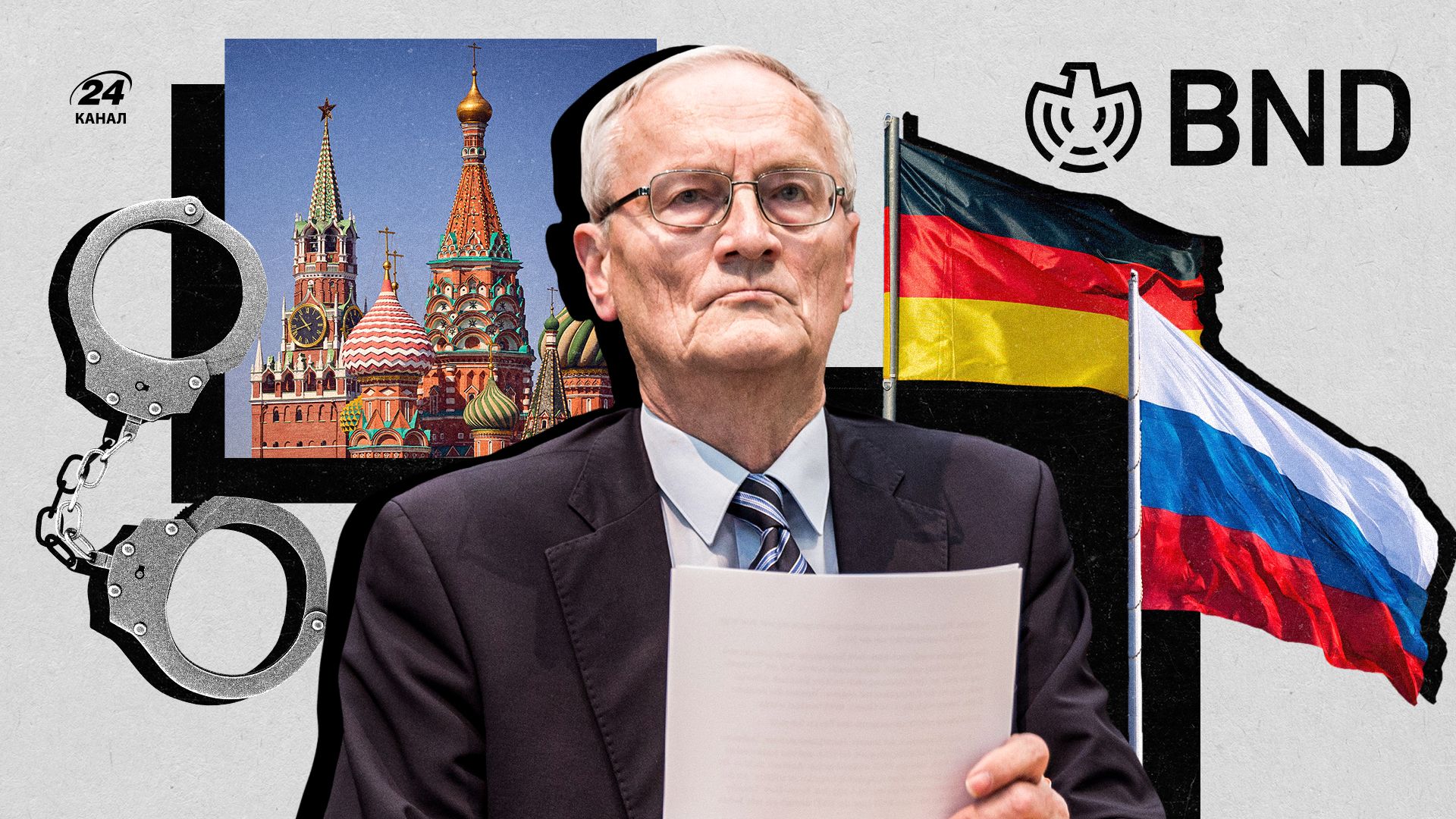


On October 5, Martin Jäger, the current head of Germany’s Federal Intelligence Service (BND), warned members of the Bundestag that Europe is already effectively in a state of “shadow war” with Russia, and that Moscow is testing the West’s resilience through sabotage, cyberattacks, and espionage operations. According to him, Germany, in particular, has become one of the main targets of Russian hybrid attacks.
Less than a day later, German intelligence agencies tracked down a spy much closer to home. On the morning of October 6, law enforcement officials detained 80-year-old August Hanning – a man who had headed the BND for seven years and later served as one of the highest-ranking officials in the German Ministry of the Interior. Now the prosecutor’s office suspects him of espionage, illegal acquisition of state secrets, and attempted treason.
Channel 24 analyzed what makes the Hanning case interesting, why his arrest occurred precisely at a time when Berlin is trying to restructure its own intelligence services to adapt to a new reality, and to what extent is Germany prepared to wage a new intelligence war, given that it has, in some cases, failed to notice old problems right under its own nose for years?
From Intelligence Chief to Traitor: How and to Whom Did the Former Head of Germany’s BND Leak Classified Information?
The story of August Hanning alone would make for a decent spy novel. He spent most of his professional life surrounded by state secrets, and today investigators are trying to determine to whom and for what purpose he might have passed on those secrets after his career ended.
Hanning rose gradually to the top of German intelligence. A lawyer by training, he worked in the federal government and, even before the fall of the Berlin Wall, served at the West German mission in East Germany.
In the 1990s, Herr August moved to the Chancellor’s Office, where he coordinated the work of the German intelligence services, and in late 1998, he eventually became head of the BND. As a reminder, Gerhard Schröder – now known as a personal friend of Putin and a business partner of the Russians in schemes to circumvent sanctions and "seize" assets – became Chancellor of Germany at that time.
August Hanning’s tenure coincided with a sort of transitional period. The Cold War had already ended, and Russia was gradually transforming from an adversary into a partner for the West. Later, following the September 11, 2001, terrorist attacks in the U.S., international terrorism became the main threat to Western intelligence agencies, and cooperation between once-hostile intelligence services ceased to be anything out of the ordinary.
August Hanning / Photo – zdfheute.de

In fact, Hanning himself was one of those who established these contacts with Russian security forces. As early as March 2000, he even traveled to Chechnya, where Putin had just launched a new war against Ichkeria. The German did not travel alone but was accompanied by FSB officers. Officially, this trip took place within the framework of “cooperation in the fight against terrorism.”
After seven years at the helm of the BND, Hanning moved to the Ministry of the Interior, where he served as state secretary until 2009 ( Angela Merkel was already chancellor at the time), after which he ended his career as a civil servant.
But it seems that Hanning grew bored in retirement, so after leaving public service, he decided to capitalize on his past achievements and connections. This is where the criminal aspect of this story begins.
According to the German Federal Prosecutor’s Office, in the spring of 2010, Hanning made contact with a former colleague – a certain “Manfred D.” (In Germany, it is customary to refer to suspects by their first name and the first letter of their last name; this is usually the real information of an actual person). This colleague continued to work at the BND, and Hanning arranged with him to regularly receive internal agency documents in exchange for money. By June 2022, about two thousand such documents had accumulated, including materials used to prepare regular intelligence briefings for the country’s top leadership.
Investigators suspect that Hanning had already used at least some of this information in his private “retiree” business. In one instance, he allegedly prepared an analytical report for an employee of a foreign intelligence service, and for years exchanged internal political information with a representative of yet another country.
However, the prosecutor’s office has not disclosed which specific countries’ representatives Hanning collaborated with, so for now, one can only speculate. The media have mentioned the Azerbaijani intelligence services, with which Hanning allegedly collaborated, but Azerbaijan officially denies any involvement – though no one asked it to do so.
The problem is that Russia played a particularly significant role in Hanning’s career after his resignation. He worked as a consultant for the British firm G3, where he was specifically responsible for Russia and the states of the former Soviet Union, while companies associated with him were engaged in market analysis in China, Russia, and other countries.
The Insider found that between 2015 and 2019 alone, the former head of the BND visited Russia at least seven times. Moreover, some of these trips were suspiciously short. For example, in July 2016, Hanning flew into Moscow in the evening and flew back to Berlin the very next day. A similar visit took place in May 2019. It is currently unknown what exactly he was doing during these trips (perhaps it was just a culinary tour to sample chebureki and posikunchiki), nor is it clear how they relate to the treason case.
Police officers near August Hanning’s home / Photo – AP
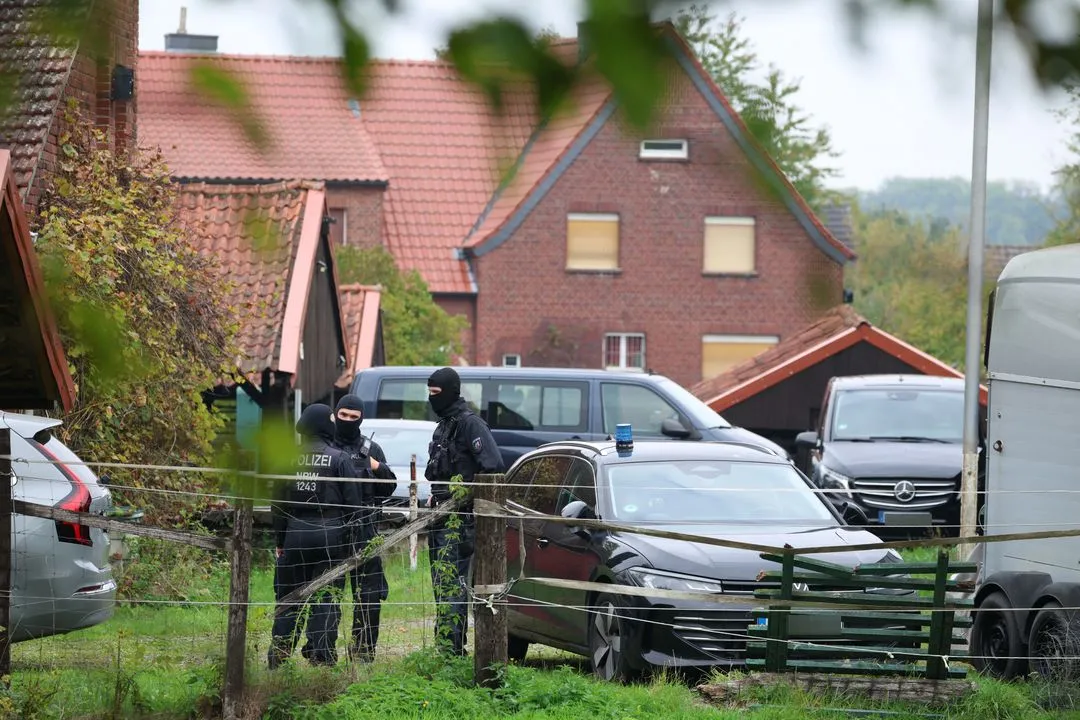
It’s quite ironic that it was not the BND’s own counterintelligence that uncovered all of this. In September 2025, Hanning’s home was searched as part of a completely different investigation – the high-profile case involving the abduction of the children of German businesswoman Christina Block.
Hanning himself and a former Hamburg police officer were suspected of having their private security firm accept a contract from Block to abduct her children in 2022, as the woman was in a custody dispute with her ex-husband.
In fact, it was then that investigators accidentally (!) stumbled upon approximately two thousand German intelligence documents that the former head of the service simply should not have had in his possession. In fact, one of the biggest espionage scandals in modern Germany was uncovered by a stroke of luck, and therein lies the problem – one that is far broader than the activities of a single traitor.
German intelligence is going through dark times: why the BND fails to detect traitors in its own ranks
In reality, it is not so much August Hanning as German intelligence itself that is taking the hardest hit in this whole affair. The problem becomes clear when we take a closer look at the second suspect – Manfred D. After Hanning’s resignation, he continued to work at the BND under subsequent directors and remained there until the spring of 2026.
In other words, if the investigators’ theory is correct, for years a person with access to extremely sensitive information was able to remove it from the agency right under the nose of his own security service. Moreover, the documents included not only German secrets but also information obtained from the intelligence agencies of partner nations.
And this is far from the first such scandal for the BND. In late 2022, law enforcement officials arrested a high-ranking intelligence officer, Karsten L., who was accused of passing classified information to Russia. He had access to top-secret materials and a diplomatic passport, and had successfully passed all necessary security clearances for many years, even though military counterintelligence had previously investigated him on suspicion of right-wing extremism.
But the problems facing German intelligence were not limited to hunting for spies within its own ranks. The BND was criticized for underestimating the speed of the Taliban’s takeover of Afghanistan in 2021, and at the start of the Russian invasion of Ukraine, the agency’s then-director, Bruno Kahl, was actually in Kyiv and was forced to flee the country in a hurry after the first strikes. A year later, the agency faced another round of criticism when, unlike some of its partners, it failed to learn in advance about Yevgeny Prigozhin's mutiny.
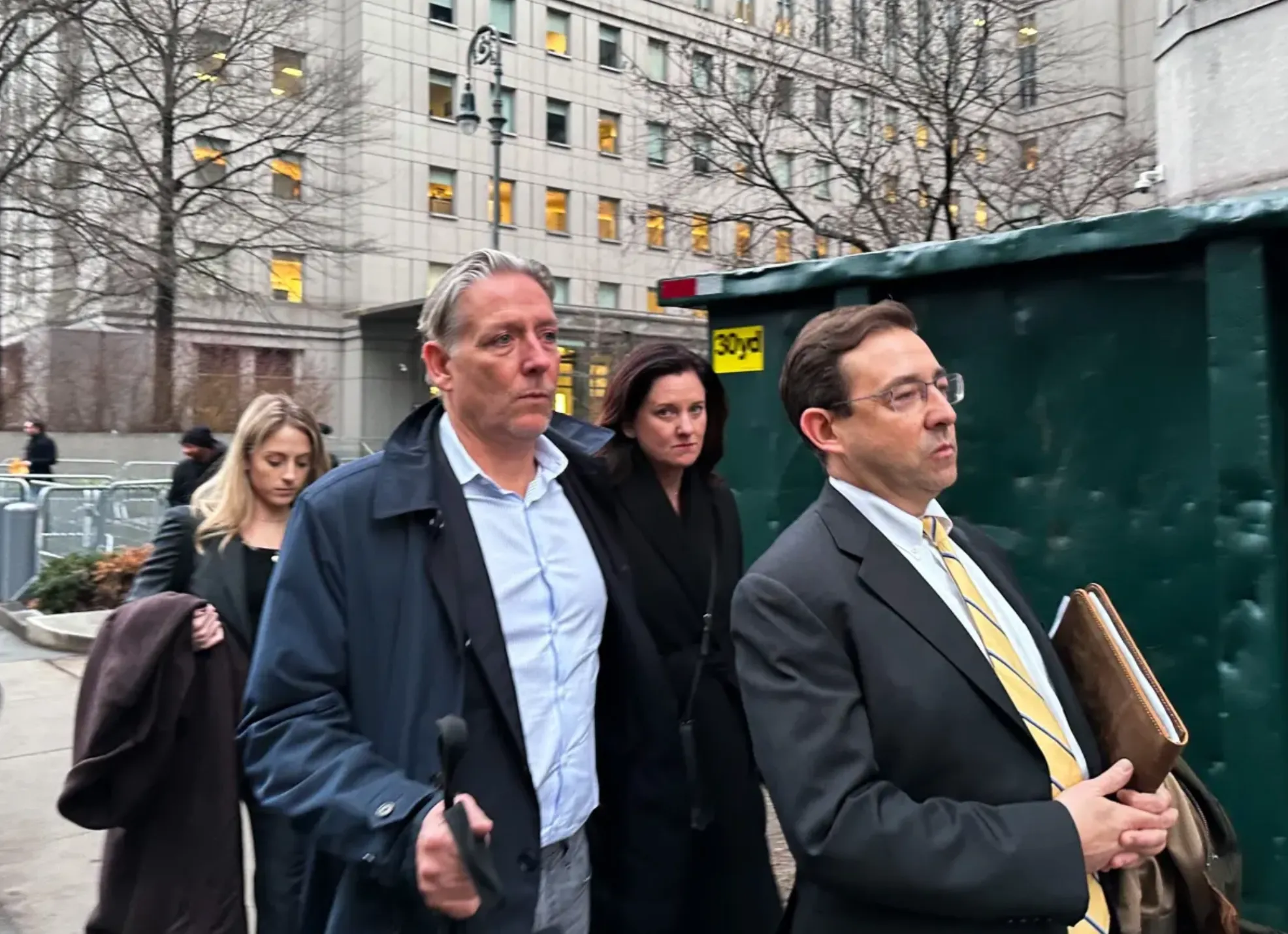
However, the problem of former intelligence officers who decide to monetize their old connections is not unique to Germany. One of the most high-profile examples in the U.S. involved Charles McGonigal, the former head of the FBI’s counterintelligence division in New York. After leaving the service, he began working for the sanctioned Russian oligarch Oleg Deripaska, even though he had previously investigated the activities of Russian elites himself. Ultimately, in 2023, a U.S. court sentenced him to 50 months in prison.
Charles McGonigal outside a courthouse in New York / Photo – NY Daily News
In Germany’s case, all these stories paint a rather uncomfortable picture. For years, the BND has been criticized for being overly cautious and lacking capabilities, but now Berlin is preparing to give its intelligence services a free hand. And the Hanning case has served as a very untimely reminder that, before allowing the intelligence service to hunt down foreign secrets more effectively, it would be wise to learn how to better protect its own.
On the Threshold of a New Era: How Russian Aggression Is Forcing Germany to Strengthen Its Intelligence Services
What adds a certain irony to the situation is that it was August Hanning himself who once called the BND “the vegetarian among intelligence agencies.” German intelligence has traditionally had far fewer capabilities for active operations than, for example, the American CIA, the British MI6, or the Israeli Mossad.
The reasons for this approach are quite clear: following the experience of the Nazi dictatorship, the German state spent decades trying to impose the strictest possible limits on the activities of its own security agencies.
However, it appears that the era of “vegetarianism” is gradually coming to an end. In August, Friedrich Merz’s government approved the largest reform of intelligence legislation in the history of the Federal Republic of Germany, and by the end of September, the bill had already passed its first reading in the Bundestag. The government explicitly cites the need for these changes due to ongoing sabotage, cyberattacks, and other hybrid threats – against which German intelligence simply lacks sufficient authority to defend the country.
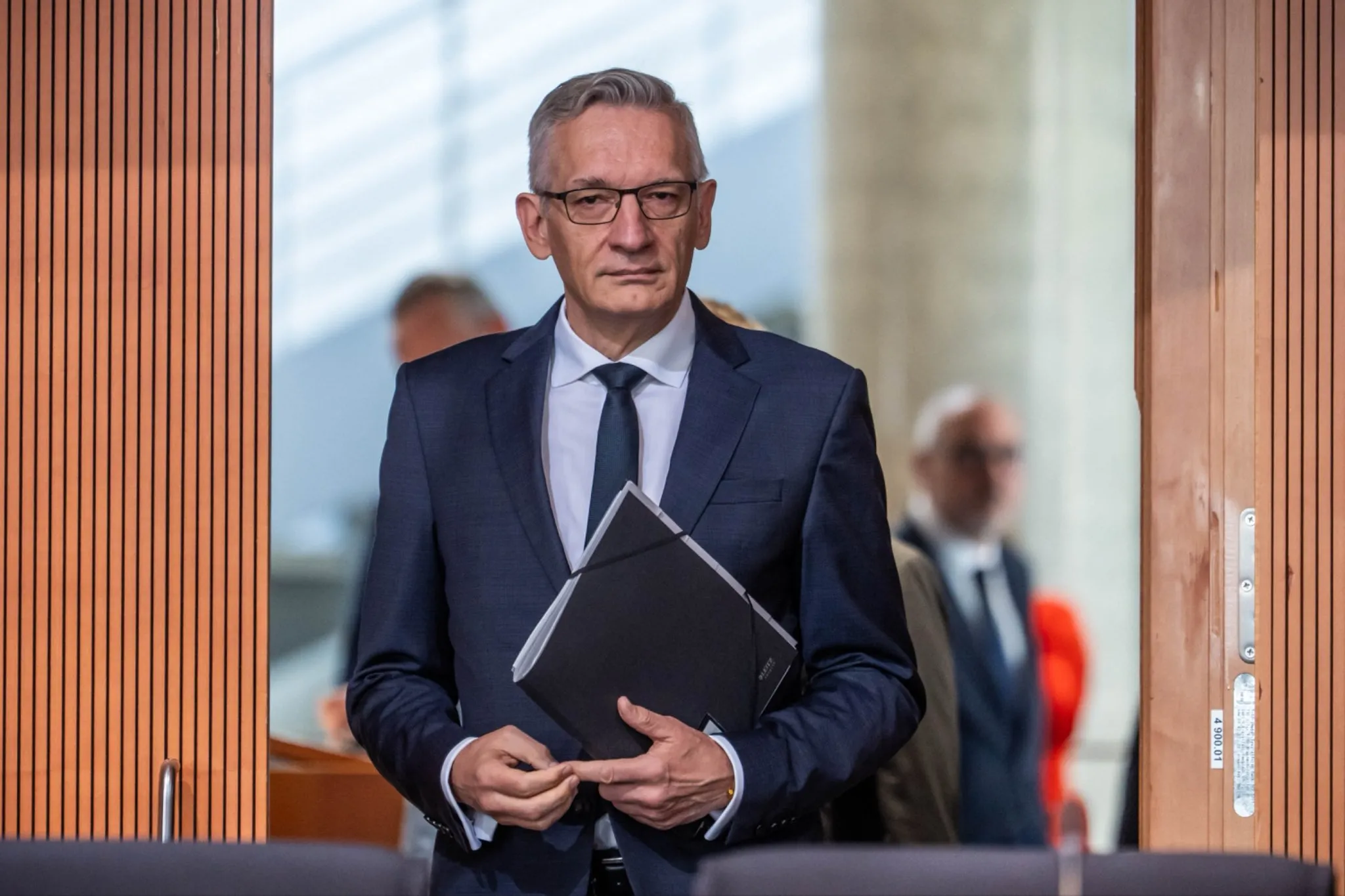
Head of German Intelligence Martin Jäger / Photo – X GermanyNATO
If the reform is adopted in its current form, the BND will be able not only to gather information on threats but also, in exceptional cases, to actively counter them. The agency will be allowed to make broader use of modern technologies for analyzing information, retain some intercepted data for longer periods, and effectively take preemptive action. In return, the government promises to strengthen independent and parliamentary oversight of the intelligence services themselves.
In other words, Berlin is attempting to shift its intelligence services from an observer role to that of an active player. And it is Russia that has become one of the key catalysts for such transformations. The European Union has already openly accused Russian intelligence services of conducting hybrid attacks over many years. Just last July, the EU imposed new sanctions against Russians and affiliated entities for their involvement in such operations.
That is precisely why the statements by the heads of German intelligence agencies bear little resemblance to the cautious rhetoric of past years. At a hearing in the Bundestag on October 5, 2026, the BND called Russia the most dangerous adversary for Germany, and the head of the Federal Office for the Protection of the Constitution, Sinan Zelen, noted that the threats the military predicts for the end of the decade have already become a reality today in the “shadow world” of intelligence agencies.
In this sense, the Hanning case seems symbolic. Germany is forced to learn how to wage intelligence warfare in conditions where the line between a nominal peace and open confrontation is becoming increasingly blurred, and Russia is now resorting – not even to acts of sabotage – but to actions on German soil that would certainly have been called "acts of war" in the past. However, by giving the intelligence services more leeway, Berlin will simultaneously have to learn to exercise much better control over their operations, since periodic information leaks still occur directly through the agency’s own central channels.