
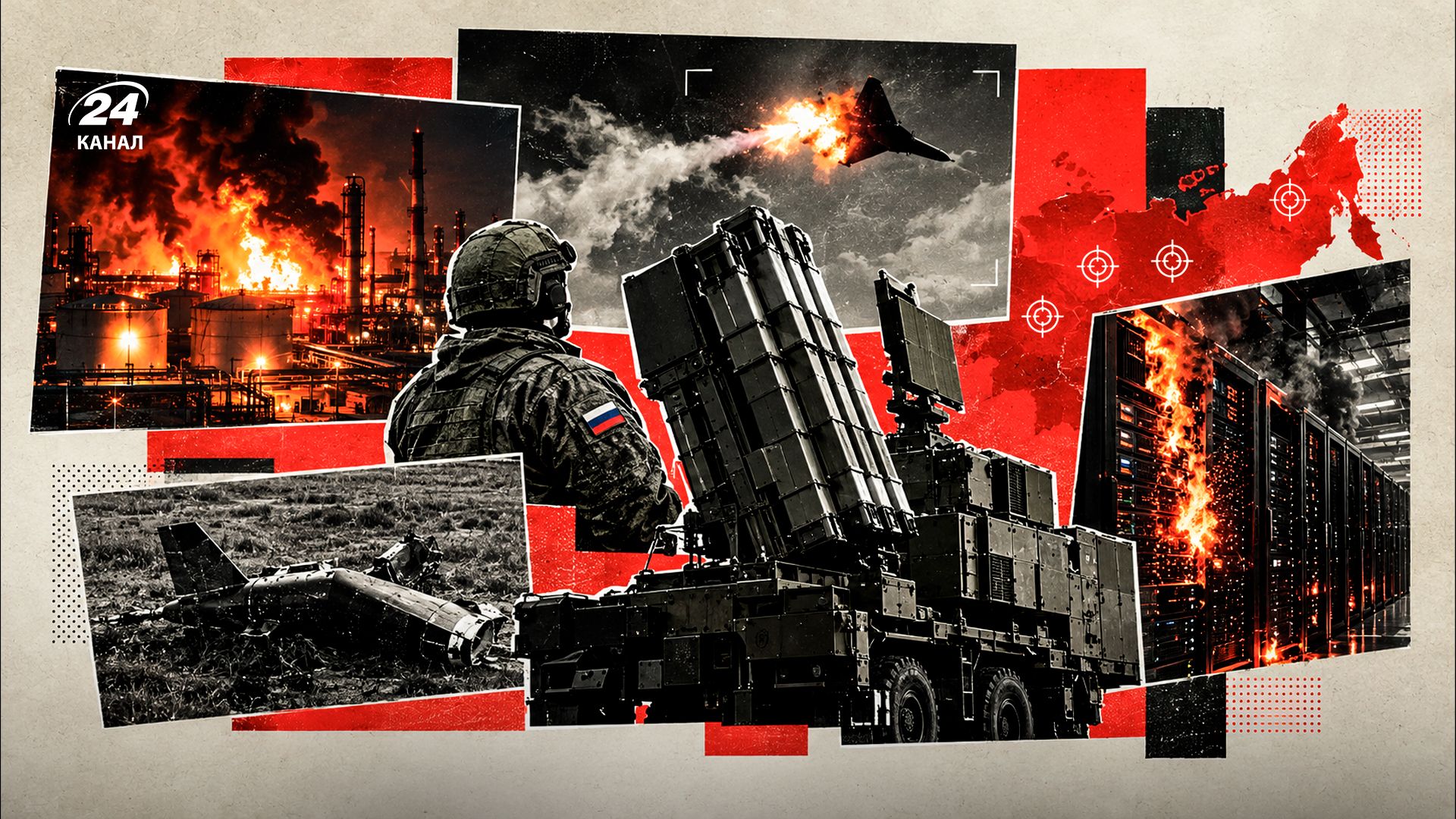


Ukraine is expanding its campaign of strikes against Russian infrastructure, targeting not only oil refineries but also data centers on which Russia’s digital services, businesses, and government systems depend. At the same time, the resumption of strikes on oil refineries and the targeting of facilities thousands of kilometers from the Ukrainian border demonstrate that Russia’s rear remains vulnerable.
Military analyst Yan Matveev explained to Channel 24 why data centers could become strategically important targets, how their destruction affects the Russian economy and military infrastructure, and why restoring such facilities is significantly more difficult than restoring ordinary warehouses. He also analyzed the significance of the new strikes on Russian oil refineries and the ability of Ukrainian long-range drones to cover great distances despite Russian air defenses.
Digital Vulnerability: Why Data Centers Are More Important Than Warehouses
Ukraine has opened a new front in the war against Russia by launching a campaign of strikes against Russian data centers. The first major target was Yandex's data centerin the city of Sasovo, Ryazan Oblast, located on the grounds of the sanctioned “Sasta” plant.
This attack demonstrated that hostilities have escalated to a new level, where not only the enemy’s physical resources but also the very mechanisms governing the state and the economy have become vulnerable.
Important! As a result of a drone attack in Russia’s Kaluga Region, a Yandex infrastructure facility was damaged. This is expected to cause temporary disruptions in online services, as the server equipment was damaged. Recently,This is the company's second data center has also been hit by similar strikes.
The strike on Yandex’s infrastructure has already led to serious disruptions in the operation of Russian corporate systems. Users of Yandex.Cloud and Yandex.Pay, as well as clients of major financial institutions – including T-Bank, where corporate messaging and email systems were paralyzed – experienced access issues. The disruptions affected the Wildberries and Ozon marketplaces as well as the websites of major real estate developers.
However, the main threat to Russia lies not in the temporary inconveniences faced by civilian users. As military analyst Yan Matveev explains, a data center is fundamentally different from a typical logistics hub.
While goods from a destroyed warehouse can be temporarily loaded onto trucks or transported to another facility, a data center is a complex industrial electronics complex. If it is destroyed, the servers and storage systems are completely burned out, and the facility must be rebuilt from scratch.
Yandex’s infrastructure is deeply integrated into the Russian state system. The company acts as a monopoly in Russia’s data processing market, providing server capacity not only to private businesses but also to government agencies.
Due to a chronic shortage of their own resources and corruption, Russian law enforcement and government agencies often outsource data processing to large IT companies. Consequently, the destruction of such facilities poses a direct threat to communications and the management of military technologies. There are even unconfirmed reports that certain data centers are involved in supporting the operation of Russian nuclear power plants.
End of the Pause: Resumption of Strikes on the Oil Refining Industry
In parallel with the opening of the “digital front,” the Armed Forces of Ukraine have resumed large-scale attacks on Russian oil refineries after a prolonged pause. The new targets include Gazprom’s refinery in Salavat (Bashkortostan), with a refining capacity of over seven million metric tons per year, as well as theOmsk Oil Refinery – the largest oil refining complex in Russia.
The reasons for the previous pause in attacks on oil refineries remain a subject of debate. It could have been either a political decision in light of statements by Western partners or a technological necessity – the time needed to upgrade the drone fleet and accumulate a sufficient number of drones to confidently breach the enemy’s defenses.
However, the key factor in the resumption of attacks was the absence of any symmetrical response from the Kremlin. Russia has not ceased its terror campaign against Ukrainian cities, continuing daily strikes on civilian infrastructure, energy facilities, and residential buildings in Kyiv, Pryluky, Kremenchuk, and other cities. Consequently, Ukraine lifted any unspoken restrictions and continued to destroy the enemy’s economic potential.
The Illusion of Protection: How Drones Travel 3,000 Kilometers
The strike on the Omsk Oil Refinery, located nearly 3,000 kilometers from the Ukrainian border, served as a telling indicator of the state of Russia’s air defense. The drone, traveling at a cruising speed of 100–150 kilometers per hour, remained in Russian airspace for many hours.
Despite the presence of radars, fighter jets, and combat helicopters, the Russian military proved unable to detect and intercept the target at such a great distance. This demonstrates the absolute vulnerability of strategic targets deep within Russia’s rear.
Against this backdrop, statements by the Russian Ministry of Defense about the alleged interception of 1,750 Ukrainian drones and 17 “Flamingo” cruise missiles appear to be an attempt to conceal its own helplessness.
For months, Russian propaganda has reported the destruction of Ukrainian drone assembly workshops, passing off attacks on ordinary residential yards as the elimination of military factories. However, reality tells a different story: Ukrainian production of long-range weapons has not only continued but has actually expanded, enabling comprehensive operations to destroy both the aggressor’s oil and digital infrastructure.
Military analyst on new serious challenges for Russia: watch the video