
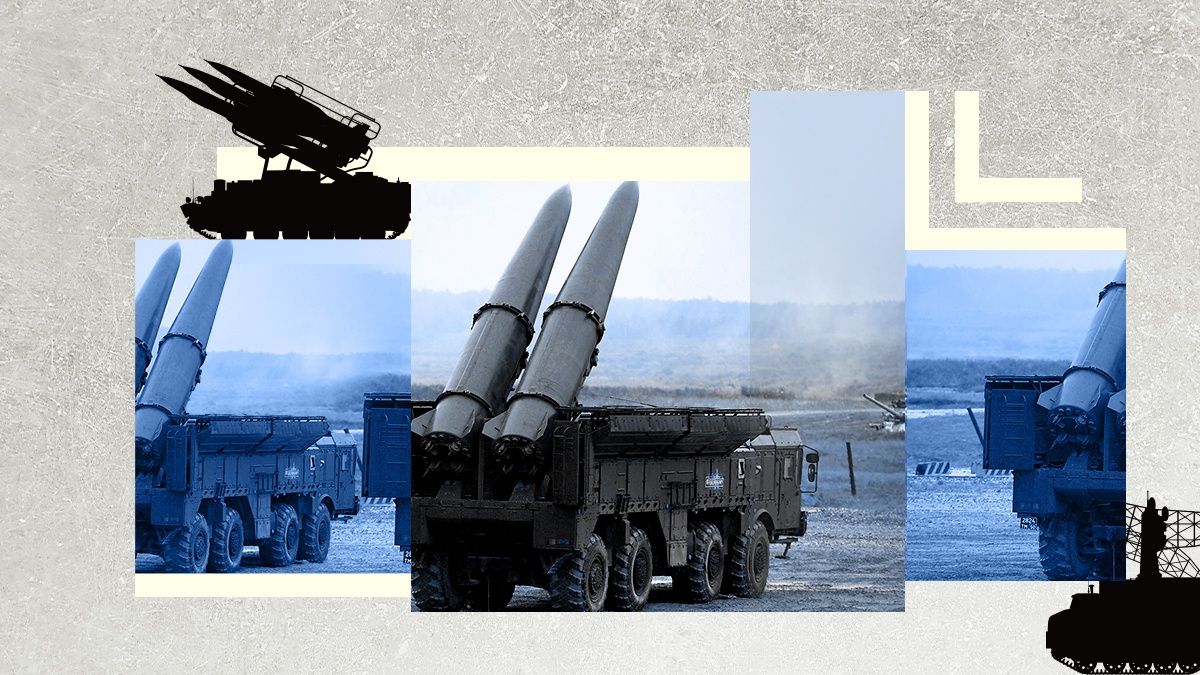


To launch missile strikes against Ukraine, the Russians are deploying nearly their entire arsenal: cruise, ballistic, and aeroballistic missiles, whether land- or sea-based, and so on. Among them are ballistic missiles from the Iskander-M operational-tactical missile system and cruise missiles from the Iskander-K system.
In July 2026, the "Iskander-M" missiles were once again in the spotlight. Russia brought them to Belarus during so-called nuclear exercises.
At that time, the occupiers claimed that they were indeed handling nuclear warheads. Whether this was a bluff or not remains unknown, but the Russians’ plan is clear: to intimidate and draw attention to themselves.
For more on what these missiles are and how Ukraine’s air defense can counter them, read the report by Channel 24.
See also Nuclear "Iskander" Missiles in Belarus: What Are Putin and Lukashenko Up To, and What Is the Threat Posed by These Missiles?
Recent "Iskander" attacks on Ukraine
- On the night of July 2, the Russians launched 24 Iskander-M/S-400 ballistic missiles from the Bryansk and Kursk regions. The Air Force shot down 4 of them. The main target of the attack was Kyiv.
- On the night of June 15, during a massive attack, the Russians launched 34 Iskander-M/S-400 ballistic missiles from the Kursk and Bryansk regions. Most of them targeted Kyiv and the surrounding region. Air defense forces intercepted a total of 15 such missiles.
- On the night of June 2, 2026, the enemy struck Ukraine with Iskander-M missiles. The Ukrainian Air Force recorded 33 missiles launched by Russia from the Bryansk, Kursk, and Rostov regions, as well as from the temporarily occupied territory of Crimea. Air defense forces managed to shoot down 11 of them.
- On the night of March 24, 2026, air defense forces were able to shoot down 18 Kh-101 cruise missiles and 5 "Iskander-K" cruise missiles – that is, all of the cruise missiles launched at Ukraine. However, none of the 7 Iskander-M/S-400 ballistic missiles were shot down.
- On the night of February 3, 2026, after the end of the so-called "energy ceasefire," the Russians launched a massive strike on the energy sector, specifically, they deployed 32 Iskander-M/S-300 ballistic missiles and 28 Iskander-K/Kh-101 cruise missiles. Air defense forces destroyed 11 ballistic missiles and 20 cruise missiles.
- On the night of January 20, the enemy used 18 Iskander-M/S-300 ballistic missiles to attack Ukraine. The main targets of the attacks were Kyiv and the Kyiv region. The launches were carried out from the Bryansk and Rostov regions. Air defense forces managed to intercept 14 missiles.
- On the night of November 14, 2025, the Russians deployed 6 cruise missiles, including "Iskander-K" missiles, launched from occupied Crimea. These missiles were destroyed by air defense forces. The Russians also launched 9 "Iskander-M"/KN-23 ballistic missiles from the Bryansk region. Six missiles were successfully shot down.
- For the attack on October 25, Russian forces used nine Iskander-M ballistic missiles from the Rostov and Kursk regions. According to the Air Force, four ballistic missiles were shot down.
- During a combined attack on September 10, 2025, the Russians launched one ballistic missile. It was likely an "Iskander-M" or KN-23, launched from the Voronezh region.
- On the night of August 30, Russian forces launched eight "Iskander-M"/KN-23 ballistic missiles from the Rostov region and the Krasnodar Krai. In addition, the enemy used "Iskander-K" missiles.
- On the morning of August 18, the Russians struck Zaporizhzhia twice – presumably with "Iskander" missiles from Crimea.
- On the night of June 22, the Russians attacked Ukraine with two Iskander-M/KN-23 ballistic missiles from the Voronezh and Rostov regions.
- On the night of June 21, Russia attacked Kremenchuk with "Iskander-K" missiles from the Belgorod region.
- On the night of May 25, the Russians attacked Ukraine, firing nine Iskander-M/KN-23 ballistic missiles. The enemy launched the missiles from the Kursk region of Russia.
- On the night of May 24, the enemy struck Ukraine with 14 "Iskander-M/KN-23" ballistic missiles launched from the Taganrog, Yeysk, Bryansk, and Crimea regions. The missiles struck Kyiv, Dnipropetrovsk, Odesa, and Zaporizhzhia regions. Six Iskander missiles were successfully intercepted.
- On May 3, Russian forces launched an attack using two Iskander-M ballistic missiles. The enemy launched the missiles from the Rostov region of Russia and Crimea.
- On April 24, during a combined missile and drone attack, the Russians deployed 11 "Iskander-M"/KN-23 ballistic missiles, which were launched from the Bryansk, Voronezh, and Kursk regions of Russia. Air defense forces intercepted 7 ballistic missiles. In addition, the Russians launched 6 "Iskander-K" cruise missiles from the Donetsk region. Unfortunately, they could not be intercepted.
- On April 18, according to preliminary reports, Kharkiv was struck by three "Iskander" missiles. One of them exploded in the air right outside the windows of a 16-story residential building in the Osnovyanskyi district. Ihor Terekhov reported that the strikes were carried out by ballistic missiles equipped with cluster warheads.
- On April 13, the Russians launched two "Iskander-M"/KN-23 ballistic missiles. The enemy killed 35 people in that attack. On April 6, the enemy launched six "Iskander-M" ballistic missiles from the Bryansk region. Air defense shot down one of them.
- On the evening of April 4, Russian forces struck Kryvyi Rih with an "Iskander" cluster missile. Russia killed 21 people, including 9 children. 75 people were wounded. On March 1, the Russian army launched an "Iskander" strike on the "Novomoskovsk" training ground in the Dnipropetrovsk region. The General Staff of the Armed Forces of Ukraine officially confirmed that there were fatalities and injuries as a result of the strike.
- On the night of February 12, Russian troops launched a missile attack on Kyiv. In the Obolon district, one person was killed and four others were injured as a result of the attack. Among the injured was a 9-year-old girl. Two office buildings were severely damaged; a fire broke out in one of them, spreading from the 7th floor down to the 1st floor.
- Around 9:00 p.m. on February 11, Russian missiles struck Kryvyi Rih. Ten apartment buildings and private homes were hit, as well as educational institutions, business facilities, a hotel, a gas station, and about 30 cars. There were no injuries or fatalities.
- On the morning of February 4, Russian forces fired an Iskander-M missile from Izyum in the Kharkiv region. Five people were killed, and 50 others sustained injuries of varying severity, including children.
- On the evening of January 31, the Russians attacked Odesa with three "Iskander-M" ballistic missiles, causing destruction and leaving at least seven people injured. In total, Russia launched seven Iskander-M/KN-23 ballistic missiles and seven Iskander-K cruise missiles that day.
- On the morning of January 18, Russian forces may have struck Kyiv and Zaporizhzhia with four Iskander-M ballistic missiles. Two enemy aerial targets were shot down.
- On the night of February 22, the occupiers launched two "Iskander-K" cruise missiles from the Kursk region at peaceful Ukrainian cities. The Ukrainian Air Force reported the successful interception of both enemy targets.
Differences Between the "Iskander-K" and "Iskander-M"
The use of "Iskander" operational-tactical missile systems (OTRS) allows for simultaneous strikes with both ""Iskander-K" " and "Iskander-M" missiles. However, the Russians typically specialize and use separate launchers for different types of missiles.
The fundamental difference between the "Iskander-K" and "Iskander-M" is as follows: the "Iskander-K" is a cruise missile, while the "Iskander-M" is a ballistic missile. Accordingly, the variants of the "Iskander" system are designated "K" and "M."
There is also an "E" variant. This is the export version of the "Iskander-M," in which the missile’s range is limited to 280 kilometers.

"Iskander-M" tactical missile system with ballistic missiles / photo – Russian Ministry of Defense
To better understand the differences between the missiles, it is worth citing an explanation provided by Yuriy Ignat, a former spokesperson for the Ukrainian Air Force.
According to him, the "Iskander-K" is the ground-based counterpart to the Russian "Kalibr" missile. At the same time, "Iskander-K" is a general name; the missiles for this system have their own designations – R-500, 9M728, or 9M729.
In contrast, the "Iskander-M" launches ballistic missiles that ascend nearly to the stratosphere, from where they return at high speed.

Photo of the"Iskander-K" OTRK (launcher) firing cruise missiles / Photo: Russian Ministry of Defense
What do these two missiles have in common? As Ignat explained, their warheads weigh about 500 kilograms, just like the "Kinzhal," and their strike range is 500–600 kilometers. If they hit their target, these missiles cause damage within a 60-meter radius.
"Iskander-K" or "Iskander-M": Which Missile Is Harder to Shoot Down
Both missiles carry a large warhead. Their threat can be assessed by considering which missile is harder to shoot down.
The "Iskander-K" missile is not hypersonic, meaning it travels at a speed slower than the speed of sound. It was the "Iskander-K" that the Russians used during their attack on Mykolaiv on April 27, 2023.
At that time, Yuriy Ignat emphasized that such missiles were being shot down by our air defense systems. At the same time, the difficulty in shooting down the missile lies in the fact that it flies very low. Consequently, it is difficult to detect and ultimately shoot down.
In addition, the "Iskander-M" has improved speed characteristics compared to the previous "Iskander-K" version. Although exact data on the Iskander-M’s speed has not been disclosed, a number of sources and experts believe it is hypersonic.
The Iskander-M features an improved guidance system, which allows for more precise targeting and ensures high strike accuracy. The Iskander-M also has greater maneuverability and the ability to evade air defense systems.
In contrast, Ukraine has more options for shooting down "Iskander-K" missiles. Not only aircraft but even "Igla" or "Stinger" man-portable air defense systems (MANPADS) can be effective against the "Iskander-K."
Technical specifications of the "Iskander-K":
- Type – tactical ballistic missile system;
- missiles – R-500, 9M728, or 9M729 (these are cruise missiles);
- manufacturer – Novator Design Bureau, Yekaterinburg (Russia);
- range – up to 500 kilometers;
- warhead weight of the Iskander-K – 450–500 kilograms.
The Russians also have another type of missile for the Iskander-K tactical missile system. These are the 9M729 missiles, based on the "Kalibr" design. Their maximum range is stated as 2,500 kilometers.
"Iskander-K" Is in Short Supply: Why Russia Rarely Uses This Missile
The military portal Defense Express clarifies that "Iskander-K" is a general term for cruise missiles that the Russians can use as part of the "Iskander" tactical missile system. These include the 9M728 (also known as the R-500) and 9M729 missiles.
Interestingly, as of February 23, 2022, according to the portal, the Russian military had only 100 missiles of both types – the 9M728 and 9M729 – in stock. During the first 10 months of the full-scale invasion, the Russian defense industry was able to produce only 20 missiles of both types, at an average rate of two cruise missiles per month. The Russians are replenishing their stockpiles of the " "Daggers" " at roughly the same rate.
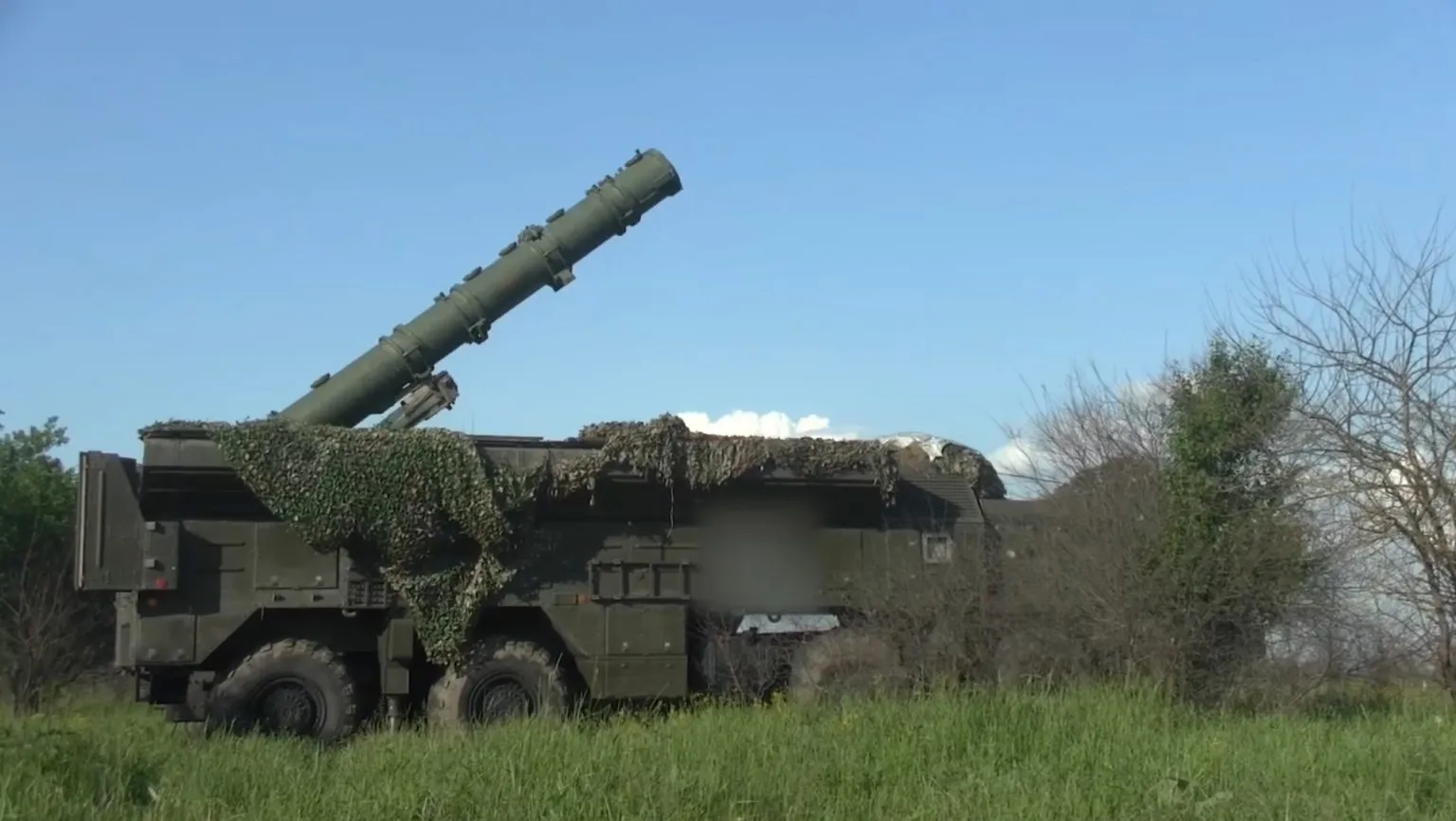
"Iskander-K" tactical missile system firing at Ukraine, 2024 / Screenshot from a video by the Russian Ministry of Defense
Defense Express believes that Russia’s inability to quickly replenish its missile stockpiles was the reason why the occupiers rarely used the "Iskander-K" to strike Ukraine.
However, the situation subsequently changed. Russia has poured significant resources into restoring its missile capabilities in order to continue its terror campaign against Ukraine.
"Iskander-K" video of the OTRK deployment:
According to the Main Intelligence Directorate (GUR), by 2026 Russia will be capable of producing approximately 60 "Iskander-M" missiles and 10 "Iskander-K" missiles per month. This allows them to maintain a certain intensity of attacks but does not enable the occupiers to build up a large strategic reserve.
As of April 2026, Russia has up to 200 Iskander-M ballistic missiles and no more than 110 Iskander-K cruise missiles in stock.
There are only a few minutes to take cover: why it’s important to be in a shelter during an "Iskander" attack
The enemy launches "Iskanders" from border regions (Belgorod, Voronezh, Rostov, Kursk, or Bryansk) or from the temporarily occupied Crimea.
Ballistic missiles travel at quite high speeds, so people have literally only minutes to take cover. Similarly, the Patriot air defense system has only a few minutes to detect and destroy the target.
That is precisely why the "Iskander-M" is much harder to destroy, as it flies much faster and follows a ballistic trajectory.
But even if the missile is destroyed, it doesn’t mean there’s no threat to civilians, since missile debris falls to the ground.
One such tragic incident occurred when debris fell in the Desnianskyi district of Kyiv in June 2023. Unfortunately, three people were killed then.
Consequences of the missile attack on Kyiv on June 1, 2023 / Photo by the State Emergency Service


According to local residents, debris from the "Iskander" fell 10 minutes after the air raid alert. The tragic consequences were likely also caused by the fact that The shelter was closed..
The danger posed by falling debris lies not only in the fact that pieces of the missile can cause injuries of varying severity or even destruction. There is also the issue of the missile’s warhead, which may not explode in the air after being shot down by air defense systems. This means there is a risk that the warhead could explode after the debris hits the ground.
Therefore, Debris poses a tremendous danger for the civilian population.
It was precisely missiles from the "Iskander-K" systems that Russia used in its attacks against the Ukrainian Cabinet of Ministers in central Kyiv during the attack on September 7, 2025.

Consequences of the Iskander-K missile strike on the government building in Kyiv / photo – State Emergency Service of Ukraine, collage – Office of Katarina Maternová, Head of the Delegation of the European Union to Ukraine
At that time, the missile caused a fire and once again drew the world’s attention to Russian terrorism.