


 2
2 More than four million Ukrainians have been granted temporary protection status in the EU – an emergency measure that served as a lifeline during the first weeks of the full-scale war. However, what began as a short sprint has turned into a protracted marathon.
Another harsh winter lies ahead, and Europe is once again preparing to receive new waves of refugees. But even in safety, thousands of Ukrainians find themselves trapped in a “life on hold.”
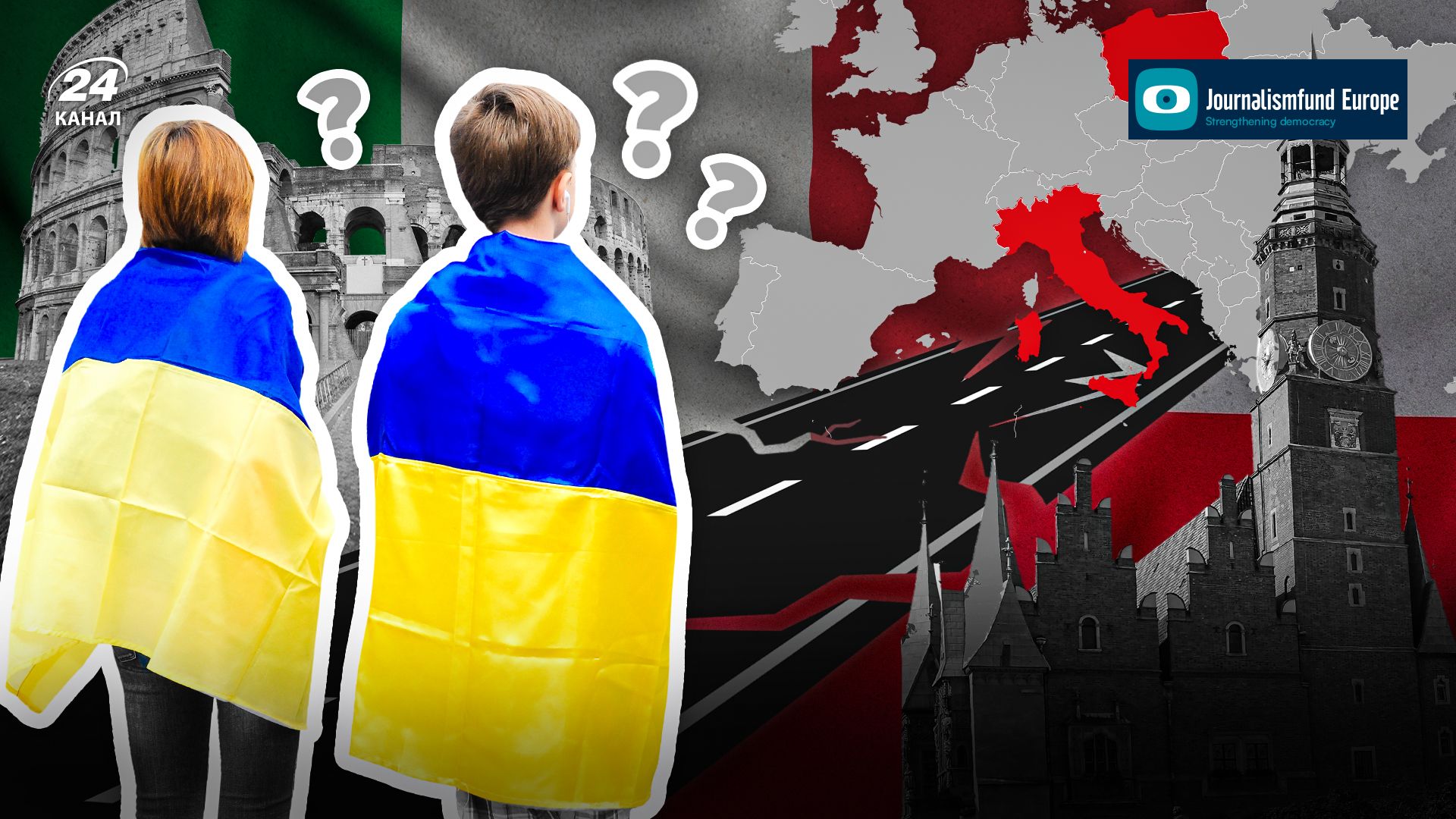
This report by Channel 24 from Poland and Italy explores the challenges of adaptation, practical advice for refugees, and the conclusions Europe must finally draw.
This report was produced by Channel 24 with support from Journalismfund Europe in collaboration with Marta Abba and Artur Koldomasov.
Ukrainians Live in Uncertainty Even Abroad
As of the end of July, 4.43 million Ukrainians with temporary protection status are living in European Union countries. This mechanism was designed as an emergency measure with a three-year time limit. However, the war continues, and Brussels now faces a key question: what lies ahead for the refugees?
Over four years of full-scale war, the EU has yet to establish a unified legal framework that would provide a clear answer regarding the long-term prospects for Ukrainians. Each member state implements temporary protection according to its own rules and renews it annually. Formally, the status has been extended until March 2028, but in practice, this does not mean real integration everywhere – from access to the labor market and renting housing to the ability to simply plan one’s life.
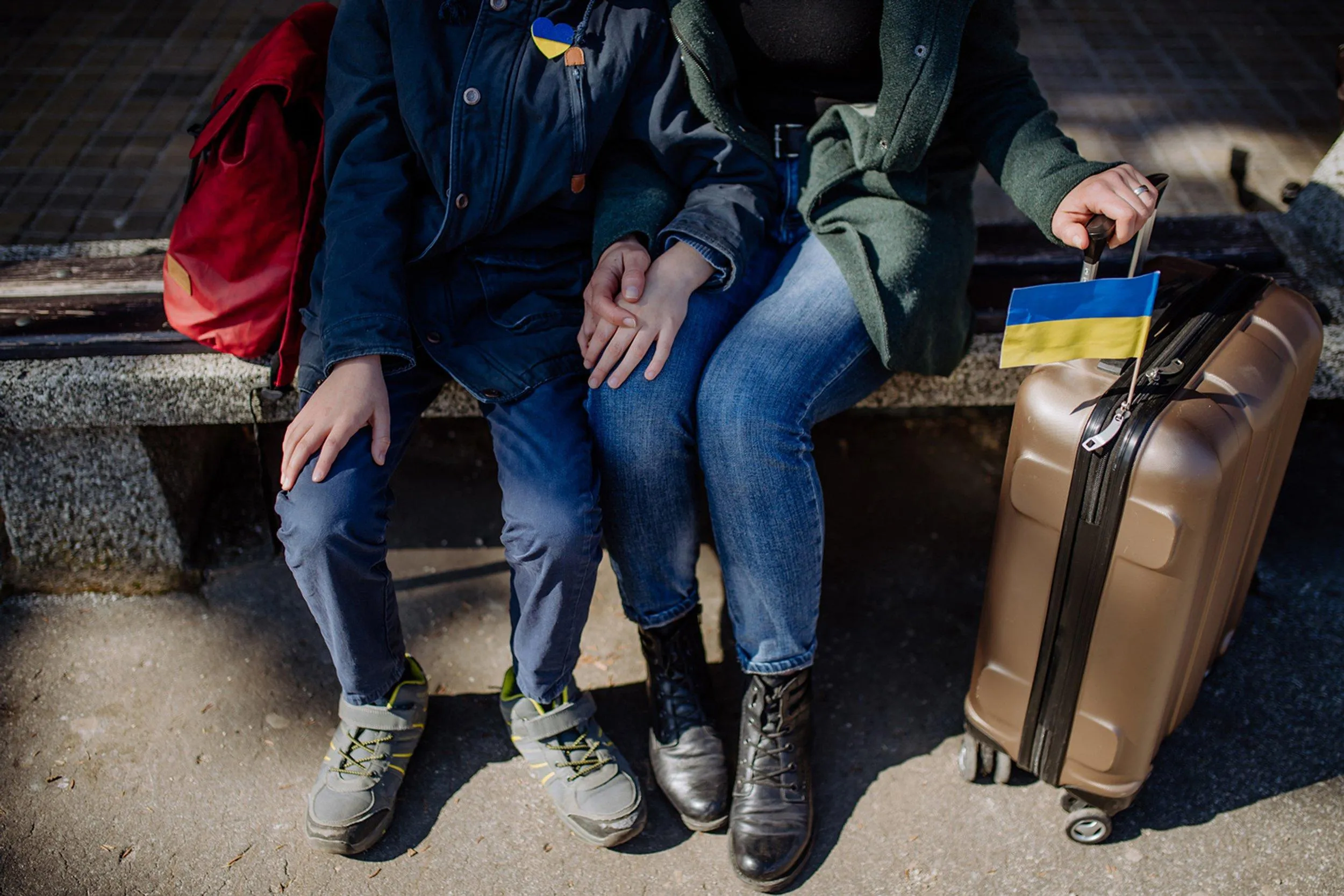
For many Ukrainians, this “temporary solution” has dragged on for years / Photo: Channel 24
As a result, millions of people remain in legal limbo: they are neither classic refugees nor long-term residents, and are forced to wait for each new decision to find out whether they will be allowed to stay.
Dr. Agnieszka Kulesa, a leading social sciences researcher at the Center for Social and Economic Research (CASE), emphasizes that the fundamental problem lies in the mismatch between a tool designed for emergency situations and the protracted nature of forced displacement caused by the war.
The main lesson is not so much that temporary protection failed, but rather that emergency protection mechanisms must be accompanied by advance planning for various long-term scenarios. This involves creating clear and predictable pathways for those who may remain in their host countries, while preserving the possibility of returning home when circumstances permit,” said Agnieszka Kulesa.
The Bureaucratic Trap and the Black Market for Real Estate in Italy
In Italy, the main challenge for Ukrainians has been the inflexible bureaucratic machine. Due to delays with paperwork, people live in complete uncertainty for months. The root of the problem is that the Italian government usually makes decisions on extending protection at the last minute – literally just a few days before New Year’s. As a result, the entire process gets off to a late start, and Ukrainians receive permits in the form of plastic cards that must be renewed annually.
When the card expires, a person submits documents and receives only a temporary paper slip from the police. They wait 3–4 months for the new plastic card, and during that entire time, they are stuck in a “gray zone.”
In Italy, however, this paper slip literally paralyzes daily life: local systems simply refuse to accept it. During this period, Ukrainians lose access to free healthcare, and the government suspends child benefits and compensation for daycare.
It has reached the point of absurdity: even with official contracts in hand, banks refuse to open payroll accounts for people because they fundamentally do not consider the piece of paper from the police to be a valid document. And when the long-awaited card is finally issued, it turns out that it needs to be renewed again in a few months.
Added to the red tape is the problem of finding work in one’s field. Many Ukrainian doctors, engineers, and scientists are forced to work as janitors or care for the elderly. Verifying a Ukrainian degree and gathering all the necessary original documents is quite a challenge.
Anzhelika, a Ukrainian woman, moved from Kharkiv to Italy in 2023. At first, she stayed with an Italian family who, in a spirit of solidarity, offered to help her. But then a real struggle began: renting an apartment without a long-term employment contract turned out to be practically impossible. Because of this, a “gray market” for rentals is effectively thriving in the country, where someone rents an apartment and illegally sublets rooms to refugees. But this traps Ukrainians in a vicious cycle: without an official lease agreement, they cannot register their place of residence; without registration, they cannot obtain an ID card; and without an ID card, they cannot obtain a tax identification number. Without this number, a person cannot even register on the government job search platform.
Anzhelika herself works in seasonal tourism. Ukrainians rarely get long-term contracts, but they even have to fight for temporary work.
There are jobs, but only on short-term contracts. Here, you can’t complain or make demands: there’s always someone else ready to take your place. It’s impossible to even plan six months in advance. “If I end up on the street tomorrow, no one will help me,” she says.
Another Ukrainian woman, Alina, decided to go through official channels and completed every stage of the Italian admission process. In the fall of 2022, she left Dnipro with her teenage son. She moved from a temporary shelter near Milan to social housing under the SAI integration program in the province of Brianza. In Ukraine, Alina had a successful career at a bank, and in Italy she works as a sales consultant at a shoe store. For the first year, she didn’t even try to learn the language because she was convinced she’d be able to return home in just a few months.
But when it became clear that the war was dragging on, she had to switch to “living one day at a time.” However, even government assistance doesn’t guarantee a future, since the support program isn’t permanent.
The hardest part is the complete uncertainty. We simply don’t know what to do next. I tried to find private housing in our neighborhood, but the prices there are astronomical, and for a foreigner to rent an apartment on her own is almost an impossible task,” Alina sighs.
Young people who come to Italy to study face similar difficulties. Nina, a student who arrived in the country in 2024, found herself caught in a bureaucratic loop: while she waited 4–6 months for a residence permit, she had to pay for her room on her own. Because of this, she lost her eligibility for social support programs.
But she didn’t give up – on her third attempt, she was admitted to the architecture program at Sapienza University of Rome. However, her biggest challenge wasn’t her studies, but finding a place to live in the capital. Roman landlords often turn her down right to her face when they see her Ukrainian passport.
I was told outright: “You’re a foreigner, and I only rent to Italians.” It’s hard to build friendships with locals here, and living as a foreigner in Italy is a constant challenge. But it’s possible. Surprisingly, this experience has taught me to be more optimistic,” the student shares.
In 2025, the Italian government introduced the option to transition from temporary protection to a full-fledged work permit. However, this option is available only to those who have managed to secure a stable, long-term contract. Everyone else – seasonal workers like Anzhelika, or those forced to work informally – will face the risk of permanently losing their legal status once the EU-wide protection expires.
From Solidarity to Social Tension: What Refugees Face in Poland
At the start of the full-scale invasion, Poland was the first country to open its doors to Ukrainians and offer them shelter. As of September 2026, 868,000 people are there with temporary protection status, making it the second-largest host country for Ukrainian refugees. The main problem here has been a deep institutional divide, as the lack of a clear long-term strategy on both sides of the border is slowly but surely distancing refugees from the society that was the first to extend a helping hand to them.
The initial wave of unprecedented support in 2022 – including free healthcare, housing, and child benefits (“800+”) – has, over time, turned into a serious economic and political challenge. Against the backdrop of the 2023 grain crisis and political disputes between Kyiv and Warsaw, questions about the limits of this aid have begun to be raised more and more loudly in Polish society.
Internal disputes over the special aid law regularly trigger panic, forcing hundreds of thousands of people to storm local administrative offices in search of residence cards. The situation is exacerbated by a lack of systematic dialogue: Kyiv lacks think tanks to analyze Polish policy and merely reacts to Warsaw’s accusations. At the same time, communication with its own citizens abroad often boils down to new bans and restrictions.
The full-scale invasion has turned Ukrainians into a “global nation.” However, Kyiv’s communication with the diaspora amounts to restrictions rather than strategic cooperation, notes Margarita Sytnik, co-founder of the civic initiative “Holka.”
After four and a half years of full-scale war and aid, even basic support is fading: free housing is a thing of the past, and the closure of shelters has hit pensioners, single mothers, and low-income families the hardest. On the private market, however, prices are sky-high: Svitlana Maslii, an expert at the “Ukrainian House” in Warsaw, notes that renting a modest studio apartment in Warsaw or Kraków, including a security deposit, costs at least 6,000 zlotys (nearly 1,400 euros).
On top of the high prices comes “passive discrimination.” Fearing the tenant protection law, landlords demand that Ukrainians pay a security deposit covering 3–6 months’ rent in advance or simply hang up the phone when they hear an accent. Blogger Karina Filonenko (Casya_krk) recalls how, after arriving in Kraków, her family had to move from one refugee hotel to another for half a year – no one wanted to rent them an apartment.
Karina Filonenko has a superpower: she responds to problems with irony:
Anna, 21, moved to Poland with her family in March 2022 and is now pursuing a master’s degree in Warsaw. Finding housing didn’t go smoothly right away due to landlords’ unrealistic demands:
They demand that you prove you have stability. Even though your life has lost all stability precisely because of the war and migration.
The media is fueling the tension. In their pursuit of views, Polish media outlets publish ethnically charged headlines: for example, when describing a raid that resulted in 2,000 detentions – where the vast majority were Poles – the press highlighted only the 90 detained Ukrainians in the headline. Russian propaganda is actively exploiting this conflict. Bot networks instantly inflate any disputes and spread labels such as “draft dodgers” or “job stealers.” Meanwhile, the fact that Ukrainians account for up to 2.7% of Poland’s GDP is ignored.
Ukrainian media are also adding fuel to the fire. Due to a shortage of their own correspondents in Poland, they reprint the most sensational Polish reports, further sowing panic among readers back home.
The Ukrainian government is interested in the return of its citizens, but lacks specific tools
The Ukrainian government is interested in the return of its citizens but emphasizes that the process must take place exclusively on a voluntary basis. In practice, however, the tools used vary. For example, Switzerland already provides financial support to refugees, helping to cover the costs of tickets and initial housing rent upon their return.
In Kyiv, officials acknowledge that resolving this issue requires pan-European solutions.
“We all understand that return is possible only on a voluntary basis. After all, how can anyone be forcibly returned? We have been holding substantive discussions with the European Commission for several years now to identify joint programs and incentives,” notes Foreign Ministry spokesperson Heorhiy Tykhyi.
The Ministry of National Unity, established in late 2024, was intended to serve as an attempt to centrally coordinate return policy. However, in practice, this ambitious agency never launched any effective programs, making headlines only for an internal scandal involving the retention of its own staff, and was eventually disbanded altogether following the corruption scandal involving Oleksiy Chernyshov.
At the same time, at the European Union level, rules began to change accordingly at the request of the Ukrainian authorities. Updated European directives made it more difficult for certain categories of citizens to obtain or extend temporary protection. This primarily affects men of draft age who are subject to military service, as well as women registered for military service (particularly medical professionals and pharmacists), who are applying for status abroad for the first time and cannot confirm the legality of their departure or the fulfillment of their military duties. Additional barriers have also arisen for those attempting to re-register between different EU countries: a number of states, such as Ireland, automatically deny new status if a person already has a valid registration in another EU country.
According to estimates by the Center for Economic Strategy (CES), in a baseline scenario, approximately 1.6 million people could return to Ukraine (with a total range of 1.3 to 2.2 million). At the same time, recent survey data from the Laboratory of Legislative Initiatives show that about 30–40% of citizens consider returning a realistic possibility. At the same time, nearly 80% of those who are even considering a trip home clearly emphasize that they are willing to do so only after hostilities have completely ended and security is guaranteed.
Experts stress that the government must offer comprehensive incentive programs, with housing and real economic prospects as key priorities. Existing housing programs, such as “e-Recovery” or subsidized mortgages, must be significantly scaled up and closely tied to regional labor markets so that people do not return “to nowhere.” Internally displaced persons from the occupied territories – particularly from the Zaporizhzhia, Kherson, Donetsk, and Luhansk regions – require special attention. Without clear housing and social solutions for them, the state risks severing ties with these people permanently.
An important factor that may limit the effectiveness of such programs is that refugees often seek to return specifically to their homes – to their own homes or at least to their home region. In practice, this means that even providing refugees with housing in safe regions will not always encourage them to return, says Iryna Ipolitova, a senior research fellow at the Center for Economic Strategy (CES).
Experts agree on one thing: the housing issue cannot be resolved in isolation from the labor market. According to Iryna Ipolitova, a comprehensive approach that involves close cooperation between employers, communities, and the government seems more promising: employers should offer jobs in specific communities, while the communities – by securing government funding or participating in co-financing programs – should build rental housing.
At the same time, Volodymyr Skrypets, head of the analytical department at the Laboratory of Legislative Initiatives, warns of complex internal social risks. According to him, the government may face a shortage of resources for large-scale incentives to encourage return, since after the end of hostilities, a huge portion of the budget and social support will be directed toward veterans and their families.
This creates the potential for conflict between those who fought for Ukraine… and those who left. Unfortunately, this is a social conflict that we will not be able to avoid… The main factor that could help them return is a minimum level of reconstruction combined with active cultural engagement and a sense that they are needed by their country,” he says.
Refugees should not put their lives on hold, and European governments should adopt a long-term solution
To ensure that the years spent under temporary protection do not become wasted time, European and Ukrainian experts advise Ukrainians not to adopt a wait-and-see attitude. At the same time, as Yevgeniya Bulgakova, program manager at the NGO “April 10,” emphasizes, the prolonged postponement of life decisions is not mere social passivity, but a direct consequence of the lack of a planning horizon, since legal certainty is a prerequisite for human agency, not its result.
As Dr. Bashak Yavchan of the Migration Policy Group (MPG) notes, time spent under protection cannot, in principle, be viewed as a mere waiting period. In her view, integration and return are by no means opposites, but rather complementary processes: people with secure status, language skills, and savings are much better prepared for voluntary and sustainable return than those kept in a state of legal uncertainty.
To successfully emerge from this “pause,” experts in the field advise not wasting time waiting, but rather focusing on practical steps. Language remains the key “gateway” to both stable legal status in the EU and regular employment. At the same time, analysts advise initiating the process of having diplomas recognized as early as possible: this not only ensures fair working conditions in Europe but also creates a reliable professional asset in case of a return home.
Furthermore, due to the EU countries’ stricter financial requirements for permanent residency, an official and documented employment history becomes the strongest tool for future legal applications. In a constantly changing legal landscape, experts advise relying exclusively on official institutions and reputable organizations, while avoiding questionable advice from social media.
Integration and return are not opposites. People with secure status, skills, and savings are much better prepared for voluntary and sustainable return than those kept in a state of uncertainty,” emphasizes Dr. Bashak Yavchan.
Dr. Agnieszka Kulesa of the Center for Social and Economic Research (CASE) notes that the main problem lies not at all in the failure of the temporary protection mechanism itself, but in the miscalculation of long-term scenarios. The mechanism was designed as a rapid emergency response, but the protracted war has turned it into a years-long “test of endurance.”
The problem is not that temporary protection has failed. The point is that emergency protection should have been accompanied by planning for long-term scenarios at an early stage... People should not bear sole responsibility for managing this uncertainty,” emphasizes Dr. Agnieszka Kulesa.
To rectify the situation at the state level, Dr. Bashak Yavchan and leading European analysts insist on a series of urgent structural solutions. First and foremost, European institutions must change the rules so that years spent under temporary protection count toward obtaining long-term resident status, thereby preventing “lost years.” Instead of keeping people in a constant state of anxiety due to annual emergency extensions, Brussels should establish common minimum standards for transition so that the country of first arrival does not determine a person’s entire future.
The changes must be flexible and implemented at the national level. For example, Poland’s CUKR card should serve as a genuine bridge to permanent residency with flexible application deadlines. At the same time, the successful Italian model of converting protection status into work visas should be expanded not only to those who already have long-term contracts but also to students, social workers, and part-time employees. In addition, countries should move away from one-size-fits-all requirements and introduce targeted support programs for vulnerable groups – the elderly, caregivers, and people with disabilities – as well as actively develop institutional programs for language and professional integration modeled after leading Scandinavian practices.
It is particularly important to avoid situations where the gradual reduction of support is used as the primary tool for encouraging self-reliance. Reducing social assistance without simultaneously creating accessible legal opportunities and integration tools does not necessarily enhance autonomy. Instead, for the most vulnerable groups, this may increase the risk of poverty, dependence on outside assistance, and legal instability,” emphasizes Yevheniia Bulgakova.
Equally important is direct support for Ukrainian civil society organizations and giving them a real voice in consultations, which will help avoid “top-down” decisions that completely ignore the actual needs of people on the ground.