
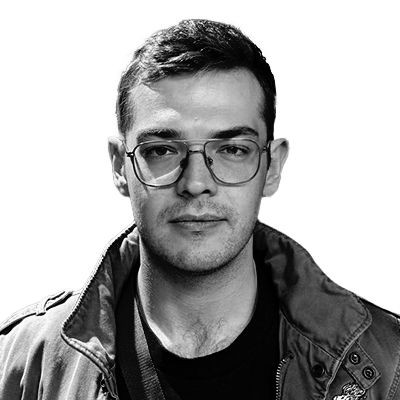

Over the past two years, Finnish President Alexander Stubb has become one of the few European politicians who has managed to find common ground with Donald Trump. Moreover, the Finnish leader not only maintains good relations with the American president but also tries to use them to influence his stance on the war in Ukraine. And it seems he is succeeding in this far better than many of his counterparts from far more influential European countries.
popular videos
On October 20, 2026, Stubb, together with Ukrainian President Volodymyr Zelenskyy and Norwegian Prime Minister Jonas Gar Støre, held talks in Oslo with the participation of U.S. representatives Steve Witkoff and Jared Kushner. And on October 27, the Finnish president and Støre personally called Vladimir Putin to discuss the prospects for resuming peace talks.
24 Channel explains who Alexander Stubb is, how the Finnish politician found common ground with Donald Trump thanks to his long-standing passion for golf, and why Finland remains one of Ukraine’s most reliable European allies today.
From Sports to Politics: Alexander Stubb’s Political Journey
There is one rather interesting detail in Alexander Stubb’s biography. As a young man, the Finn dreamed of becoming a professional golfer and even received an athletic scholarship to an American university because of it. However, it did not lead to a major athletic career. Instead, several decades later, it would be golf that would help him contain what is arguably the greatest crisis in modern relations between Europe and the United States.
The future president of Finland was born on April 1, 1968, in Helsinki to a Finnish-Swedish family. His father, Joran Stubb, was a hockey scout – an official who spent decades searching for European players for the American NHL.
In fact, it was Joran Stubb who opened the door to the world’s premier hockey league for European athletes. In particular, stars such as Teemu Selänne, Saku Koivu, and many others owe their stellar careers to Stubbs Sr. Among them is Ukrainian Dmytro Khrystych.
So it’s no surprise that Alexander himself initially dreamed of playing hockey, but eventually traded his skates for another stick sport – golf.
However, sports were far from his only talent. In 1993, Stubb graduated from Furman University in the United States with a degree in political science, after which he continued his studies at the Sorbonne and the College of Europe.
And in 1999, he defended his doctoral dissertation on international relations at the London School of Economics. Add to that his proficiency in five languages, and international politics seemed a more logical choice than a career in sports.
Stubb began his career at the Finnish Ministry of Foreign Affairs, then moved to Brussels, where he worked within the EU institutions, notably as an advisor to European Commission President Romano Prodi. And in 2004, he himself became a Member of the European Parliament representing Finland’s center-right National Coalition Party.
His career then took off rapidly, and by 2008, Stubb had become Finland’s Minister of Foreign Affairs. In this role, he almost immediately had to deal with Russian aggression against Georgia. Even then, he described Russia’s ambitions quite clearly, and his words today seem almost prophetic:
During this “08-08-08” period [August 8, 2008 – the date the war in Georgia began], a number of contenders emerged hot on the heels of the world’s sole superpower – the United States of America. China, Russia, and India are striving for a post-American world in which several heavyweights participate [...]. The influence of the U.S. and Europe will diminish. Exactly how this will unfold will play a decisive role in shaping the future of international politics – from a 2008 speech by Alexander Stubb.
That year, Finland held the OSCE chairmanship, and in August, Russia attacked Georgia. Stubb, together with his French counterpart Bernard Kouchner, traveled to Tbilisi and Moscow in an effort to broker a ceasefire. And this was far from the last time he would have to deal with the consequences of Russian military adventures.
In 2011, Stubb became Minister of European Affairs and Foreign Trade, and three years later, he took the helm of his party and became Prime Minister of Finland. It seemed as though his career was going splendidly, but that’s when things didn’t go according to plan.
Stubb remained at the helm of the government for less than a year. After the 2015 parliamentary elections, he had to step down in favor of Jussi Sipilä and move to the Ministry of Finance. And the very next year, Stubb lost the battle for leadership of his own party to Petteri Orpo, who would later become Finland’s prime minister himself.
After this double blow, Stubb decided to step away from high-level politics. He initially served as vice president of the European Investment Bank, and in 2020 he moved to Italy, where he became head of the School of Transnational Governance at the European University Institute in Florence.
And it seemed that, finally, instead of endless political squabbles, he would have a life of teaching, research, and living in one of Italy’s most beautiful cities. But Stubb wasn’t ready to walk away from politics for good, and within a few years he would return home to become president and one of Europe’s most prominent leaders.
The Diplomacy of Golf: How Stubb Found a Way to Connect with Donald Trump
In 2024, Alexander Stubb decided to return to national politics and run for president of Finland. And despite a long hiatus from his political career, he managed to win – albeit by a narrow margin.
In the second round, Stubb received 51.6% of the vote, beating former Foreign Minister Pekka Haavisto. Thus, the politician who had once lost the battle for leadership of his own party suddenly found himself in the nation’s highest office.
Moreover, he returned to a completely different Finland. Following Russia’s full-scale invasion of Ukraine, his country abandoned its policy of military non-alignment and joined NATO in 2023. In fact, according to Stubb himself, this was one of the main motivations for his return:
So in 2016, when my good friend – who is now the prime minister and who challenged me in the race for leadership – removed me from office, I felt a great sense of relief. And I thought, “All right, I’ve worked in banking, I’ve been involved in research, and the only thing that brought me back to politics was Russia’s aggressive war against Ukraine, because it was precisely that war that made my lifelong dream – Finland’s accession to NATO – come true,” Stubb said in a TED interview
So the new president, who is responsible for foreign policy and serves as commander-in-chief of the Finnish armed forces, had his work cut out for him. Especially after Donald Trump’s return to the White House, when relations between Europe and the U.S. began to deteriorate rapidly. And that’s where Stubb’s long-standing passion for golf came in handy.
In fact, the late Republican Senator Lindsey Graham helped arrange the meeting with Trump after learning that the Finnish president had studied in his home state of South Carolina and was also a member of the is a pretty good golfer. As Stubb himself recounted, in February 2025, during the Munich Security Conference, Graham simply called Trump and suggested playing a round of golf with the Finnish leader at his Mar-a-Lago residence. Trump agreed, so Stubb headed to Florida in March.
What started as a routine round of golf turned into an informal meeting lasting nearly seven hours. The politicians had a meal together, spent several hours on the course, and even won the club tournament while playing on the same team. So the Finnish president didn’t have to face a difficult diplomatic dilemma – whether to beat the White House chief on his own course.
Later, in an interview, Stubb admitted that Trump turned out to be a rather pleasant playing partner, and that the U.S. leader’s public image differs significantly from his behavior in private. On the course, Trump joked a lot, didn’t get flustered by missed shots, and generally behaved much more calmly than one might have expected.
However, amid the sporting activities, there was also time for serious conversations. The politicians discussed the war in Ukraine, Russia, and the possibility of the U.S. purchasing Finnish icebreakers. According to Stubb, Trump even asked him whether Vladimir Putin could be trusted. The answer was short and clear: “No, he cannot.”
It seems Trump appreciated this candor. After the meeting, he praised Stubb’s athletic abilities, and the politicians later continued their conversation over the phone. As early as August 2025, the Finnish president was among the European leaders who traveled to Washington to support Volodymyr Zelenskyy in his negotiations with Trump.
But is Stubb really capable of influencing the American president? The Finnish leader himself is skeptical of his reputation as a sort of “Trump charmer” and believes that journalists are exaggerating his capabilities.
Sometimes I’ve managed to explain Trump to Zelenskyy or Zelenskyy to Trump, and then both of them to our European friends. I hope this is helpful. But to claim that I whisper something in Trump’s ear and he does it right away? That’s an exaggeration! That doesn’t happen, ” Stubb explained.
According to him, if Trump listens to even one out of ten of his suggestions, that’s already a good result. But the main advantage of such a relationship isn’t even the ability to persuade the U.S. president, but rather access to information and the ability to pass it on to allies.
“I come from a small country, so I don’t have much power, but for me, information is power. So if I can start informing my colleagues about what I think the U.S. could do, or tell them what my colleagues could do, pass that information on to the U.S., or act as a mediator, say, between the President of Ukraine and the U.S. President – that’s exactly what happens when we build these connections,” said Alexander Stubb.
And for the president of Finland, which shares a border of over 1,300 kilometers with Russia, this is a significant diplomatic resource. After all, Finland’s own future security will depend to a large extent on the outcome of the war in Ukraine.
Finland Has Long Been Familiar with the Kremlin: Why Helsinki Has Become One of Ukraine’s Key Allies
For the Finns, the war in Ukraine is far from just another conflict in Eastern Europe. Unlike many other countries, Finland knows all too well what Russian aggression is like, Finland has its own, rather painful experience in its relations with Moscow. Moreover, for Alexander Stubb, this history is also a personal one.
In 1939, the Soviet Union attacked Finland, launching theso-called Winter War. Despite the Soviet army’s overwhelming superiority, the Finns managed to preserve their independence, although they had to pay for it with the loss of some territory and by having to accommodate Moscow’s interests for decades at the expense of their own.
Incidentally, it was at that very time that the current president’s father, Joran Stubb, was born, so it’s no surprise that Finland took the Russian invasion of Ukraine seriously, and Stubb himself has repeatedly emphasized that the Finnish experience should not serve as a blueprint for Ukraine.
And Helsinki’s support for Ukraine isn’t limited to mere statements. The Finns began assisting the Ukrainian army as early as 2022, long before Stubb’s presidency. And in April 2024, the newly elected president traveled to Kyiv, where he and Zelenskyy signed a ten-year security agreement. The document provides for military and financial aid, support for Ukraine’s reconstruction, and its accession to the EU and NATO.
And by the rather modest standards of the Finnish economy, this aid is enormous. As of October 2026, Finland had already prepared 35 military aid packages with a total value of approximately 3.6 billion euros. And that does not include humanitarian and civilian support.
Moreover, Helsinki and Kyiv have begun shifting from arms deliveries to joint production. In September 2026, Stubb and Zelenskyy signed a new defense agreement that provides for technology exchange and cooperation in drone production. And on October 22, during a visit by Finnish Prime Minister Petteri Orpo to Kyiv, the parties signed seven more agreements in the fields of defense, unmanned systems, satellite communications, and other sectors.
Stubb himself views support for Ukraine not only as a matter of solidarity but also as a concrete interest for the security of Finland and all of Europe. In his view, after the war, Ukraine – with its massive army and combat experience – could become one of NATO’s most important partners. Therefore, the Finnish president supports Kyiv’s future membership in both the Alliance and the EU.
However, no matter how much weapons and money European allies allocate, they still cannot fully replace U.S. aid to Ukraine. This is especially true today, when Donald Trump is capable of changing the course of peace negotiations with a single decision or presenting Europeans with yet another abrupt shift in U.S. policy. And this is precisely where Stubb’s personal relationship with the White House leader takes on special significance.
After all, for Ukraine, the Finnish president is important not only as the head of a state that provides weapons and money, but also as someone capable of personally explaining to Trump why Russia cannot be trusted.
Of course, a single round of golf won’t force the American president to change his policy. But Stubb has already proven that he knows how to play on the same team as Trump. Now he faces a much more difficult task – convincing the American president that agreements with Putin must not be made at the expense of Ukraine’s interests, even if Trump himself is eager to add yet another peace deal to his list of personal victories.
FAQ
Related topics:
If you find an error on this page, select it and press Ctrl + Enter