


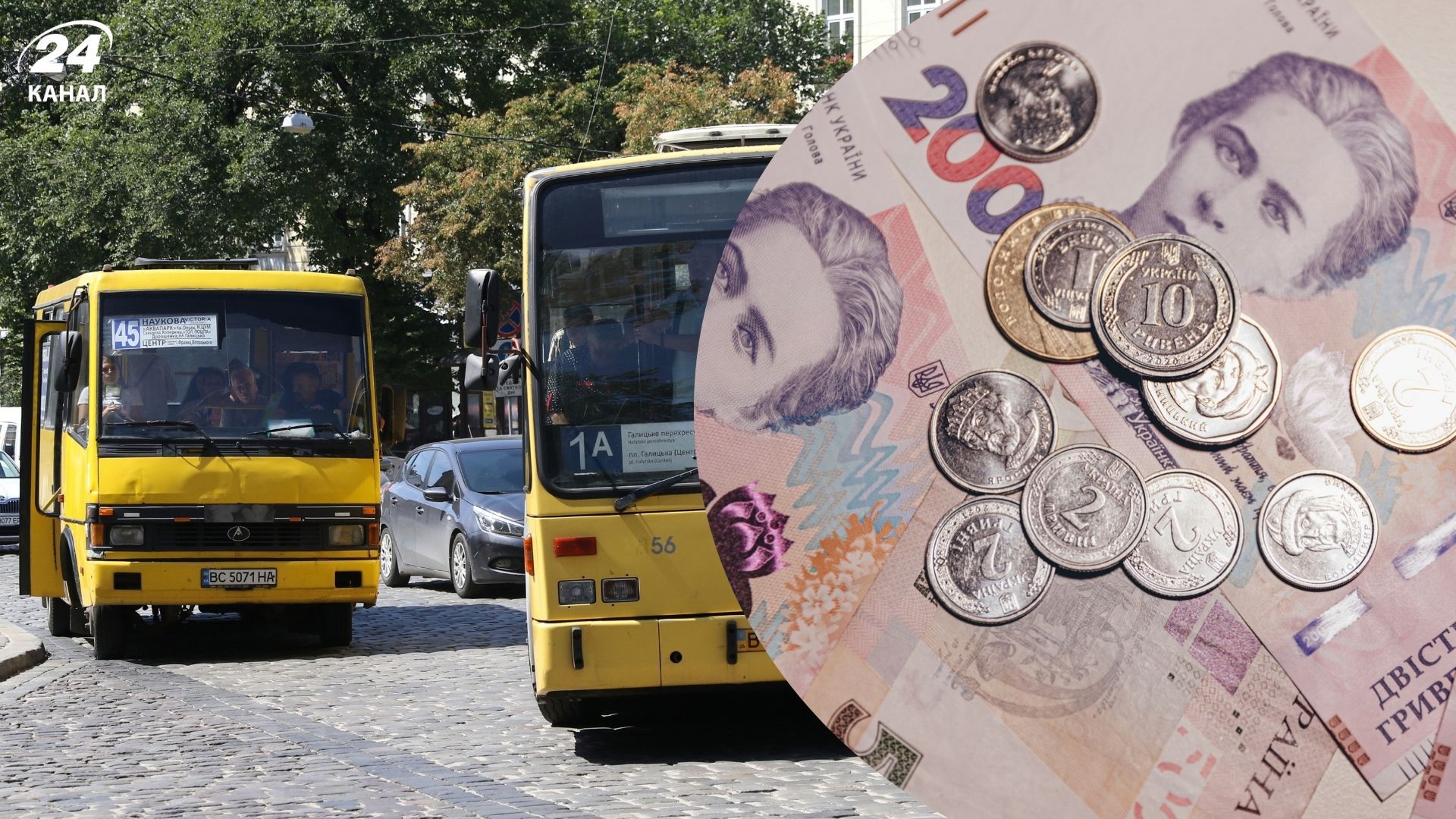
In response to an inquiry from Channel 24,the Ministry of Finance explained how delays in receiving international aid are affecting the funding of budget expenditures. The ministry assures that expenditures on salaries for public sector employees remain a priority, but did not specify a date for the resumption of payments to Lviv utility workers.
Payments totaling over 500 million hryvnias have been delayed in Lviv
On October 7, Lviv Mayor Andriy Sadovyi said id that the State Treasury Service is not making payments for transportation services and city sanitation. The city’s timely payment for these services is crucial, in particular, for paying the salaries of drivers and street cleaners. The mayor warned that by the end of the week, some employees may not receive the wages they have earned.
The total amount of unpaid bills has exceeded 500 million hryvnias, but this does not represent the total amount of wage arrears. It also includes funds for winter preparations, medical and educational facilities, and recovery efforts following Russian shelling.
If we consider the funds that will go toward employee salaries, I think that amounts to no more than 10 million in this package, although there will be payments again next month,
– Sadovyi explained on Channel 24.
The delays also affect expenses without which businesses cannot operate: the purchase of fuel and materials, and payments to contractors. The mayor said that Lviv is building facilities to protect its infrastructure but cannot pay for the necessary materials or work already completed.
At the same time, significant funds remain in the city budget accounts. Bogdan Slutsky, an economist at the Center for Economic Strategy, cited data showing that as of October 6, the balances in local budget accounts totaled nearly 128 billion hryvnias, including approximately 2.8 billion hryvnias in Lviv. The processing of payments depends on the order of priority for expenditures established by the government, and some of the remaining funds may be earmarked for specific purposes. Other Ukrainian communities have also reported delays in treasury payments.
Employees of municipal utilities do not necessarily fall into the category of public sector workers whose salaries are funded on a priority basis. For example, a public transit driver receives a salary from the company, which depends on the city’s timely payment for transportation services.
As mayor, I have no moral right to receive a salary as long as street cleaners aren’t getting paid, and as long as tram and trolleybus drivers aren’t getting paid. I would like the members of the Verkhovna Rada and the government to show solidarity. “First, we’ll pay the people, and then we’ll take our own salaries,”
– stated the mayor of Lviv.
To resolve the issue, he proposed enacting legislation to make the salaries of employees at all levels a protected first-priority item, and to pay officials’ salaries only after people have been paid.
The Rada Must Pass Laws to Secure Aid
To fulfill part of its obligations to international partners, Ukraine needs decisions from the Verkhovna Rada. Back in September, the prime minister warned of risks to public finances and urged lawmakers to speed up the adoption of the necessary bills. Due to failure to meet the established conditions, a portion of the $29.5 billion in international funding is now at risk.
The reason lies in delays in fulfilling some of the conditions of cooperation programs with international partners, on which the receipt of funds depends. This problem is not new, and it is acknowledged by the country’s leaders,
the Ministry of Finance reported.
Roksolana Pidlasa, chair of the Verkhovna Rada’s Budget Committee, stated that in order to receive the aid planned for the remainder of the year, parliament must pass approximately 40 bills. She expressed doubt that lawmakers would have time to adopt all the necessary decisions.
At the same time , a 26-day recess is scheduled between the Verkhovna Rada’s plenary sessions : from September 17 to October 13. The Parliament’s Secretariat explains that lawmakers continue to work in committees, working groups, and commissions, but there will be no plenary votes during this period.
The government is doing everything possible to expedite the adoption of necessary decisions in the Verkhovna Rada. Dialogue and cooperation with members of parliament are ongoing,
the ministry noted.
The Cabinet of Ministers requested that an additional plenary session be held on October 12, without waiting for the deputies’ scheduled return to voting the following day.
Some expenditures are being postponed until the end of the year
While the receipt of some international funding is delayed, the government is adjusting the timing of certain capital expenditures. The Ministry of Finance clarified that this applies, in particular, to construction and reconstruction, as well as the protection and winterization of the energy sector. Defense, servicing of national and local debt, salaries for public sector employees, pensions, and social benefits remain priorities and are being funded as before.
This involves postponing some expenditures until the end of the year, not canceling programs or halting work. The goal of this step is not to save money, but to allocate available resources in accordance with priorities,
the Ministry of Finance explained.
The ministry promises to fund the deferred expenditures once funds are received from partners, when sufficient financial resources are available. The ministry also emphasized that social and humanitarian expenditures, as well as support for those most in need, remain a priority.
To determine the order of payments, the Cabinet of Ministers adopted a resolution drafted by the Ministry of Finance, which applies to both the state and local budgets. The Treasury ensures compliance with the government’s established procedure for expenditures.
The restrictions are not applied automatically, but only in the event of a confirmed shortage of financial resources based on forecast results – that is, they do not apply “by default” every month,
the ministry clarified.
The resolution will remain in effect until December 31, 2026. The Ministry of Finance describes this procedure as a transparent and predictable tool for managing public finances and emphasizes that it does not alter approved budget allocations and does not constitute a sequester.
At the same time, in its response to a request from Channel 24, the ministry did not specify a concrete date for the resumption of payments on which the salaries of Lviv’s public utility workers depend, nor did it clarify which specific decisions not adopted by parliament directly contributed to the delays in Lviv.