


Donald Trump called him a “jihadist” and vowed to keep him out of the Senate, but American voters decided otherwise.
In the November 3 midterm elections, Democrat Abdul El-Sayed defeated Republican Mike Rogers in Michigan, becoming the first Muslim elected to the U.S. Senate. And this happened in a state where, just two years ago, Trump himself won the presidential election.
Abdul El-Sayed managed to defeat not only the Republicans but even part of the Democratic establishment.
Throughout the campaign, he faced fierce opposition from some within his own party, accusations of anti-Semitism, and multimillion-dollar spending by his political opponents on ads against him. And yet, the former health official from Detroit, who had never previously held elected office, is now preparing to take up his duties in Washington.
24 Channel explores who Abdul El-Sayyed is , the path he took to the Senate , and why his campaign and victory sparked such a stormy reaction within American politics.
popular videos
The First Muslim Senator in U.S. History: The Political Journey of Abdul El-Sayed
The future senator was born on October 31, 1984, in Rochester Hills, Michigan, to a family of Egyptian immigrants. His father, Mohamed, moved to the U.S. to study at a local university, and after his divorce, he raised his son together with his second wife, Jacqueline, whose family has lived in Michigan since the 19th century. Therefore, despite his Egyptian heritage, El-Sayed has repeatedly emphasized that he is just as much a Michigander as any other local resident.
From an early age, Abdul showed remarkable academic ability. In high school, he captained three sports teams, and later enrolled at the University of Michigan, where he studied biology and political science. In 2007, he was even chosen to deliver the commencement address at his graduation ceremony, where former U.S. President Bill Clinton, a member of the Democratic Party, was among the guests of honor.
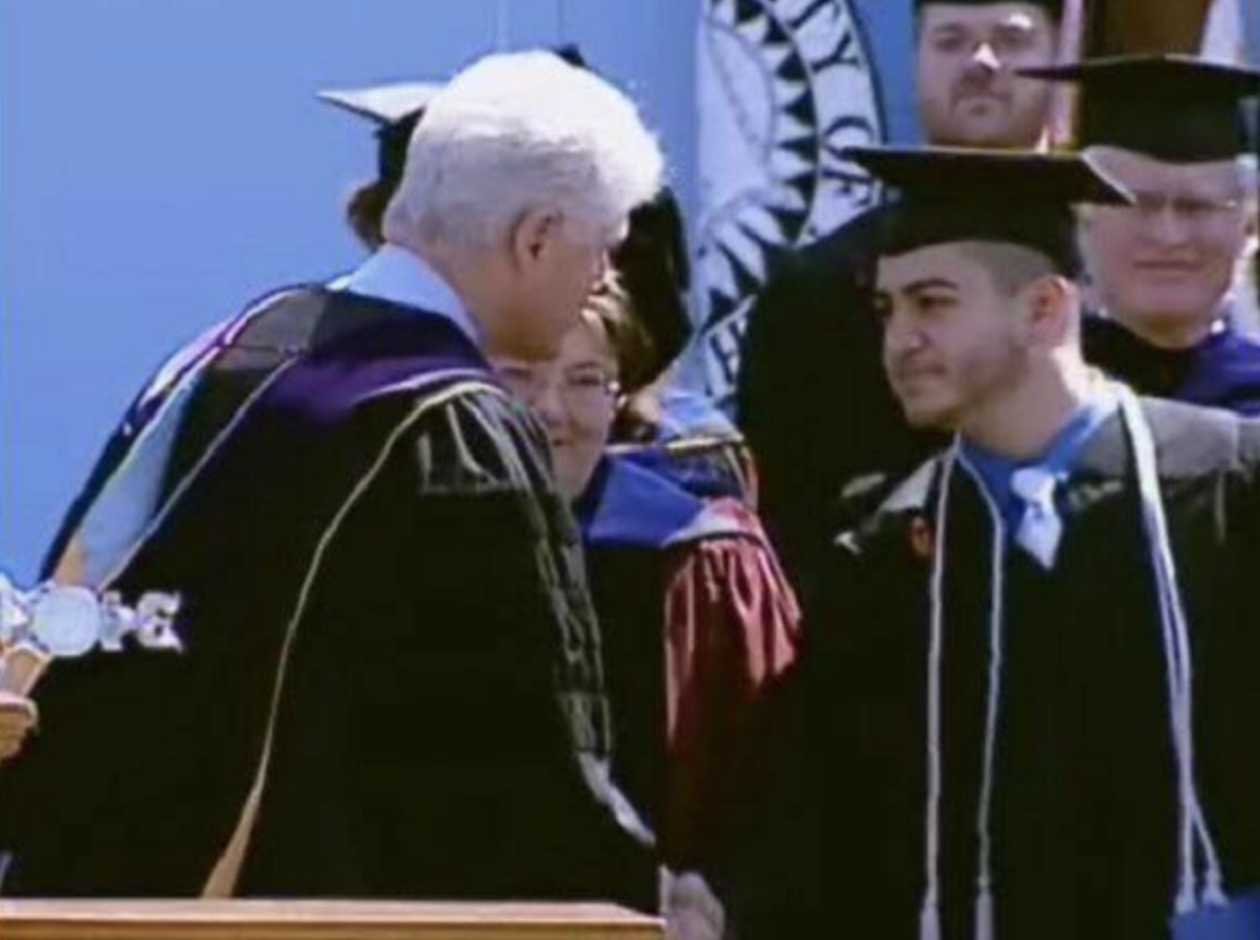
Bill Clinton congratulates the future Michigan senator on receiving his diploma / Screenshot
Later, El-Sayed received a prestigious scholarship that allowed him to study at Oxford, where he earned a Ph.D. in public health, as well as a medical degree from Columbia University. However, he never became a practicing physician, deciding instead to devote himself to addressing systemic problems in the American healthcare system.
As El-Sayed himself recounted, an incident during his medical residency forced him to change careers. One day, a homeless woman with a head injury was admitted to the hospital, and the doctors initially intended to discharge her without a proper examination. El-Sayed insisted on her hospitalization, after which the patient was diagnosed with several serious illnesses. Despite receiving treatment, the woman later decided to leave on her own, and just two weeks later, he saw her unconscious in a subway car.
It was this incident that convinced Abdul El-Sayed that the problem with the American healthcare system lies not only in access to treatment but also in the system’s inability to help people facing difficult life circumstances.
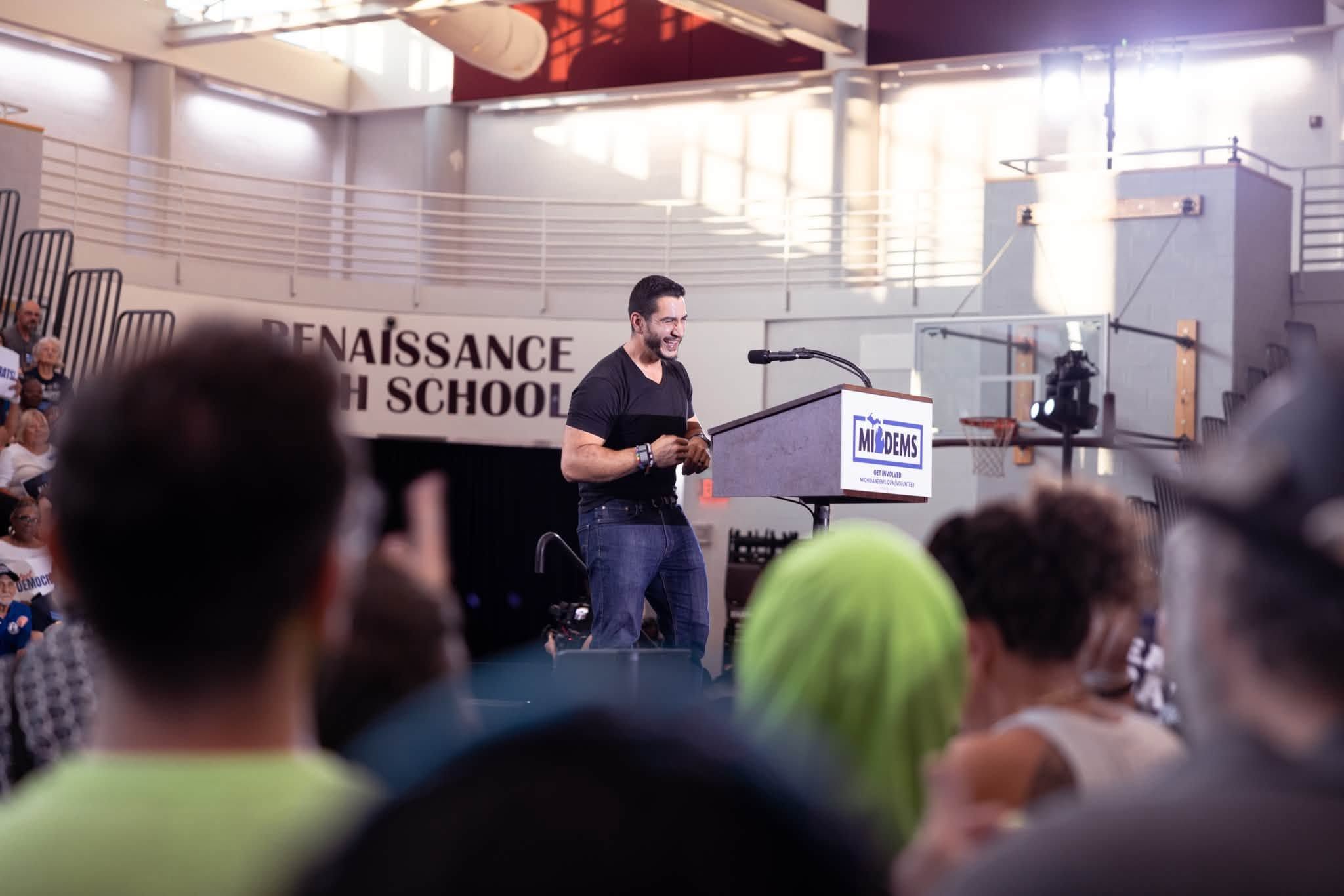
Abdul El-Sayed at a campaign rally / Photo – Facebook
As early as 2015, he headed the Detroit Department of Public Health, which was then recovering from the city’s bankruptcy. Shortly thereafter, El-Sayed was already leading the Wayne County health care system, where, among other things, he worked to address the issue of Americans’ medical debt.
His first attempt to win a Senate seat ended in failure. In 2018, he ran for governor of Michigan, where he even secured the support of prominent left-wing politician Bernie Sanders, but ultimately lost the Democratic primary.
However, El-Sayed did not give up on his political ambitions. Eight years later, he returned with a platform that put him in direct conflict not only with the Republicans but also with an influential faction within his own Democratic Party.
He took on both parties at once: how El-Sayed challenged the old establishment in the U.S.
In terms of his political views , Abdul El-Sayed belongs to the far left, the so-called “progressive wing” of the Democratic Party. Just like another well-known American Muslim politician, Zoharan Mamdani.
He advocates for the implementation of universal government health insurance, known as Medicare, higher taxes on billionaires, and limiting the influence of large corporations on American politics.
It is no surprise that among his main allies are Senator Bernie Sanders, Congresswoman Alexandria Ocasio-Cortez, and Rashida Tlaib – leaders of the far-left wing of the Democratic Party. Their support has given the politician’s opponents grounds for fierce criticism and accusations of being virtually sympathetic to communism.
However, the greatest controversies surrounding El-Sayyed stemmed from his stance on Israel. The politician openly accuses the Israeli government of genocide against Palestinians in the Gaza Strip and advocates for an end to U.S. military aid to Jerusalem.
This stance is actively supported by American progressives, but at the same time , it makes him an easy target for the influential pro-Israel lobby within both major U.S. political parties.
This conflict was particularly acute during the Democratic primaries in Michigan. El-Sayed’s main rival was Congresswoman Hayley Stevens, who was backed by Michigan Governor Gretchen Whitmer, Senate Majority Leader Chuck Schumer, and other party leaders.
In addition, groups linked to the Israel lobby spent over $30 million to support Stevens, in an effort to prevent her opponent from winning.
But in the end, the money didn’t help, and on August 4 , El-Sayed won the primary, receiving 48.45% of the vote to Stevens’ 47.55%. Thus, a former mid-level bureaucrat who had never held high elected office managed to defeat an experienced congresswoman, whose campaign had also received a flood of donor money.
But the intra-party battle did not end there. Just two days before the general election , Stevens unexpectedly announced her support for Republican Mike Rogers.
Democrat Haley Stevens’s controversial statement in support of a Republican:
She explained her decision by citing a conflict with El-Sayyed over his campaign and the Democratic candidate’s collaboration with left-wing streamer Hassan Piker, known for his controversial remarks about Israel.
This caused a real scandal among Democrats. Even Chuck Schumer, who had previously supported Stevens, called her action a “disgusting betrayal.”
Donald Trump immediately took advantage of the situation and even publicly praised Stevens for supporting the Republican. On the eve of the election, he also announced the suspension of U.S. financial aid to Israel, attempting to play a trump card against the progressives.
It didn’t work. After all, Abdul El-Sayed defeated the Republican, winning 52.5% of the vote, with more than 2.5 million Americans casting their ballots for him.
“Taken by storm”: Abdul El-Sayed became an internet sensation / Screenshot X
Incidentally, one of the factors behind his victory was the mobilization of the electorate on social media – a tactic previously mastered by Trump supporters. Abdul El-Sayyed became very popular online and was hailed as a “heartthrob.”
The politician himself actively played into this enthusiasm and exploited his image just as actively. Taylor Swift herself helped him with this – the world’s most popular singer allowed El-Sayed to use her songs during the campaign. And the politician himself danced enthusiastically to her hit “I Belong With Me.”
The future senator dances to Taylor Swift – watch the video:
His athletic physique and signature T-shirts, which highlight his build and muscles, became the subject of objectification and sexualization, capturing the interest of both female and male audiences. As a result, the Muslim candidate even received support from members of the LGBTQ+ community, and memes featuring El-Sayyid went viral on X, TikTok, and other social media platforms.
El-Sayed’s victory demonstrated that even the support of the party leadership, tens of millions of dollars in campaign donations, and the personal intervention of the U.S. president do not guarantee the desired outcome in an election.
At the same time, the story in Michigan revealed just how deep the rift within the Democratic Party has become. While some Democrats tried to prevent El-Sayed from entering the Senate, others saw him as a representative of a new generation of American politicians.
“Jihadist” and supporter of the 9/11 attacks: how Donald Trump tried to smear El-Sayyed
It’s important to understand that the Republicans tried to stop El-Sayyed for reasons far beyond his political views.
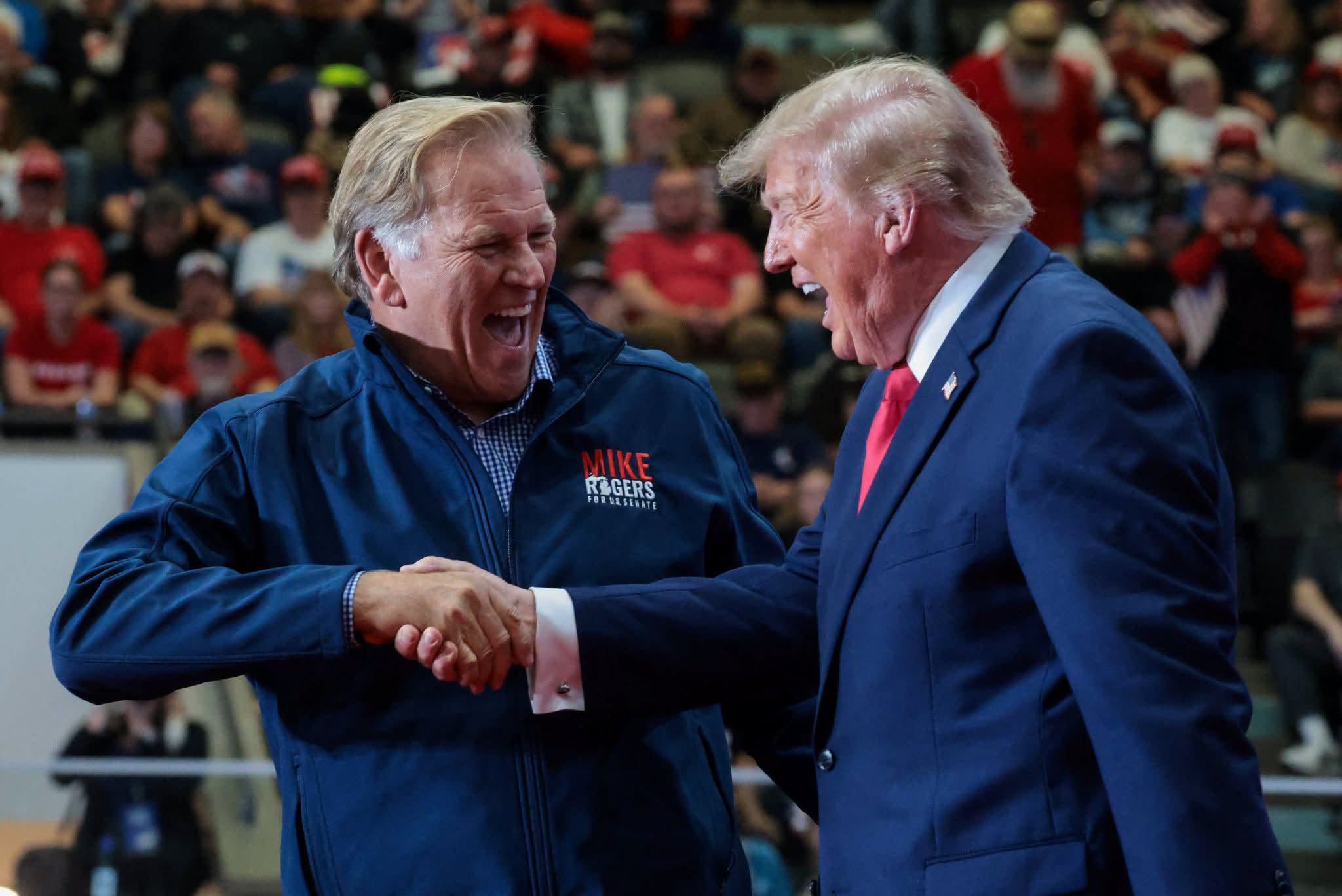
Republican candidate Mike Rogers and Donald Trump were unable to prevent Mr. Abdul El-Sayyed’s victory / Photo – Facebook
One of the main arguments against the Democrat was his Muslim background, which Donald Trump’s team actively used to intimidate American voters. Moreover, true to form, the president himself did not mince words in his statements, attempting to play the xenophobia card.
A post by Donald Trump, with which he tried to “discredit” Al-Sayyid, only served to boost his popularity and mobilize the electorate:
For example, Trump repeatedly called El-Sayyed a “jihadist” and a member of the “Muslim Brotherhood” – a well-known radical Islamic organization. It eventually reached the point where the U.S. president even shamefully compared him to the terrorists who carried out the attacks on September 11, 2001.
And these were by no means isolated attacks; according to estimates by The Washington Post, Republicans spent about $46 million on political ads that exploited themes of Islamic radicalism, terrorism, and the September 11 attacks.
However, even those Democrats who previously may not have shared his political views stepped forward to defend El-Sayyed. In particular, during a final rally in Detroit, former President Barack Obama compared the attacks on the candidate to the campaign waged against him, when his opponents spread false rumors about the future president’s background and religion.
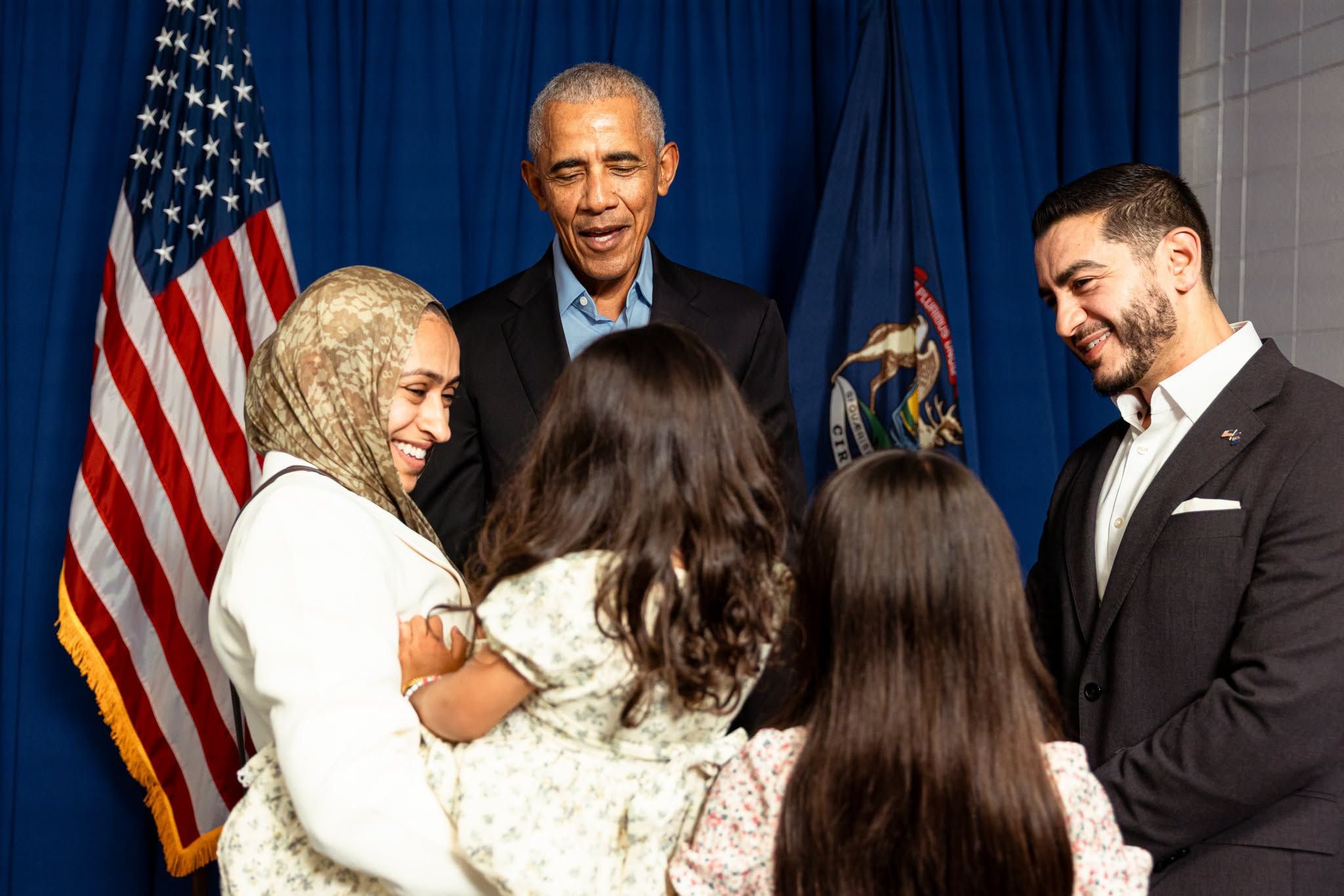
Barack Obama actively lobbied for El-Sayyid’s election as a senator from Michigan. Experts see this as an attempt to “normalize” the politician and convince him to abandon his radical rhetoric / Photo – Facebook
The Republicans’ tactic did not work. In the November 3 election, El-Sayed beat Mike Rogers by about 7%. The situation in Dearborn – a city with a large Arab-American community where Trump won in 2024 – was particularly telling. This time, voters gave the Democrat a decisive lead.
Moreover, in his victory speech, Abdul El-Sayed didn’t resist the temptation to take a dig at his political opponents. In particular, he addressed Vice President J.D. Vance (who actively campaigned against Abdul during the election), reminding him that, by virtue of his office, he would be the one to swear in the new senator. And to Trump, who constantly mispronounced his name, he suggested that after the inauguration, he simply call him “Senator.”
Trolling from the winner:
Incidentally, El-Sayyed didn’t just take aim at American politicians, but also at British journalists. On Election Day, November 3, he got into an argument with Sky News correspondent James Matthews, who tried to ask him a few uncomfortable questions.
The Democrat stated that he had no intention of running for office in the United Kingdom and therefore wasn’t at all interested in the opinions of British voters. When the journalist pointed out that Sky News has an international audience, El-Sayed sarcastically replied that “about five people” watch the channel.
A video of the exchange quickly went viral on social media and sparked outrage in the UK. In particular, well-known TV host Piers Morgan called the politician’s behavior pathetic and condescending, noting that El-Sayed himself studied at Oxford University in the UK and even once wrote for The Guardian, so he could have shown more respect toward British journalists.
Watch the video of the altercation between Abdul El-Sayed and James Matthews:
For the Democrats themselves, this victory also set an important precedent in internal party discussions. After all , El-Sayed demonstrated that even in a competitive state, it is possible to win with an openly left-wing platform without abandoning positions that are unpopular among some of the party leadership.
Now El-Sayed faces a much more difficult task. After all, it’s one thing to defeat Donald Trump and his allies at the polls, especially at a time when most people simply hate them because of their constant failures. But it is quite another matter to ensure that his own political promises are fulfilled in Washington, especially when it comes to reforming the American healthcare system, raising taxes on billionaires, and reevaluating U.S. relations with Israel – some of the most contentious issues within the United States.
Ultimately, over the course of eight years, El-Sayed went from being an unsuccessful gubernatorial candidate to becoming the first Muslim senator in U.S. history. But now he will have to prove that he is capable not only of defeating the political establishment, but also of changing the system from within.
FAQ
If you find an error on this page, select it and press Ctrl + Enter