
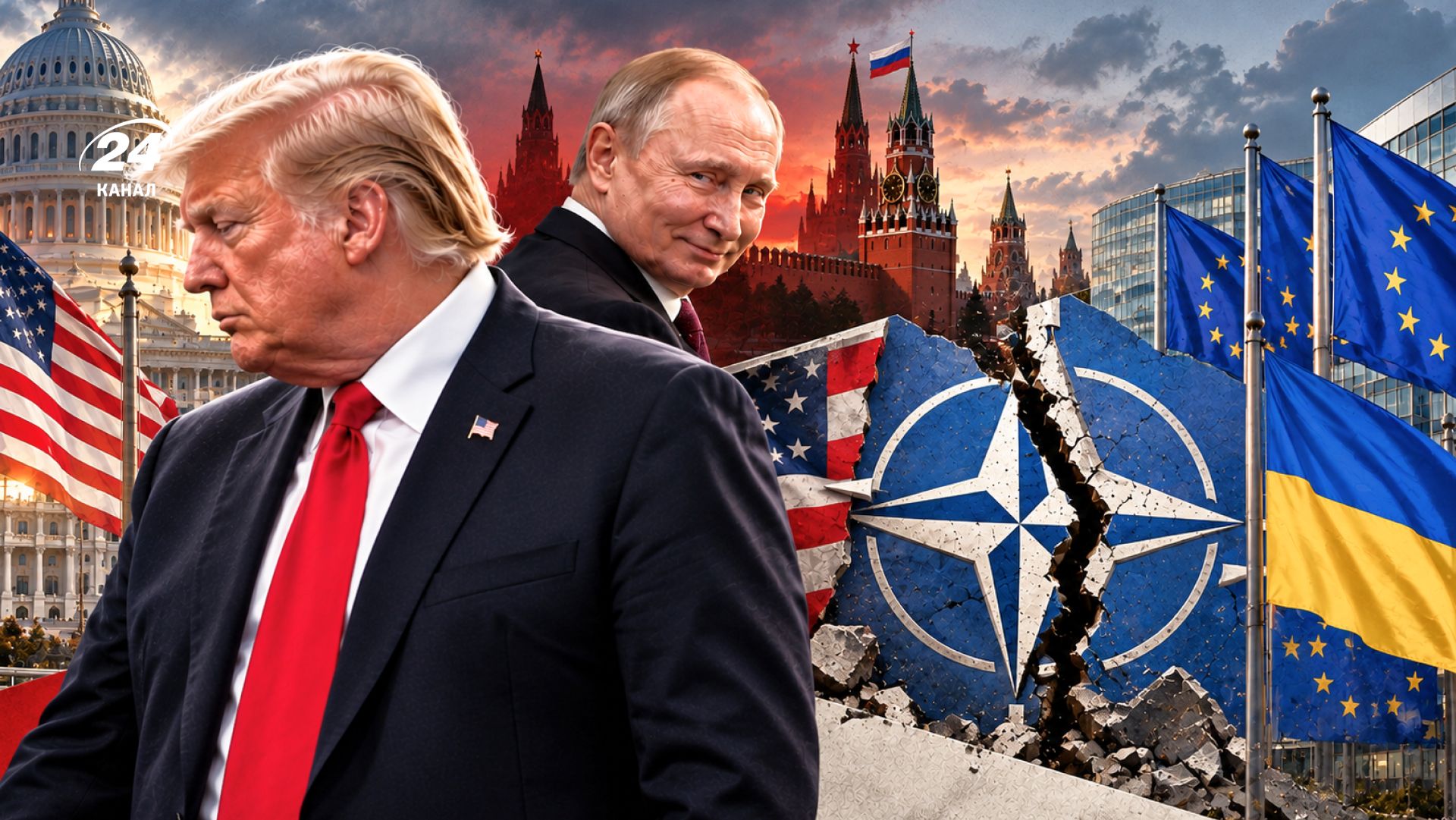


Donald Trump authorized the trade in Russian diesel fuel, hoping to lower prices at gas stations in the U.S. However, fuel prices did not drop, and reports of restrictions on Starlink and problems with the transmission of intelligence data to Ukraine sparked a new wave of criticism against the U.S. president.
Yuriy Rashkin, a U.S.-based civic and political activist, explained in an exclusive interview with Channel 24 why Trump’s policies are causing growing discontent even among his former supporters. He also assessed Congress’s ability to influence the White House and warned of a serious threat to U.S. relations with its European allies.
The diesel deal could become a trap for Ukraine
Restrictions on Starlink’s operations and issues with warnings about Russian missile strikes have not helped lower prices at American gas stations. Instead, Washington’s decisions have raised new questions about support for Ukraine, as the Trump administration attempts to negotiate with Russia, which continues the war.
Rashkin is convinced that the U.S. president’s policies are harming not only Ukraine but also the United States itself. A country that for decades has served as a guarantor of security for its allies is increasingly making decisions that force its partners to doubt its reliability.
This is terrible for our reputation as a country. Because how can anyone trust us? How can anyone form a defense alliance with a country like this? What can we even say about the Budapest Memorandum? This is one big Budapest Memorandum. And we’ll have to rebuild our reputation from scratch. The first step for us is to hold elections,
– Rashkin emphasized.
Trump’s attempts to shift the blame for high fuel prices onto Ukraine are particularly outrageous. Previously, the U.S. president made sensational statements about migrants who allegedly eat cats and dogs, and now he is trying to convince voters that their problems at gas stations are linked to Ukrainian strikes on Russian oil refineries.
The U.S. administration continues to propose various options for ending the war; in particular, a 28-point peace plan was previously discussed. However, Rashkin believes that Trump is all too eager to support proposals that serve Moscow’s interests, even when they contradict Ukraine’s position.
Every one of these plans we’re discussing – any agreement, any 28-point plan – is always an idea from Russia. And he just picks them up and says, “Oh, what a wonderful idea!” He is an enemy of the democratic world; he is a traitor. People tell me, “Don’t get emotional.” This isn’t about emotions; it’s an assessment of what Trump is doing and where he is leading the United States of America,
– said the public figure.
Sharp criticism of Trump is increasingly coming from people who previously believed constructive dialogue with him was possible. Rashkin recalled that some journalists and political commentators lost confidence in the American president after his meeting with Putin in Helsinki, others after the talks in Anchorage, and for some, the diesel deal was the final straw.
Support for the president is also waning among Latino voters, a significant portion of whom voted for him in 2024. Now, as Rashkin noted, Democrats are winning even in some districts whose boundaries were redrawn to favor Republicans.
He cited strict immigration policies as one reason, particularly the actions of ICE agents who carry out detentions and document checks. Having seen how Trump’s campaign promises are being implemented, he believes that part of the Latino community has begun to turn away not only from the president but also from the Republican Party.
At the same time, Ukraine must maintain relations with the United States, even if trust in the current administration has significantly deteriorated. Rashkin considers the mechanism by which Washington could use purchases of Russian diesel fuel against Kyiv to be particularly dangerous.
The diesel deal is like cheese in a mousetrap. Here’s the plan: it doesn’t save anything, it doesn’t change prices – nothing. But now it’s our diesel, and Ukraine is targeting our diesel. And now Trump is declaring with even greater audacity that Russia is now suffering because of this dreadful Ukraine, which has caused fuel prices to rise for our farmers,
– explained Rashkin.
In reality, he attributes the sharp rise in fuel prices in the U.S. primarily to the war against Iran. Prices were already high in early September, when Americans began paying closer attention to the upcoming congressional elections, and the situation has not improved significantly since then.
Rashkin does not rule out that economic problems have already cost Trump a significant portion of his support. Republican voters may continue to hope for a quick end to the crisis, but the president has so far been unable to offer a solution that would noticeably alleviate their situation.
Trump Is Not Worried About the Senate as Long as There Aren't 67 Votes
Representatives from both U.S. political parties have spoken out against authorizing trade in Russian diesel fuel. Twelve senators signed a letter calling for the decision to be rescinded, which was also forwarded to Treasury Secretary Scott Bessent and Secretary of State Marco Rubio.
Among those who spoke out against the deal were Republicans Mitch McConnell, Tom Tillis, Susan Collins, Lisa Murkowski, and John Cornyn, as well as Democrats Richard Blumenthal, Jeanne Shaheen, Dick Durbin, Sheldon Whitehouse, Jack Reed, and Chris Coons. Meanwhile, Politico reported on a possible delay in new tough sanctions against Russia.
Despite this, public opposition from lawmakers remains important. Even if the appeal does not lead to an immediate revocation of the license, Trump will not be able to claim that all American politicians support his decision.
All of this, taken together, is absolutely crucial. Otherwise, he’ll say, “Look, no one’s even speaking out. How wonderful.” We need to at least make it clear that we’re here and that this concerns us,
– Rashkin emphasized.
The problem also lies in the U.S. president’s attitude toward legislative procedures. Rashkin believes that when making the decision regarding Russian diesel fuel, Trump disregarded the mechanisms that require explaining changes to sanctions policy to Congress.
The administration could have justified the need for sanctions exemptions on the grounds of U.S. national security interests. However, according to the public figure, the White House didn’t even attempt to properly take advantage of this opportunity.
All they wanted him to do was say that it was important for national security. Artificial intelligence could have written a report for Congress for him, explaining how this relates to national security. That’s it. He didn’t even do that. He just brazenly went ahead and announced the deal. He couldn’t care less about the Senate or Congress. Why? Because there aren’t 67 votes in the Senate,
– explained Rashkin.
This refers to the number of votes required to remove the president from office through impeachment proceedings. As long as Trump’s opponents lack such support, he can feel fairly confident, even when some Republicans openly criticize his decisions.
Rashkin compared the president’s situation to that of a hired city administrator in the U.S. Such an administrator retains their position as long as they have the support of the elected council, but must abide by its decisions if they do not want to lose their job.
Ultimately, even a president can find himself in a situation where support from his own party is no longer sufficient. Something similar happened to Richard Nixon, who decided to resign after learning that he did not have the necessary number of votes to remain in office.
When Nixon’s party leaders came to him and said, “Sir, you have 15 votes,” he left the next day. And now we see a letter with 12 signatures. These include both Republicans and Democrats. Until then, Trump will do whatever he wants, wherever he can. Because there aren’t 67 votes,
the public figure noted.
After the congressional elections, the situation may change if the Republicans lose some of their seats. However, even such an outcome does not guarantee that Trump will immediately abandon his policies.
Rashkin does not rule out a new impeachment attempt, although its prospects will depend on the stance of Republican lawmakers. In his view, during the previous impeachment, some of them saw no point in supporting the removal of a president who was leaving office anyway after completing his first term. Now the issue may be viewed differently, since Trump remains in power and has significantly greater opportunities to influence government institutions.
FBI Director’s Trip to Moscow Raises Questions in the U.S.
U.S. media reported on possible talks between FBI Director Kash Patel and Russian officials. Specifically, MSNBC reported on his arrival in Russia, although the report did not specify the topics of the meetings or the participants.
Earlier reports had indicated that preparations were underway for a trip scheduled for October 14–15. Rashkin considers such contacts particularly questionable on the eve of the U.S. election, when Russian interference remains one of the threats to democratic processes.
Distrust of Patel is heightened by his open political support for Trump. Before his appointment as FBI director, he wrote a children’s book featuring the American president, and in another work, he listed people he considered his opponents.
For Rashkin, such partisanship calls into question the independence of the head of an agency that is supposed to protect the American state regardless of partisan interests.
It’s unclear what he’s doing there, because he’s the FBI director, and his main task is to protect our elections from Russian influence. What is he doing in Moscow? He needs to be in Washington, in the United States, keeping an eye on this,
– Rashkin emphasized.
Protecting American elections from foreign interference is directly linked to the work of counterintelligence. However, the politician fears that under the Trump administration, law enforcement agencies may increasingly be used to crack down on the president’s domestic opponents.
In such a situation, accusations of espionage or collaboration with foreign states – brought not on the basis of actual evidence but because of a person’s political views – would pose a particular danger.
Rashkin recalled the practices of the Soviet secret services, when the label of “foreign spy” was used to persecute people who had nothing to do with intelligence. He suggested that, under certain circumstances, similar mechanisms might be attempted in the U.S. as well.
For Russia, it has always been about seeking out enemies of the people – labeling those we don’t like as spies for the West. And I think something similar is currently being prepared in the United States, if Trump is able to pull it off. When he needs some kind of structure that can accuse people of spying for China or whoever – his Democratic enemies –
– the public figure speculated.
The FBI director’s contacts with Moscow also pose risks to the American official himself. Rashkin admits that Russian intelligence services may try to obtain sensitive information or gather compromising material to exert influence over him in the future.
He also did not rule out attempts to entice Patel with personal benefits or business proposals. However, nothing is currently known about the content of his possible meetings in Russia, any agreements with the Russian side, or actual attempts at recruitment. Rashkin expressed concern that the FBI director may have already gained access to a significant amount of information of interest to Moscow during his tenure.
Starlink and intelligence data have become tools to pressure Ukraine
Debates continue in Washington regarding further military support for Ukraine. The publication Semafor reported on discussions within the Trump administration regarding a possible restriction on intelligence sharing and the operation of the Starlink satellite internet service.
CIA Director John Ratcliffe, as noted in the report, opposed halting the exchange of intelligence. At the same time, the White House has publicly assured that support for Ukraine continues, although reports of communication disruptions and delays in warnings about Russian ballistic missile attacks have raised serious concerns.
Rashkin is convinced that even the dissent of individual officials does not guarantee the continuation of U.S. aid. In the current administration, too much depends on the president’s personal decisions, and his subordinates have limited ability to change the political course.
Then the CIA director steps in and says, “Well, it’s not quite that simple. Look, maybe we’re in negotiations.” Meanwhile, Elon Musk is limiting Starlink’s capabilities. There are no questions. Pressure is being put on Ukraine. And the only thing that will stop it is the U.S. election, because we need an opposition,
” Rashkin stated.
The issue of timely warnings about ballistic missile strikes remains particularly acute. After incidents where explosions in Ukrainian cities occurred before air raid sirens sounded, explanations citing technical problems and adverse weather conditions emerged.
Rashkin is skeptical of such arguments but did not provide evidence that the U.S. side intentionally stopped transmitting information about missile launches. He believes that any potential restrictions must be considered in conjunction with Washington’s political demands on Kyiv, particularly regarding strikes on Russian oil refineries.
Elon Musk’s decisions remain just as unpredictable. Despite his previous conflict with Trump, the owner of SpaceX continues to influence the operation of the technology on which the Ukrainian military depends.
It’s hard for me to fully predict what Musk will do. There’s simply a lot of information I don’t have. But we can see that he’s playing his own game. And right now, that game involves causing even more harm to Ukraine,
– Rashkin noted.
Polish Foreign Minister Radosław Sikorski publicly reminded Musk that Starlink’s services for Ukraine are funded by international partners. However, Rashkin doubts that financial arguments will significantly change the billionaire’s position.
The conversation mentioned the sum of approximately $50 million that Poland spends annually on satellite communications. At the same time, the politician cited Musk’s significantly higher expenditures in support of American candidates and election campaigns.
According to his estimate, the SpaceX owner has spent hundreds of millions of dollars supporting Trump and associated political forces. Therefore, the potential loss of a single satellite communications contract may not matter as much to him as political deals in Washington.
Rashkin also recalled Musk’s involvement with DOGE, as well as his role in scaling back USAID operations. Following his conflict with Trump, the billionaire even spoke of creating a separate political party, but recent events cast doubt on whether he has definitively distanced himself from the president.
The greatest risk for Ukraine remains the possibility of new restrictions on satellite communications. Rashkin does not claim that Musk has already decided to completely shut down Starlink, but he believes that the Ukrainian military should prepare for various scenarios.
I really like the Ukrainian mindset that there are no unsolvable problems. Here’s the problem. And all the time we have before Elon Musk completely shuts down the service – that’s the time we have to prepare and switch to something else,
– the civic activist emphasized.
At the same time, Ukraine continues to launch strikes against Russian digital infrastructure, particularly data centers on which the operation of various information systems depends. Following these attacks, reports began to emerge of a decline in the activity of Russian bots on Western social media platforms.
However, bot farms have not lost all their capabilities. Russian disinformation networks are still actively operating in the comments sections of popular political broadcasts, although their presence on different platforms can vary significantly.
For example, during a recent broadcast featuring Rashkin and Lev Parnas – which was watched by over three thousand people – a number of accounts exhibiting characteristic provocative behavior appeared in the comments.
“When something popular is happening, they still have resources. But they take their resources and shift them back and forth,”
– Rashkin explained.
The activity of such accounts may depend on the popularity of a specific livestream and the topic of discussion. Russian disinformation networks, as Rashkin suggests, may concentrate their resources where they expect the greatest impact and then shift them to other platforms.
He also noted that aggressive posts in political discussions are often not made by real users, but by specially created accounts. For this reason, Rashkin advises against wasting energy on arguments with obvious provocateurs, even if their comments elicit a strong emotional reaction.
After the election, Trump will not necessarily stop putting pressure on Ukraine
Ukraine faces a difficult choice: to temporarily agree to Washington’s proposals to avoid new restrictions, or to continue targeting Russian oil refining, risking a deterioration in relations with Trump. Some Ukrainian experts advise focusing on weathering the period leading up to the U.S. election on November 3.
Rashkin does not believe that all disputes will automatically disappear after the election. The U.S. president’s problems stem not only from the election campaign but also from the war against Iran and high oil prices.
Even if the Republicans suffer a defeat, the economic situation in the U.S. will not change instantly. Therefore, attempts to shift the blame for rising fuel prices onto Ukraine may continue even after the election is over.
I think this hope is unrealistic, because Trump’s troubles won’t end with the election. His popularity will continue to fall due to his disastrous war in Iran and because oil prices won’t plummet after the election. And Iran won’t give in. All of this is just fantasy in Trump’s head,
– Rashkin suggested.
Permission to purchase Russian diesel has not yet resulted in a noticeable reduction in fuel prices for Americans. Instead, the White House now has an opportunity to claim that Ukrainian strikes on oil refineries are allegedly hindering the supply of diesel needed by American farmers.
Rashkin suggested that Trump might need this rhetoric even after the election if prices remain high. At the same time, he does not rule out that the haste behind the diesel deal is linked to a desire to help Russia right now, without waiting for the U.S. election campaign to end.
Meanwhile, the Ukrainian military continues to identify new vulnerabilities in Russia. Following the controversy surrounding the strikes on oil refineries, Ukraine attacked data centers, causing new difficulties for Russia’s digital infrastructure.
Rashkin ironically suggested that Trump might even try to blame Ukraine for problems with the Russian internet. However, he believes that the choice of future military strategy should remain with Kyiv.
He considers engagement with Western media to be an important tool in countering political pressure. Volodymyr Zelenskyy continues to give interviews to international journalists, including Piers Morgan, and to explain Ukraine’s position directly to a foreign audience.
I think that engaging with the media will certainly help. And it’s always important to talk about what’s happening. Zelenskyy has a very good reputation in the West. There are people who talk about corruption because he embodies Ukraine. That’s why everything good is Zelenskyy, and everything bad is Zelenskyy,
the public figure explained.
In the international media landscape, the Ukrainian president has effectively become the chief representative of the entire country, which is why he is held responsible for both Ukraine’s successes and its problems. Rashkin believes that a broader government of national unity could distribute this political burden among several government officials.
A Possible Rift in NATO
Problems in relations between Ukraine and the U.S. may be part of a much deeper international security crisis. Since World War II, Washington has played a key role in deterring potential aggressors, but Trump’s current decisions raise doubts about whether the United States is prepared to continue fulfilling these obligations.
Rashkin is convinced that the U.S. administration is no longer using its capabilities to deter Putin. Instead, Washington is trying to influence Ukraine, although its ability to force Kyiv to abandon its own decisions is becoming increasingly limited.
For me, the key point here is the realization that the era of deterrence that followed World War II has come to an end. The United States is no longer containing Putin. This is evident from what is happening in Ukraine. But on the other hand, the United States also cannot contain Ukraine,
Rashkin emphasized.
The greatest concern is the possibility of further rapprochement between Washington and Moscow. Rashkin even suggested that, under certain circumstances, Trump might take significantly more radical steps in cooperation with Russia, although there is no evidence of such plans.
At the same time, European countries continue to support Ukraine and view Russian aggression as a threat to their own security. If the United States begins to hinder this support or effectively sides with the Kremlin, conflicts will arise even among NATO members themselves.
Following the diesel deal, Volodymyr Zelenskyy stated that he felt betrayed by Trump’s decision. However, this is not just about Ukrainian-American relations, as the trust of European allies in the entire collective security system depends on Washington’s position.
We are witnessing the end of NATO here. If we set aside all the preamble and get to the heart of the matter, this is the end of NATO. Because how can you trust an ally if it can just abandon someone like that? One might say that Ukraine is not a NATO member, but this will lead to a rift within NATO among the allies,
– said the public figure.
In his view, European states will have to increasingly rely on their own capabilities and on cooperation among countries that recognize the Russian threat. Among the possible options, he mentioned reforming the existing alliance or creating a new format for military cooperation.
Even a NATO model without the United States cannot be ruled out. Rashkin acknowledges that the current alliance has a well-developed structure and mechanisms for cooperation that may remain useful, but he considers the key factor not to be preserving the organization’s name, but rather the partners’ genuine willingness to defend one another.
The issue is particularly acute with regard to countries that, following a change in government, may renege on their previous alliance commitments. In Rashkin’s view, the future security system must include mechanisms to respond even to such scenarios.
The main thing is to have allies who understand the threat. And if these allies do not understand the threat or may cease to be allies because someone else was elected, then it must be possible to exclude such a country from the military alliance. We need different rules, because the rules that have held this world together since World War II no longer work. There isn’t the deterrence that there should be,
– explained Rashkin.
After the November 3 election, Trump may have fewer political opportunities and less desire to intervene in international affairs. However, Rashkin doubts that this will automatically return the United States to its previous role as a guarantor of security for its allies.
Under these circumstances, Ukraine will have to rely increasingly on its own decisions and on the support of countries that are prepared to genuinely stand up to Russia. Rashkin is convinced that even a reduction in U.S. aid should not force Kyiv to abandon its goals in the war.
Yuriy Rashkin on Trump’s betrayal, the FBI director’s visit to Moscow, and the end of NATO: watch the video