

By the end of this decade, Russia could either achieve a strategic victory over Ukraine and impose its own security architecture on Europe, or suffer a complete fiasco and begin to lose control over its own regions – not just the occupied territories.
Analysts Artur Martirosyan and Simon Saradjian explore these possible outcomes; in their study for Russia Matters, they describe what they consider to be the four most likely scenarios for Russia’s future through 2030.
24 Channel examined the circumstances under which the Kremlin could emerge victorious from the current standoff with the West, what could lead to the collapse of Putin’s system, and whether we should expect Russia to disintegrate at all. We also draw attention to the paradox of these predictions, which is that even a military defeat for Russia does not guarantee the fall of Putin’s regime, while the weakening of the Russian state itself could give rise to a whole series of new threats to the world.
popular videos
“A Besieged Fortress” led by Putin: Can Russia Continue the War Until 2030?
It is now 2030, and Russia has been waging a full-scale war against Ukraine for nine years, while Western sanctions continue to put pressure on its economy. Russians are growing poorer, and Moscow’s economic and technological dependence on Beijing is only increasing. However, Vladimir Putin – or his appointed successor – continues to control the country, and the Russian military remains a serious threat not only to Ukraine but also to the countries on NATO’s eastern flank.
This is roughly what the first scenario for Russia’s future looks like, which researchers have dubbed “The Besieged Fortress.” And although under such a scenario Russia is effectively unable to achieve its strategic goals in the war against Ukraine, the Kremlin will succeed in achieving another goal that is no less important to it – preserving its own power.
However, it will be the Russian people themselves who will pay the price for the survival of Putin’s regime. By that time, the number of Russians killed in the war is guaranteed to exceed 1 million (currently it stands at “only” 720,000), and vast sums of money will continue to be channeled into the military-industrial complex and the maintenance of the security forces, while civilian infrastructure and the healthcare system will gradually fall into disrepair. The already complex demographic situation will be exacerbated by war casualties and the continued exodus of skilled workers from the country.
China stands to gain the most from such a turn of events. Having lost a significant portion of its Western markets, Russia will become increasingly dependent on Beijing’s goodwill to continue buying its oil and gas – effectively as a monopoly – supplying technology, and helping it circumvent sanctions. And the fewer alternatives Moscow has, the more favorable terms China will be able to dictate.
However, perhaps the most troubling aspect of this scenario is that Russia could remain in this state for years – and not merely exist, but pose a threat to the European continent.
Researchers currently consider this scenario for Russia’s future to be the most likely. However, while as of August 2026 they estimated its probability at 54–59%, by 2030 this figure drops to 37–42%.
After all, to maintain his power, Putin does not need to ensure the well-being of the Russian people. It is enough for the dictator to have money for war, to maintain the security apparatus, and to ensure the loyalty of the elites. And although the prospect of at least four more years of war looks quite bleak in and of itself, this is far from the worst-case scenario for Ukraine and Europe regarding Russia’s future.
From “New Tilsit” to the Outcome of the Crimean War: How Ukraine’s Fate Will Determine Russia’s Future
According to the researchers’ second scenario, by 2030, Russia will somehow manage to inflict a strategic defeat on Ukraine.
This scenario suggests that Ukraine could lose even more territory and, although it would formally retain its independence, its military capabilities would be significantly limited. However, the Kremlin’s ambitions do not end with Ukraine alone, and against the backdrop of discord within the Western community, Moscow gains the opportunity to impose its own terms of coexistence on the rest of Europe.
It is no coincidence that researchers have dubbed this scenario “New Tilsit, ” drawing a historical parallel with the events of the early 19th century. Back then, in July 1807, following a series of military defeats, Russian Emperor Alexander I was forced to make peace with Napoleon on Napoleon’s terms.
The French emperor effectively gained the ability to divide the continent into spheres of influence and dictate the rules of political life to a significant part of Europe. And now, more than two centuries later, analysts suggest that Vladimir Putin may find himself in the role of Napoleon.
Having come to terms with Russia’s victory, some European states will begin to restore economic ties with Moscow; in particular, sanctions on Russian energy resources will be lifted. Poland and the Baltic states, however, having lost confidence in NATO’s ability to guarantee their security, will be forced to seek alternative ways to defend themselves against Russian aggression. Researchers suggest that this could even lead to discussions about acquiring their own nuclear weapons.
For Putin’s regime itself, such a turn of events would be a true triumph. After all, the Kremlin would succeed in proving to Russians and its own political elites that the long-running war, the enormous human losses, and the economic hardships were ultimately justified and have, in fact, placed Russia among the world’s leading powers – at least as a formidable military machine.
Researchers estimate the probability of such a Kremlin scenario by 2030 at 16–19 percent. And to a large extent, its realization will depend not only on the successes of the Russian army but also on deepening divisions within the West itself.
However, the history of the Treaty of Tilsit itself demonstrates just how short-lived such a world order can be. Just five years after it was signed, Napoleon and Alexander I found themselves at war once again. And it is unlikely that Ukraine and the countries of Eastern Europe will willingly accept the terms imposed by Moscow once they have gained enough strength to renegotiate them. So, sooner or later, Moscow will have to be burned to the ground once again.
The history of the Russian Empire also includes a completely different, directly opposite experience. In 1856, Russia suffered a humiliating defeat in the Crimean War, which openly demonstrated the extent of the empire’s military and technological backwardness compared to the leading European powers. The war, which was supposed to strengthen Russia’s position on the international stage, ultimately laid bare a whole series of internal problems. And although the empire survived this defeat, the new emperor, Alexander II, was forced to undertake large-scale domestic reforms.
This is roughly the course of events envisaged by the researchers’ third scenario, under which the war against Ukraine would not only end in a strategic defeat for Russia but would also force the Russian elite to reflect on just how dead-end the path Vladimir Putin has led their country down has turned out to be.
And while a victory would give the Russian elite something to celebrate and be proud of, a defeat would force them to scramble to find someone to blame. Russian security officials and military commanders, who for years have argued for the need to continue the war, will begin to lose their influence. Instead, the arguments of a certain technocratic faction within the Russian elite – which views Russia’s economic and political isolation as too high a price to pay for the dictator’s imperial ambitions – will carry increasing weight.
Interestingly, analysts estimate the probability of Russia’s strategic defeat by 2030 to be roughly the same as the probability of its victory – 16–21 percent.
Moreover, according to analysts, even under such rather bleak circumstances, Putin’s system itself may survive. What’s more, in an attempt to compensate for the Russian army’s loss of prestige, the Kremlin may resort to even more aggressive nuclear blackmail against the West.
And while the previous three scenarios focused primarily on the future of Putin’s regime and Russia’s place in the world, the fourth scenario could call into question the very existence of the Russian state in its current form.
Russia on the Brink of Collapse: How the Kremlin Could Lose Control of the Country
Interestingly, researchers do not link this fourth scenario for Russia’s future to a revolution, a military coup, or even the sudden death of Vladimir Putin. On the contrary, at first glance, nothing remarkable is happening in Russia in 2030. Federal authorities continue to operate in Moscow, Russian regions are formally subordinate to the Kremlin, and there are no protests involving thousands of people on the streets of Russian cities.
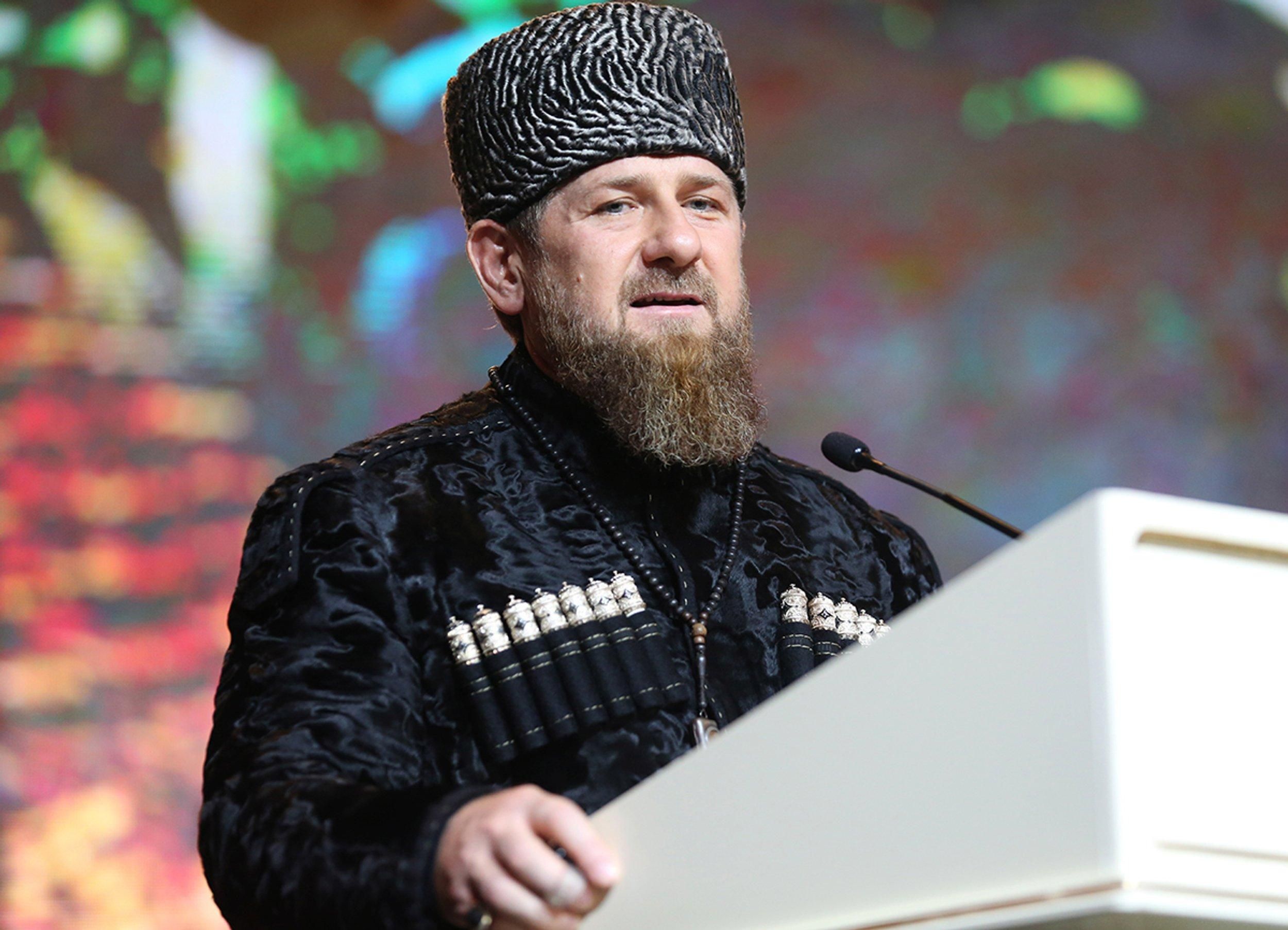
Ramzan Kadyrov, Russia’s governor of Chechnya, is gradually building his own security apparatus, separate from the Kremlin / Photo – Getty Images
However, behind this illusion of stability lies the gradual deterioration of the Russian state. The federal government has increasingly less money to support the regions; local elites are increasingly ignoring Moscow’s orders; and problems with salary payments and the functioning of public utilities are becoming commonplace. At the same time, regional elites do not seek open confrontation with the Kremlin but are simply learning to survive without its intervention.
Paradoxically, under such a scenario, the pressure of sanctions on Russia may even weaken. And not because the Kremlin will manage to reach an agreement with the West, but because the world’s interest in Russia as a major geopolitical power will gradually fade. In other words, Russia will literally cease to pose a tangible threat to Europe.
However, not everyone in the world will view the weakening of the Russian state with outright enthusiasm. The fact is that Moscow’s loss of control over the regions could turn into a major problem, especially for neighboring countries. This could lead to a rise in organized crime, problems with controlling national borders, and – what worries Western analysts the most – the uncertain fate of Russia’s nuclear arsenal.
At the same time, no one can guarantee that the gradual deterioration of the Russian state will not, at some point, take on an avalanche-like character. After all, the weaker the Kremlin’s power becomes, the more difficult it will be for it to cope with each successive internal crisis.
Moreover, researchers estimate the probability that Moscow will gradually lose control over its own country at 23–26% by 2030. In other words, they consider this course of events even more realistic than a strategic victory or defeat for Russia in the war against Ukraine.
And that is precisely why, in addition to the four main scenarios, the researchers also consider the most radical possibility – the rapid collapse of the entire Russian state. For example, a large-scale currency crisis could coincide with a power struggle among Putin’s potential successors and open confrontation between various groups within the Russian security forces. In such a case, the Kremlin risks simultaneously losing control over its own security apparatus and the federal subjects.
Moreover, the world saw the first signs of just how vulnerable Putin’s power structure could be as early as the summer of 2023, during Yevgeny Prigozhin’s mutiny. Researchers do not rule out a repeat of such events, though under circumstances that would be significantly less favorable for the Kremlin. That said, researchers estimate the probability of a sudden split within Russia’s security apparatus at only 3–5% as of 2026, with a slight increase to 8–10% by 2030.
Ultimately, Russia’s future will depend on far more than just what happens within Russia itself. Equally important will be Ukraine’s ability to resist Russian aggression and the West’s willingness to support our country. But the main irony is that the war Vladimir Putin started to determine Ukraine’s future may ultimately determine Russia’s own future.
FAQ
If you find an error on this page, select it and press Ctrl + Enter