
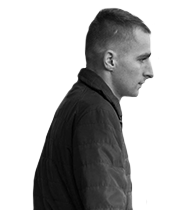

How Klitschko behaves during votes on land issues in the Kyiv City Council / Vitali Klitschko's Telegram
Mayor Vitali Klitschko rarely participates in land-related votes by the Kyiv City Council. Over the past six years, he has been present for only 437 of 2,350 votes in which council members considered land issues on their merits. But even when the mayor is in the chamber, he does not press the button in 62% of such votes. However, when Klitschko does vote, his vote can determine the fate of a plot of land.
That is exactly what happened with “Natalka” Park in Obolon. This is detailed in a study by the civic initiative “Holka,” which analyzed more than 9,400 votes by the Kyiv City Council over a six-year period.
popular videos
The study showed that out of 437 land-related votes in which Vitali Klitschko was present, he supported 168. That is 7% of all land-related votes on their merits.
How Kyiv City Council factions voted on land issues / Infographic – “Holka”
With exactly 61 votes – the minimum required – the Kyiv City Council granted the company “Gyuvexhaus” a 10-year lease on 1.28 hectares in “Natalka” Park for a restaurant or other commercial facilities.
The mayor was among those who voted “in favor,” so without his vote, the decision would not have passed. The decision was adopted even though construction work had previously been carried out on the site without land rights, and a criminal investigation had been opened in this regard.
At the same time, most land-related decisions are passed by the votes of political factions. “Batkivshchyna” and the mayor’s “Udar” faction are the most active in supporting them: 83% and 82% of their deputies, respectively, attend land-use votes, and 90% of those present vote “in favor.” Deputies from “European Solidarity” and “Servant of the People” support land decisions at the same rate – 59% of their respective factions. The “Unity” and “Voice” factions vote “in favor” the least often.
If the city budget is a renewable resource and Kyiv will have a new budget every year, then land is a particularly valuable resource. Once it is given away, the city will most likely never be able to get it back. The data suggests that the mayor may well understand the reputational risks and is therefore distancing himself from land-related votes, but he represents the UDAR party. So there are questions for the party’s executive committee chairman, Artur Palatny: Why does Mykhailo Terentyev, who was implicated in the NABU operation “Clean City,” still head the land commission? But other parties must also answer for this. UDAR has only 30 votes out of 120, and decisions are made by a majority. “Batkivshchyna, European Solidarity, and Servant of the People also cast their votes on land issues,” says Iryna Fedoriv, head of the civic initiative “Holka.”
Analysis of deputies’ attendance and “overtime” voting / infographic – “Holka”
Interestingly, the mayor also stays away when issues related to construction, urban planning, and leasing are being considered. Compared to his usual attendance rate, the mayor is 19 percentage points less likely to attend votes on land issues and construction, and 27 percentage points less likely to attend votes on leasing issues.
In contrast, Klitschko attends votes on the budget and city administration 13 and 16 percentage points more often than usual, respectively.
If you find an error on this page, select it and press Ctrl + Enter