




 3
3 On Friday, October 9, Oslo will announce the new winner of the Nobel Peace Prize – arguably the most politicized and, at the same time, the most controversial of all the prizes bequeathed by Alfred Nobel.
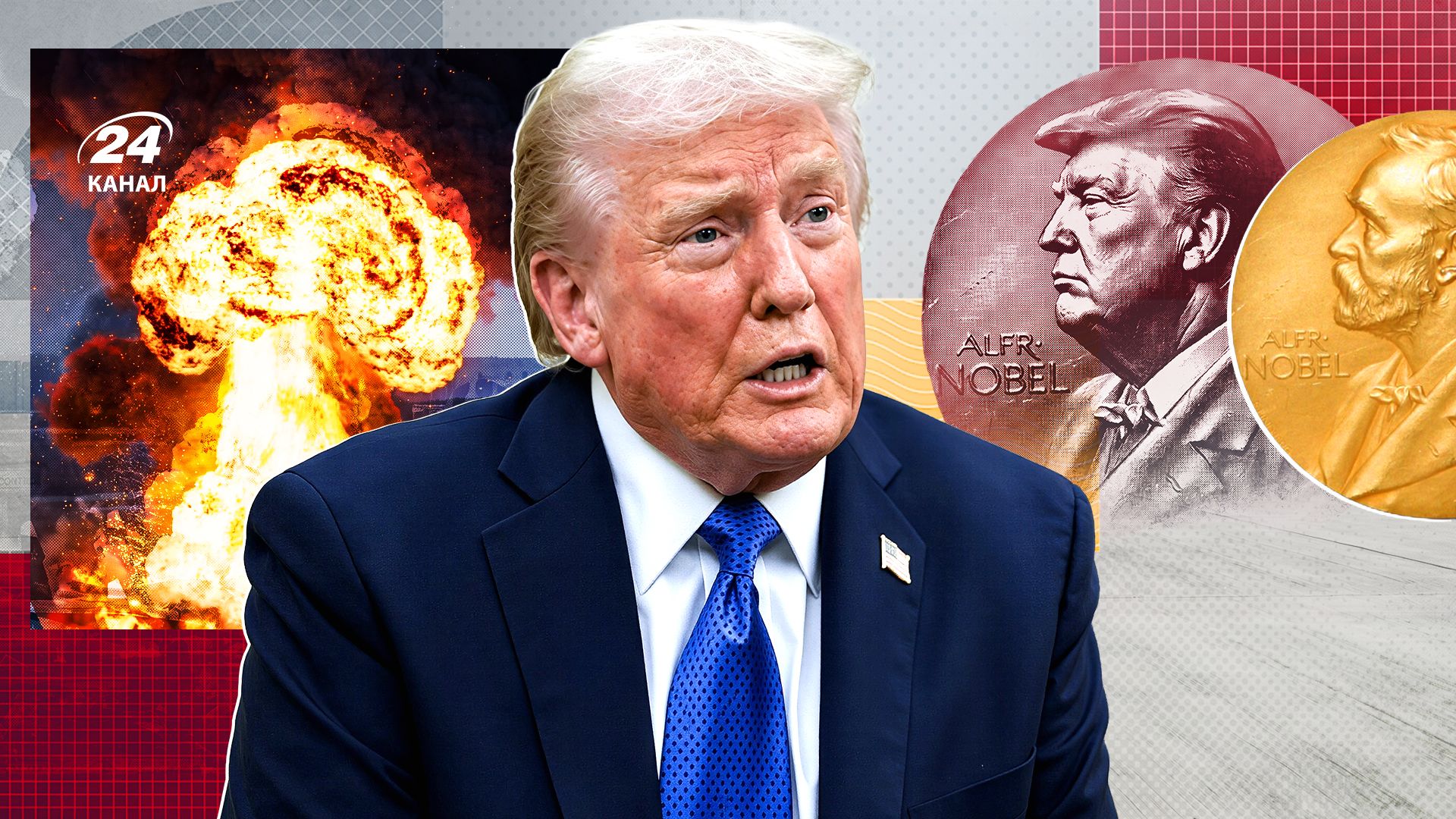
Donald Trump certainly won’t receive it, but he probably wants it more than anyone else on Earth. The American president makes no secret of the fact that he considers himself fully deserving of this award, regularly reminding the whole world of his own peacemaking achievements. But the Nobel Peace Prize is not the same as the FIFA Peace Prize. The American president makes no secret of the fact that he considers himself fully deserving of this award, regularly reminding the whole world of his own peacemaking achievements. But the Nobel Peace Prize is not the same as the FIFA Peace Prize.
Channel 24 took a closer look at who is currently considered among the favorites for this year’s Nobel Peace Prize, how a single winner is selected from among hundreds of candidates, and why the U.S. president, despite all his efforts, may once again come away empty-handed.
Many nominees – one laureate: how the Nobel Peace Prize winner is chosen
A few months before the announcement of the Nobel Peace Prize winner, the global media traditionally begins a sort of “hit parade” of nominees. A politician may be nominated by a member of parliament, a public figure by a university professor, or a government may solemnly announce that it has put forward the candidacy of a foreign leader.
In the case of Donald Trump, such announcements have even become a distinct genre for demonstrating political loyalty. The problem is simply that a nomination for the Nobel Peace Prize, in and of itself , means far less than the sensational headlines might suggest.
A fairly wide range of people has the right to nominate candidates: sitting members of parliament, ministers, and heads of state, members of certain international courts, professors in a range of humanities and social sciences, directors of peace and foreign policy research institutes, previous laureates, and the members of the Norwegian Nobel Committee themselves. As a reminder, the four other “specialized” Nobel Committees are based in Stockholm.
Members of the Norwegian Nobel Committee / Photo from the prize’s official website

The Nobel Institute itself even specifically emphasizes that inclusion on the initial list is neither an endorsement of a candidate nor a special distinction from the committee. Until the deadline for submissions (at midnight on January 31, 2026), all candidates are first screened for compliance with the competition’s formal requirements.
This year, there were as many as 287 candidates, including 208 individuals and 79 organizations. We do not officially knowwho these people are, nor will we find out anytime soon, as the names of the nominees remain confidential for 50 years. Therefore, when yet another “Nobel Prize candidate” appears in the media, the source of the information is usually the person who nominated them, or simply expert predictions or media reports.
The Nobel Committee itself, as a matter of principle, does not confirm such reports. So, for countries like Cambodia or Pakistan – which have nominally put forward Trump for the 2026 award – it’s not even necessary to do so in reality, since no one will ever know whether it’s true or not.
The actual selection process begins later, when five members of the Norwegian Nobel Committee – appointed by the Norwegian Parliament – compile a shortlist of the most promising candidates. Next, independent experts analyze their merits, and the committee itself holds meetings over the course of several months, gradually narrowing down the list of nominees. By summer, there are usually only a few candidates left on the list, and the final decision is made by consensus or a simple majority vote.
Moreover, over the course of more than a century, the very concept of “peace” has come to mean much more than the literal cessation of war. In his will, Alfred Nobel spoke of brotherhood among nations, the reduction of armies, and the holding of peace congresses. Over time, the committee has extended this logic to include humanitarian work, the protection of human rights, democracy, international cooperation, and the fight for disarmament.
That is precisely why a politician’s track record of several successful ceasefire negotiations does not automatically make them a favorite. The Nobel Committee selects not only someone who has done something for peace, but also the specific understanding of peace it wishes to support this year – and in 2026, its choice is particularly intriguing.
A Ukrainian organization among the nominees: who else could win this year
Due to the complete secrecy of the process, it is nearly impossible to compile a comprehensive ranking of the favorites for the Nobel Peace Prize. However, experts, bookmakers, and specialized think tanks attempt to do so every year.
One of the most notable benchmarks is traditionally the list compiled by the Peace Research Institute Oslo (PRIO), which has no connection to the Nobel Committee but attempts to predict which topics might interest its members.
And this year, one of those topics is directly related to Ukraine. PRIO has placed Ukrainian human rights activist Mykola Kuleba at the top of its list , alongside the international organization Save the Children. Kuleba heads Save Ukraine, an organization dedicated to bringing back Ukrainian children abducted by Russia and providing assistance to families affected by the war.
Mykola Kuleba during a public speech / Photo – Bring Kids Back UA

This recognition is intended to highlight the protection of children as a distinct aspect of the struggle for peace – one that is not as high-profile or visible as negotiations between leaders, but is often much closer to the people directly experiencing the war.
Another possible option is the Emergency Response Rooms in Sudan. This is a network of local volunteer groups that, amid civil war, organize evacuations, provide medical aid, feed the population, and maintain critical infrastructure. In fact, we’re talking about thousands of ordinary people who have taken on the roles of humanitarian organizations in places where the international aid system simply cannot cope.
At the same time, against the backdrop of a record number of journalists killed, the Committee to Protect Journalists – which tracks violations, threats, and attacks on media representatives – is also mentioned among the possible candidates. The organization is even referred to as the “Red Cross for journalists.”
Tomoko Akane, President of the International Criminal Court, was subject to U.S. sanctions in 2026 / Photo – ICC

However, a joint award to the UN International Court of Justice and the International Criminal Court would likely be the most politicized choice . Such a choice could be interpreted not merely as a recognition of specific achievements, but as a demonstrative show of support for these organizations and international law at a time when major powers are increasingly putting pressure on their representatives for political reasons.
Reuters separately namesPope Leo XIV, who advocates for diplomatic conflict resolution, and UN Special Rapporteur on the Palestinian Territories Francesca Albanese among the potential laureates .
However, many experts suggest that this year the Nobel Committee may deliberately give preference to an international institution, a humanitarian organization, or human rights defenders – that is, to remind the world that peace is not limited to an agreement between two politicians at the negotiating table.
And this is precisely where the problem lies for Donald Trump. The U.S. president is proposing a completely different concept to the Nobel Committee. He doesn’t advocate for the long-term building of institutions, but rather for bringing warring parties to the table, pressuring them with every means available, and securing a “peaceful” agreement.
The only question is whether such an approach is considered sufficient grounds for the Nobel Peace Prize. Especially if Trump fails – he cannot end the war in Ukraine, which he promised to resolve in 24 hours. Trump also doesn’t know What to do about Iran. And so on.
The “Peacemaker” Who Wages War: Why Donald Trump Might Once Again Be Left Without an Award
If you repeat long enough and loudly enough that you deserve the Nobel Peace Prize, one day it might seem as though the award really did get lost somewhere on its way to the White House. For years now, Donald Trump has been reminding everyone of his own peacemaking achievements, listing the wars he claims to have ended (including fictional ones), and makes little effort to hide his irritation that the Nobel Committee has yet to properly recognize his efforts.
In his eagerness to receive the award, he has gone to absurd lengths – Trump pressured the British government, and when he received a justified rejection, he took offense and staged a show of defiance at the farewell ceremony for the late king, when a low-ranking official attended the funeral on behalf of the U.S.
But if we set aside the self-promotion typical of an American president, his claims cannot be called entirely unfounded. During his second term, the White House, led by Trump, has indeed repeatedly acted as a mediator in international conflicts, and Trump has already received public endorsement of his candidacy from several foreign leaders.
The War in the Gaza Strip / Photo – Getty Images

His most notable achievement was his agreement regarding Gaza. In October 2025, with U.S. mediation, a ceasefire was reached, the last Israeli hostages were released in exchange for Palestinian prisoners, and the volume of humanitarian aid was increased.
Trump’s nomination for the Nobel Prize was publicly supported (in addition to the White House) by the leaders of Israel, Cambodia, and Pakistan. In other words, the U.S. president’s desire to receive the award is based not only on his personal conviction of his own exceptionalism.
The problem is simply that, beyond Donald Trump’s triumphant statements, the situation in Gaza looks far less convincing. A year after the agreement, its key provisions remain unfulfilled:
- Hamas has not been disarmed;
- Israeli troops control a significant portion of the enclave;
- Hostilities have not completely ceased, and the humanitarian crisis remains unresolved;
- The large-scale reconstruction that Trump himself touted so heavily has not even begun.
In other words, the U.S. president did indeed manage to halt the active phase of the war, but he has not yet succeeded in transforming the ceasefire into a lasting peace.
But Iran remains the biggest elephant in the room. The president, who is vying for the world’s top peacekeeping award, has simultaneously been waging war against another country for eight months now. The U.S., together with Israel, launched a campaign against Tehran back in February, and negotiations to end hostilities have yet to yield results. According to experts, it is precisely the war with Iran that virtually rules out Trump’s chances of winning the prize this year. And then there is the de facto occupation of Venezuela, similar plans regarding Cuba, and threats against Greenland.
Added to this is Trump’s conflict with international institutions, which the Nobel Committee itself traditionally regards as one of the foundations of peace.
The U.S. president has called on other countries to withdraw from the International Criminal Court, and the State Department has even imposed sanctions against representatives of the organization. And most interestingly, it is precisely the International Criminal Court that is being cited this year as one of Trump’s potential competitors in the race for the prize.
This creates a rather paradoxical situation, as Trump can certainly claim certain peacemaking achievements to his credit, but at the same time, his own foreign policy contradicts much of what the Nobel Peace Prize has been awarded for over the past decades.
Donald Trump Receives Someone Else’s Peace Prize / Photo – White House

Incidentally, he already has a gold Nobel medal. Last year’s laureate, Maria Corina Machado, handed her medal to Trump after receiving the award, in an effort to secure his support in the fight against the Venezuelan regime.
However, the Nobel Institute itself has specifically emphasized that while the medal can certainly be transferred, the status of laureate cannot. So if Trump’s name isn’t called from the podium in Oslo on October 9, the U.S. president will have to continue making do with someone else’s award. Or the FIFA Peace Prize.