


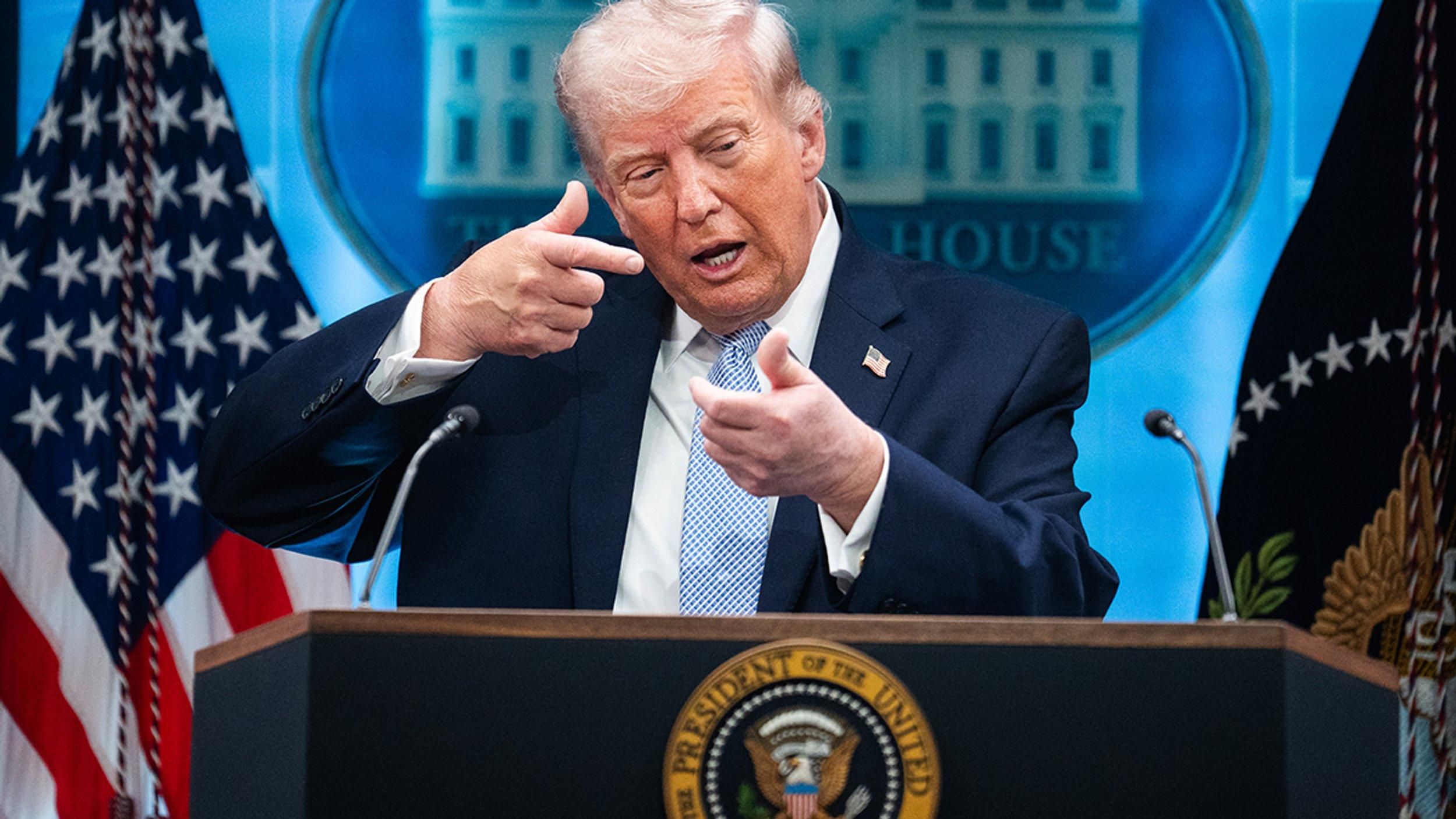


The statement by the current U.S. president about reaching an agreement with the Russians on a “major diesel deal” and his public thanks to the Russian leader personally not only “rocked” the Ukrainian and international media landscape but also effectively destroyed the strategy for a diplomatic resolution to end the Russian-Ukrainian war in the near future.
Although this strategy had already run its course by 2022 and was largely a pretense, it nonetheless raised positive expectations regarding the very possibility of halting the escalation of the war in Europe through diplomatic means.
Valery Chaly, a diplomat and chairman of the board of the Ukrainian Media Center, analyzed Donald Trump’s latest sensational statements exclusively for Channel 24 and believes they resemble a “diesel show,” but could lead to a reshaping of the negotiation process aimed at ending the war in Europe.
What was it: a “diesel show” or a “black swan”?
If you wanted to see with your own eyes what a “black swan” is in international politics – this is a very similar story. Perhaps not the most obvious one in terms of scale, but in essence and characteristics – it’s definitely a black swan.
Today’s shift by the current occupant of the White House toward the Kremlin and the beginning of a change in course – from sanctions pressure to the gradual lifting of sanctions – demonstrates the inability of Donald Trump’s team to continue serving as a mediator in negotiations between the Ukrainian government and the Kremlin, that is, the obvious failure of various attempts to achieve even a temporary ceasefire in the Russian-Ukrainian war, which is now effectively moving to a new level – that of a European regional armed conflict.
Was this expected? Generally speaking, commentators will cite many arguments that, yes, it was. And these arguments will primarily concern Donald Trump’s personal loyalty to the Russian dictator – a fact that seems strange to the general public. But why did it happen exactly this way, at this very moment, when a Ukrainian negotiating delegation was in the U.S., hoping for at least a sectoral ceasefire; when there was only one week left until the deadline set by “Lindsey Graham's sanctions bill ”; when criticism of the incumbent U.S. president for his soft stance toward the aggressors had reached another peak; and on the eve of the U.S. midterm elections (November 3) and the APEC summit in Shenzhen (November 17–18) – this can hardly be called a predictable, much less an expected, development.
The Real Reasons and Motives Behind the “Negotiation U-Turn” Across the Potomac
It is clear that this statement from official Washington was not merely another example of Donald Trump’s customary “epistolary creativity” in the form of short posts, with the now-familiar goal of destabilizing international markets and allowing his supporters to profit from it. This is a tactical move prepared by the entire White House team in collaboration with relevant business circles – represented in the negotiations by Jared Kushner and Steve Witkoff – aimed not at the quickest possible truce or even a ceasefire, but at putting out the “domestic American fire.”
This “political fire” has already caused the ruling party’s approval ratings to plummet amid rising consumer prices, particularly for diesel, whose retail prices have surprised even Texans. Local voters, who – even while supporting the environmental organizations’ protests “with their hearts” – have in fact always felt quite at ease “with their minds” as they watched the development of oil production in the Gulf of Mexico. And it was only the completely unexpected and unprecedented price of $6.66 per gallon for diesel that not only caused growing anxiety but also manifested in pollsters’ predictions of a loss of ground for the Republicans on the eve of the election.
Such a turn of events, just a few weeks before the final tally of votes in the U.S. congressional elections, despite “damage control measures” whose effectiveness remains to be seen, could clearly lead to the launch of yet another impeachment inquiry against the U.S. president – a possibility that Donald Trump himself has publicly warned about.
This is highly likely to occur if the Republicans lose control of the House of Representatives in Congress. But the White House’s moves on the foreign policy front – which clearly do not strengthen the U.S.’s position on the international stage – indicate concern (and perhaps even panic) among White House political strategists about a possible loss of the Senate as well. And that means a complete collapse of the ongoing strategy to secure victory in the presidential election, which is fast approaching (November 2028).
The Oval Office. Version 2.0, but the trap is the same. Key Consequences
What consequences will the public “unmasking” of the White House’s position have? Especially when it was accompanied by a spat between the presidents of Ukraine and the U.S., which strongly resembles the Oval Office trap of 2025 – one that Donald Trump’s team set for Volodymyr Zelenskyy and into which, unfortunately, the Ukrainian delegation ultimately fell into, having failed to prepare adequately for such a – to put it mildly – challenging negotiator as Donald Trump.
First, this stance demonstrates a de facto inability to fulfill the role of an effective mediator with leverage – a role the American negotiating team has been trying to play in the negotiation process for quite some time.
Second, it has become clear to a wider audience that under Donald Trump’s presidency, the war in Russia has virtually no chance of ending, since his personal approach and the corresponding team of negotiators were based solely on a model more suited to resolving business, trade, or economic conflicts than to ending wars of an existential nature.
Third, neither Washington nor the Kremlin has ever truly understood the specifics of strategic decision-making in Ukraine – decisions that touch upon the very existence or direction of the country’s development – a process that differs significantly from both Russian imperial governance and the new governance model that thethe current White House occupant is trying to impose on the Americans today.
No matter how much Donald Trump appeals to Volodymyr Zelenskyy, the Ukrainian president’s intransigence on fundamental issues of national security is not so much a manifestation of specific traits of his character or the implementation of a deeply thought-out plan to achieve his goals. It is, first and foremost, his intuitive sense that choosing an approach other than the one supported by the passionate segment of the Ukrainian people – who are not prepared to accept de facto capitulation in the face of a threat of annihilation – would simply mean automatically losing the opportunity to continue governing the State of Ukraine.
Fourth, such a “U-turn on the Potomac” (from the imposition of new sanctions to their lifting, without any change in the aggressor’s position) gives the Russian leader renewed hope for continuing the war of attrition and for more confidently spreading the narrative that in anycase, victory will be his – which is by no means obvious if one conducts a thorough, multifactorial analysis of Russia’s ability to continue the war for as long as it wishes.
Fifth, the U.S. has, unfortunately, once again acted as an unpredictable partner, which will objectively erode the Euro-Atlantic anti-Russian coalition and require more decisive action from European countries.
In general, this turn of events could have occurred even without Donald Trump’s public statements and this “political coming-out,” but now, vain hopes for a ceasefire, a truce, and – even more so – lasting peace in the near future will diminish significantly.
It is becoming clear that the U.S., at least until the next presidential election in November 2028, will play an increasingly minor role in negotiations on de-escalating military conflicts in Europe, as it becomes bogged down in domestic political issues. And such problems could arise as early as this winter – such as another government shutdown, the initiation of impeachment proceedings, or even the unfolding of an unprecedentedly fierce battle for the presidency, directly involving newly created law enforcement agencies on one side and the intelligence community, police, and National Guard of various states on the other.
Obviously, in such a situation, as the White House distances itself from negotiations aimed at restoring peace to the European continent, the role of key Western nations and China will grow.
What Should Ukraine Do?
What should Ukraine do, both in responding to the new situation in the short term and in adjusting its national defense and security strategy?
If anyone has doubts about whether Ukraine itself needs to change and adjust its approaches, given that there are no signs of a desire for peace on the part of the Kremlin – and there clearly won’t be any in the short term – they are mistaking wishful thinking for reality and may lead the country not to a just and sustainable peace, but to defeat.
Foreign policy must be grounded in a solid foundation. This foundation consists of a triangle: national resilience (including state institutions and societal resilience); effective defense in the face of resource asymmetry with the aggressor (new technologies and the scaling up of missile capabilities); and the maintenance and development of partnerships and, possibly, allied relations with European countries and organizations.
What, then, should be done regarding the United States, where the available tools have not yielded the results Kyiv desires? A systematic approach is needed:
Expand contacts in Congress. It is necessary to establish direct communication with all members of the Senate and the majority of the House of Representatives, both the current and incoming members.
Work with business elites. Pay more attention to defense industry lobbyists, influential corporations, and the leadership of individual U.S. states (which the governors themselves – who command the National Guard in peacetime – refer to as “united states”).
Strengthen the information presence. Ukrainian narratives in the U.S. and around the world need to be scaled up significantly – cultural diplomacy or “borscht diplomacy” alone is definitely not enough anymore.
We shouldn’t count out the unpredictable (though not to everyone) Donald Trump either. Although the 47th U.S. president’s position will likely be weakened after the November midterm elections, he will remain an important player who, even if he cannot further facilitate Russian plans, he will certainly retain – by virtue of his office – the ability to block space intelligence data critical to Ukraine, permits for the supply or sale of weapons, or the capacity to exert political, military, or informational influence not only on American but also on global processes.
There are no illusions regarding Trump’s personal attitude toward Zelenskyy. There has never been any “chemistry” in this relationship, so adequate responses to the “emotional swings” and statements of the current U.S. president could already be devised. Despite the desire of certain politicians in Ukraine to gain political capital from scathing assessments, sharp responses directed personally at Donald Trump will serve no purpose.
Even collective appeals to him from respected Ukrainian organizations or opinion leaders would have an effect similar to that of letters addressed, say, to the North Korean leader (incidentally, for some reason, it never occurred to anyone to draft such a letter addressed to Kim Jong-un).
Therefore, with all this in mind, we must expand the scope and mechanisms of both diplomatic efforts and, more broadly, Ukraine’s foreign policy toward the United States. Among the obvious priority steps is sending Ukraine’s Ambassador Extraordinary and Plenipotentiary to the U.S. to Washington immediately after the midterm elections.
The new situation requires a revised approach to selecting a candidate. This should be either a professional diplomat (with prior experience at the level of Ukraine’s Minister of Foreign Affairs) or a political appointee from among Ukraine’s top government officials (no lower in rank than the President or Prime Minister of Ukraine, or possessing sufficient personal “financial clout” to engage on equal footing with the current, primarily business-oriented White House team).
Alternatively, such a person could be appointed to the position of Ukraine’s Special Envoy to North America. It is desirable that these functions be carried out in full coordination with the Ambassador of Ukraine to the United States.
Obviously, this raises the question of a possible change in the format of the negotiations and, accordingly, a change in the Ukrainian negotiating team. But this is a separate issue that requires a detailed analysis of the previous negotiation strategy and tactics, as well as the development of a new approach to conducting negotiations – possibly establishing new tracks for them and selecting appropriate members for the revamped negotiation team.
In any case, things will no longer be the way they have been in recent years. Unfortunately, the enemy has once again caught the scent of blood and will only raise the stakes. But this is the logical progression of the war on the European continent, which is precisely what will lead to the defeat of the Russian regime. The major problem is simply that without key European powers bolstering Ukraine – above all, through direct involvement in a joint defense effort – the war could drag on for years.
Such a scenario cannot be acceptable to Ukraine and Ukrainians. The bad news: no ceasefire is possible without stopping the aggressor. The good news: the current escalation signals not only a new phase in the conflict but also that the Kremlin’s ability to wage war at this pace is not unlimited.
It is now possible to bring peace back to Europe and Ukraine more quickly than before, as the enemy has also been significantly weakened. The key is not to wait until 2028, but to join forces right now to demonstrate that the aggressor’s declared goals are unattainable. And, of course, we hope that “white swans” will begin to arrive to replace the “black swans.” After all, the people of Ukraine have certainly earned this, regardless of how controversial the assessments and actions of those who act solely in their own interests may be.