



Trilateral talks involving Ukraine, Russia, and the United States will take place in Abu Dhabi on November 10–11, 2026. Representatives from Europe are also expected to arrive in the UAE.
The Washington Post reports that the talks will also address European security issues and, in particular, the possibility of resuming the work of the NATO–Russia Council.
24 Channel analyzed Witkoff and Kushner’s “new ideas” regarding a new European security architecture and proposals for resuming the activities of the NATO–Russia Council.
popular videos
We were assisted in this byScott Lucas, a professor of international politics at the Clinton Institute at University College Dublin.
Who Will Participate in the Talks in the UAE
the Ukrainian delegation in Abu Dhabi ’s delegation includes Rustem Umerov (head of the Foreign Intelligence Service), Kirill Budanov (Head of the Office of the President), David Arakhamia (Chair of the “Servant of the People” faction and one of the “architects” of the humanitarian operation in Oleshky), Serhiy Kyslytsia (First Deputy Head of the Office of the President), and Vadym Skibitsky (Deputy Chief of the Main Intelligence Directorate of the Ministry of Defense).
The Russian side will be represented by the following members: Volodymyr Medynskyi (advisor to Vladimir Putin, nominal head of the delegation), Sergey Ryabkov (Deputy Minister of Foreign Affairs), Mikhail Galuzin (Deputy Minister of Foreign Affairs), Igor Kostyukov (Head of Military Intelligence, General Staff), and Yuri Zhigalovsky (representative of the General Staff of the Russian Federation). The American team remains unchanged: Jared Kushner and Steve Witkoff (if you’ve noticed that the Americans and Russians are “for some reason” listed in the same paragraph, read the article to the end to understand why this isn’t just a random editorial whim).
It was also reported thatParticipation of European representatives in the negotiations in Abu Dhabi.
It was reported that NATO will be represented by the Secretary General’s Chief of Staff, Jeffrey van Leuven, while the European Union will be represented by the Chief of Staff to the President of the European Commission (Björn Seibert) and the Chief Foreign Policy Advisor to the President of the European Council (Anna-Maria Bura).
Separately, the United Kingdom, Germany, and France are sending their own delegations at the level of national security advisors.
Germany will be represented by Günter Sauter, Foreign and Security Policy Advisor to Chancellor Merz; the United Kingdom by Jonathan Powell, Prime Minister Bernam’s National Security Advisor, and France by Emmanuel Bonn, President Macron’s Diplomatic Advisor.
At the same time, Putin’s spokesperson Peskov denies this fact, attempting to belittle the Europeans and undermine their resolve, as outlined at a recent conversation with the Russian dictator.
As for the Europeans’ presence, you know that there are separate channels of communication between the Americans and the Europeans, and between the Ukrainians and the Europeans, and, by all accounts, they are already establishing their own coordination mechanism. But I’ll say it again: we’re talking about trilateral negotiations in Abu Dhabi – Putin’s spokesperson refuses to acknowledge Europe’s status as a party to the negotiations.
A Cold Shock from Trump
On November 5, U.S. President Donald Trump once again shocked European allies with the ease with which he is able to “give away” his trump cards, speaking as if Russia’s strategic concessions were a fait accompli. He stated that Washington is working on a large-scale agreement on security in Europe that will concern not only Ukraine but also other European countries.
I can’t tell you exactly what we discussed, but I will say that an agreement will be reached. It will be a major agreement, and it will concern not only Ukraine. It will be very large in scope. I would even say that it could encompass all of Europe. It will be a big, wonderful agreement, and everyone will be thrilled,” Trump announced “something” that, in his view, everyone should be thrilled about.
Jared Kushner, the son-in-law of the U.S. president On the same day, November 5, he visited NATO headquarters in Brussels, where he held discussions on security guarantees for Ukraine with representatives from the U.S., Ukraine, NATO, and European allies. According to him, the Trump administration is promoting the creation of a broader European security architecture that would help establish the conditions for lasting peace.
Any agreements must fully respect the sovereignty, territorial integrity, and right of each state to make its own decisions. Each country retains full control over its own security and participation in alliances; no state will have the right to veto another’s sovereign choice. NATO will remain a key element of Europe’s collective defense, and this initiative will build on existing institutions and commitments,” Jared Kushner said in an effort to reassure European allies.
As is well known, in recent weeks, the United States’ European allies have realized that they must fight for a seat at the negotiating table – so as not to end up on the menu. The Americans and Russians weren’t particularly eager to involve them in the negotiation process. They were fine with the way things were. But Europe wasn’t.
On October 27, 2026, Alexander Stubb, President of Finland and Norwegian Prime Minister Jonas Gar Støre held a phone call with Russian dictator Vladimir Putin.
According to Politico, this was not an impromptu call. The leaders of Finland and Norway had been secretly discussing the idea of this call for months after consulting with President Volodymyr Zelenskyy, as they feared that the peace process would be conducted exclusively by Trump’s representatives and at the expense of Europe’s interests.
The Europeans realized that to avoid ending up on the menu, they needed to be seated at the dinner table. And, at least for this round of talks in Abu Dhabi, they were invited. But in what capacity and with what authority – that’s not entirely clear at this point.
NATO–Russia Council
Jared Kushner attempted to clear up the “fog” by proposing a “new idea” for broader discussions between Russia and Europe on post-war security on the continent.
Trump’s son-in-law and special envoy is effectively proposing to revive the NATO–Russia Council, which ceased operations in 2014. It’s interesting to wonder who might have told him about it and hinted that it’s an important tool for Russia?
Professor Scott Lucas notes that resuming the activities of this consultative and advisory body is a possible concession, but this should only happen if Russia is prepared to agree to a ceasefire.
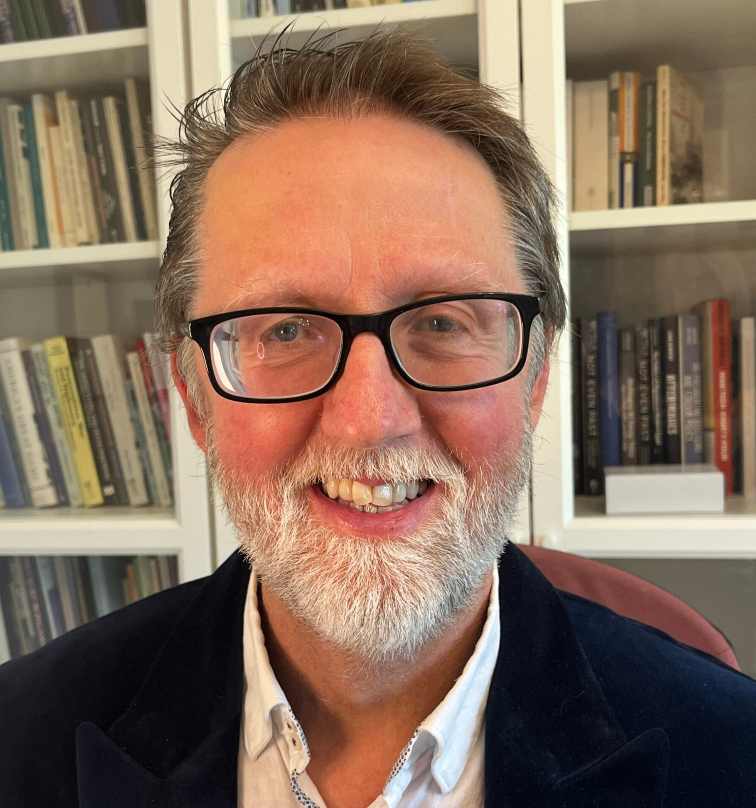
Scott Lucas
Professor of International Politics at the Clinton Institute, University College Dublin
If Russia proposes resuming the work of the Russia–NATO Council, and the U.S. supports this idea, that’s great. Let this be a starting point for further dialogue, but if the resumption of the Council’s work is presented as a condition under which NATO must first make unilateral concessions, that is an entirely different matter. Such conditions cannot be accepted.
So it’s no surprise that many experts get the impression that the Trump team is already handing over an important “trump card” to the Russians even before the meeting in the UAE begins.
Jared Kushner explained on social media platform X what goals the Americans are pursuing regarding European security and communication with Russia.
We are focusing on five main goals: ongoing security consultations, reliable communications during crises, greater military transparency, mutual measures to reduce the risk of escalation, and a sustainable framework for long-term European security and stability,” wrote the U.S. president’s son-in-law.
Professor Scott Lucas notes that Jared Kushner must also keep in mind Ukraine’s sovereignty and territorial integrity, particularly during discussions on mutual security guarantees.
Scott Lucas
Professor of International Politics at the Clinton Institute, University College Dublin
Kushner notes that mutual security guarantees must be based on the recognition of the sovereignty and territorial integrity of all participating countries. So I would like to ask Mr. Kushner: Does this mean that you are demanding that Russia end its occupation of Ukrainian territories? At the same time, Kushner makes no mention whatsoever of the Russian occupation. There is not even any mention of a ceasefire along the current front line.
Interestingly, Russia continues to insist that guarantees for Russia itself will also be discussed. Russian Foreign Minister Sergey Lavrov stated that the issue of security for Russia, Ukraine, and the region as a whole will be the first item on the agenda at the trilateral talks in Abu Dhabi.
Professor Scott Lucas notes that this could be yet another trap set by the Kremlin.
Scott Lucas
Professor of International Politics at the Clinton Institute, University College Dublin
First, the concept of mutual security guarantees could be a trap that the Kremlin tried to set even on the eve of its full-scale invasion of Ukraine in 2022. At that time, by “mutual security guarantees,” Russia meant something entirely different: NATO must withdraw from its positions in Eastern Europe, particularly in the Baltic states and Poland. In other words, the Alliance was to change the geography of its presence and revise the deployment of its forces. This was a unilateral demand from the Kremlin.
Professor Lucas is convinced that any security guarantees for Russia should be discussed only after a ceasefire has been reached, not before. This is precisely what the U.S. position should be if the United States were to act as a responsible and conscientious actor
Scott Lucas
Professor of International Politics at the Clinton Institute, University College Dublin
Negotiations should not begin with a discussion of Russian security guarantees. Russia must answer: Is it prepared to halt the invasion and respect Ukraine’s sovereignty and territorial integrity? If Ryabkov starts talking about the objectives of the so-called “special military operation,” Russians in the Donbas, or some cultural issues, the response should be simple: “Sorry, but you haven’t answered our question.”
At the same time, officials in Brussels were quick to state that it is premature to discuss resuming this format of discussions with Russia. First comes a ceasefire, followed by a meeting of the NATO-Russia Council and all other forms of diplomatic cooperation.
At the same time, the Europeans did not rule out such a format of dialogue with Russia, but they emphasized that this would only be possible after the war against Ukraine has ended.
There’s no harm in sharing the pie
In this situation, the good news is that Europe will, one way or another, be involved in the negotiation process. The bad news is that the Americans have effectively taken it upon themselves to resolve European security issues behind the backs of European leaders and their nominal allies.
Moreover, Witkoff and Kushner may use the issues of European security and the deployment of NATO troops on the continent as bargaining chips at the negotiating table with the Russians. It’s worth recalling that Russia continues to demand that NATO withdraw to its 1997 borders, which could potentially destroy the entire security system in the Baltics, Scandinavia, Eastern, and Central Europe.
The price of peace may mean not only concessions on Ukraine’s part, but also “perks” for Putin in the form of satisfying all his “sick” fantasies and “grievances” that have accumulated against the West since the collapse of the USSR.
It seems that this is precisely the “great news” that Trump promised on November 5.
Thus, the Americans are flying to the UAE with the intention of dismantling the entire European collective security system at the negotiating table with Russia. Witkoff and Kushner believe they have the right to speak with the Russians on behalf of Europe and NATO – and in place of Europe and NATO themselves – to offer certain concessions.
These “new ideas” are the result of Europe taking too long to decide who would represent it in the negotiations and in what format, refusing to take a firm stance until the very end and playing “daddy” with Trump, forgetting that “Our dad got sick, and now he sees the world differently.”
While Brussels was wasting time searching for the ideal diplomat, Witkoff and Kushner had already stepped into the spotlight, speaking not only on behalf of their own countries but also on behalf of the entire “collective West.”
Such diplomatic procrastination on the part of the EU comes at a price: in the form of “creative” proposals from the Americans that concern not their own future, but the fate of Europe itself. And European capitals – which are only now actively trying to enter the negotiation process – will have to deal with this.
FAQ
If you find an error on this page, select it and press Ctrl + Enter